
 E-Paper



NASA shares new image of Jupiter captured by Juno spacecraft
In the image of Jupiter processed by citizen scientist Gerald Eichstadt, long, thin streaks can be seen running through the centre of the image from top to bottom. The streaks are layers of haze particles that float above the underlying cloud features, says NASA.

 Prefer HTon Google


American space agency NASA recently shared an image of Jupiter captured by its Juno spacecraft that has been orbiting the planet since July 2016.
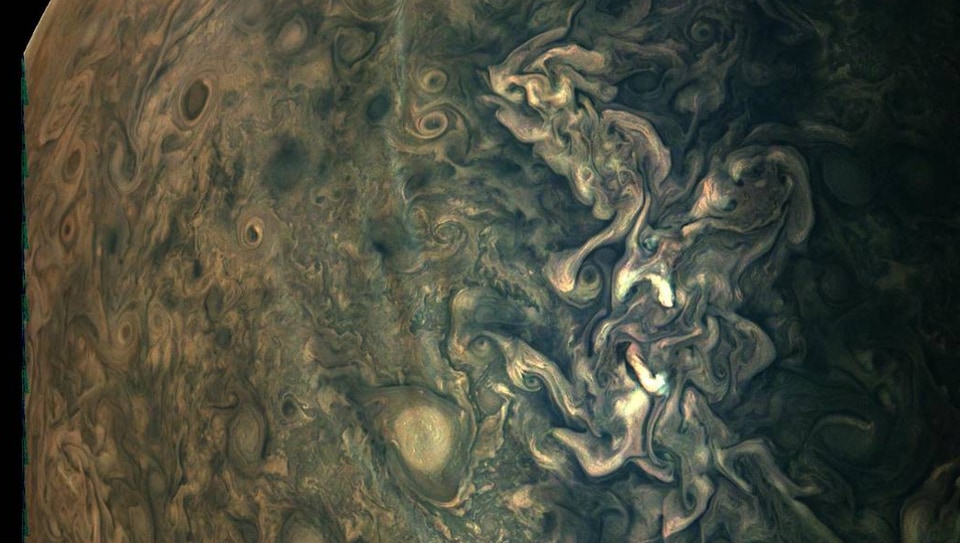
The image is of the gaseous planet’s northern regions that was taken during the spacecraft’s close approach to Jupiter on February 17, 2020.
NASA’s Juno mission captured this look at Jupiter’s tumultuous northern regions during the spacecraft’s close approach to the planet on Feb. 17, 2020, according to a statement on NASA website.
In the image processed by citizen scientist Gerald Eichstadt, long, thin streaks can be seen running through the centre of the image from top to bottom. The streaks are layers of haze particles that float above the underlying cloud features, says NASA.
Even though the streaks have been noticed since 2016, scientists are yet to figure out what they are made of or how they are formed.
NASA says Jupiter’s atmosphere flank either side of the region where the narrow bands of haze typically appear, and some researchers speculate those jet streams may influence the formation of the high hazes.
Juno spacecraft was about 15,610 miles above Jupiter’s atmosphere when it captured the image on its 25th close flyby.
The spacecraft will continue taking photos, among other things, once every 53 days until July 2021, at the earliest.
In another development related to the solar system’s largest planet, scientists had recently captured some of its highest resolution images ever obtained from the ground.


