
 E-Paper



Russian Progress cargo spacecraft successfully reaches ISS
The spacecraft was carrying a little more than one ton of nitrogen, water and propellant.

 Prefer HTon Google


Progress 77, the unmanned cargo spacecraft from Russia, docked at the International Space Station (ISS) on Wednesday.
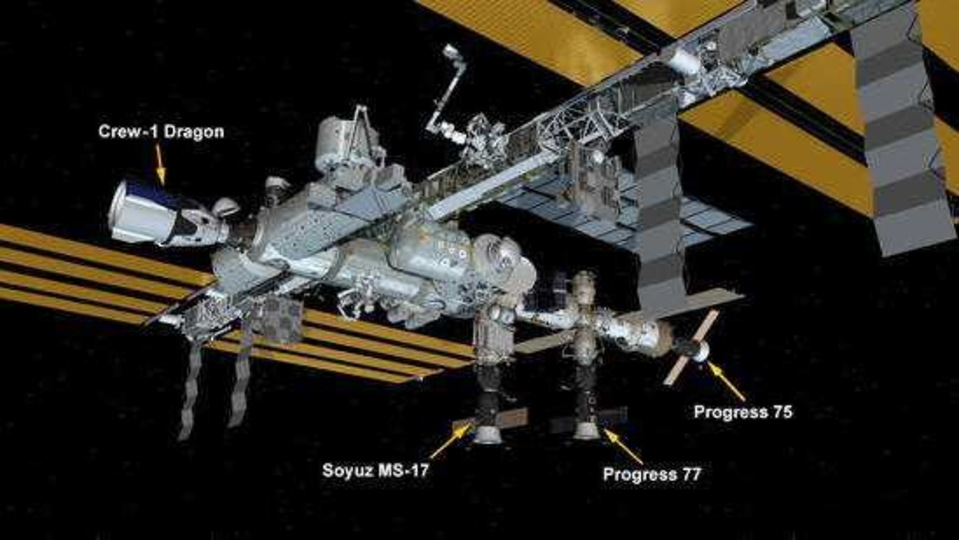
“Russia's Progress 77 spacecraft docked at the station’s Pirs docking compartment today at 1:27am ET delivering 1.1 tons of nitrogen, water and propellant to the station,” the ISS tweeted on Wednesday.
The spacecraft was carrying a little more than one ton of nitrogen, water and propellant. It began its journey on February 15 from the Russia-leased Baikonur launch facility in Kazakhstan.
NASA in a blogpost said that the Russian Progress 77 spacecraft is carrying these items to aid Expedition 64 crew members who are currently stationed in the ISS. “The spacecraft is carrying a little more than one ton of nitrogen, water and propellant to the station and the Expedition 64 crew members who are living and working in space to advance scientific knowledge, demonstrate new technologies, and make research breakthroughs not possible on Earth,” the space agency said in its post.
The ISS is being currently operated by seven crew members who belong to the United States, Japan and Russia. NASA's Kate Rubins, Michael Hopkins, Victor Glover and Shannon Walker; Japan Aerospace Exploration Agency astronaut Soichi Noguchi; and Russian Space Agency Roscosmos' Sergey Ryzhikov and Sergey Kud-Sverchkov are currently working in the space outpost, news agency Associated Press reported.
The Progress 77 spacecraft is scheduled to remain docked to the International Space Station for the remainder of the year, the blog post from NASA said. It also said that instead of Progress 77 spacecraft, it will be the Pirs spacecraft which will detach itself from the Earth-facing side of the station’s Russian segment.
“Progress 77 is scheduled to remain docked to the space station’s Russian segment until later this year. Instead of undocking from Pirs, this time Progress will stay connected and detach Pirs from the Earth-facing side of the station’s Russian segment, where it has spent nearly 20 years in service as both a docking port and spacewalk airlock,” NASA said.
Following the undocking of Pirs, the “Nauka” Multipurpose Laboratory Module will dock at the vacated port.


