
 E-Paper



CWG 2022, Hockey: Is this India's chance to dethrone Australia?
Australia have barely played any international hockey—barring two 4-match bilateral series against Malaysia in April and New Zealand in June—since Tokyo due to Covid related government travel restrictions.

 Prefer HTon Google


Let this sink in. Australia have won gold all six times men’s hockey has been played at the Commonwealth Games (CWG) ever since it debuted at Kuala Lumpur 1998. The world No 1 outfit has quite literally owned the event, having lost only one match (to South Africa in 1998) in six editions.
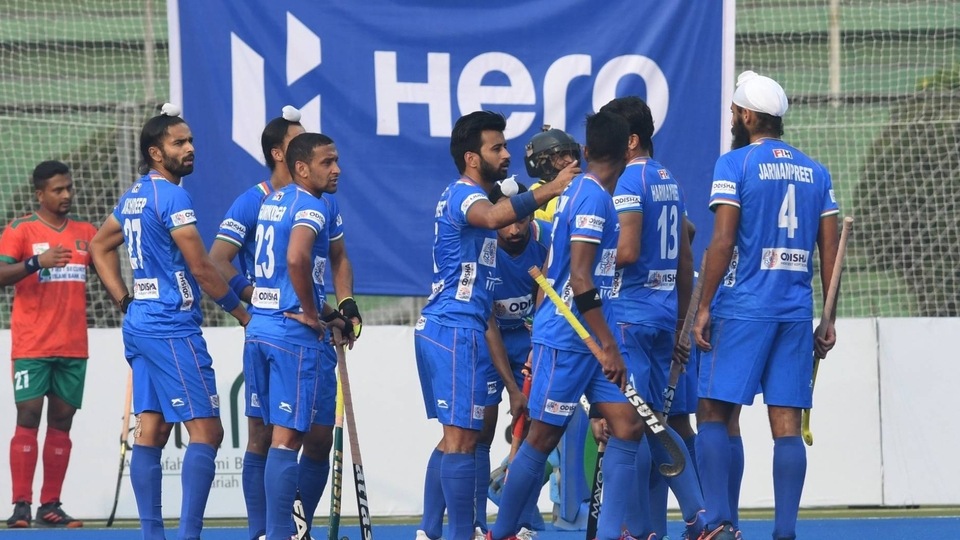
Be it the Olympics, World Cup or any other major event, the three-time world champions always enter as one of the favourites. Not many would bet against them at Birmingham 2022 either.
However, the dynamics have changed a bit ever since their silver medal finish at the Olympics. Australia have barely played any international hockey—barring two 4-match bilateral series against Malaysia in April and New Zealand in June—since Tokyo due to Covid related government travel restrictions. In addition, the Kookaburras have not even had the entire squad together until recently as many took a break after the Olympics.
“While it was good to have those two series against Malaysia and New Zealand, it hasn’t given us the variety that we will need to adapt to at CWG. We’re always pleased to play international matches but it perhaps hasn’t been ideal not having been part of the Pro League. We certainly love playing countries from different parts of the world so we did miss that,” said Australia head coach Colin Batch.
At the same time India—who claimed an Olympic medal in Tokyo after a gap of 41 years—have had the right amount of exposure and match-time before CWG. Ranked No 5 in the world, India have stood on the CWG podium only twice, claiming silver at both Delhi 2010 and Glasgow 2014 after being hammered by Australia in both finals. They disappointed at Gold Coast 2018, losing even the bronze playoff to England.
But the Graham Reid-coached side has made rapid progress since then, regularly challenging and beating the best in the world, proven by their record at the Olympics and the Pro League where they finished third, only behind winners Netherlands and Olympic champions Belgium. Which begs the question—could this be India’s time at CWG?
"India do have the potential to win gold. If you look at their growth over the past few years, they are playing at a high level. In the Pro League they played very well early and had some success away from home. Like many teams they experimented with a host of players so it has given them good knowledge. We know they are playing well and that they will be very challenging if and when we have to play against them," said Batch.
“You would have to think England and India would likely progress through (from Pool B). They are playing well and have had recent experience playing in the Pro League so they will pose a great challenge. India were the bronze medallists in Tokyo and England (who represented as Great Britain) played well and were unlucky not to go further. Both teams have got some great attacking players so they will both be a great challenge.”
Australia though will not be an immediate concern for India, who will playing world No 36 Ghana, who are debuting in Birmingham, hosts and No 6 England, No 12 Canada and No 16 Wales in the pool stages. India will be expected to march into the semis along with England from Pool B and Australia and New Zealand from Pool A—the same last four from the previous three editions of CWG.
"We have a lot of work to do to get there in the top-two to make the semi-finals. Competition is a bit unknown. First of all, we have Ghana. It’ll be a tough one because we play them first and don’t have a huge amount of information on them. You must never take any opposition lightly. We certainly won’t in any of our four games and that will be my major thrust,” said India chief coach Graham Reid.
"Then we’ve England—that's a really important game. England are world class. Then you have Canada who are long seasoned campaigners, they’ve been to the Olympics. We haven’t played Wales but they come from United Kingdom. What I do know is the mentality of these guys—they’re tough and never give up. But we’re nicely placed and have had some good results this year but that never guarantees your next results. We have to be diligent."
If everything goes according to script, India will likely face Australia in the semis or final. Australia’s situation is very similar to what was India’s before the Tokyo Olympics when the Manpreet Singh-led squad went more than three months without playing a single match.
“Does that ring a bell to last year?” laughed Reid, who has coached Australia in the past. “Having been involved (with Australia) I know their daily training environment is very good. Whilst it would have been good for them to have competition like we’ve had with Pro League, we showed last year that you don’t necessarily need that to be able to perform pretty well out of the blocks.”
Though they didn’t play many internationals, many Australians played club hockey in European leagues which was backed by their high-quality domestic programme that has produced greats like Jamie Dwyer, Mark Knowles, Chris Ciriello to name a few.
In desperate need of match time, Hockey Australia (HA) arranged matches for the Kookaburras just before CWG. In three games against hosts Spain in Terrassa, Australia lost the opener but won the next two between July 15-18. They also beat Pro League champions Netherlands in one of the two games in Utrecht, losing the other, on July 23 and 25, showing the freshness and alertness of the squad.
“I guess only time will tell if missing Pro League has had a significant effect on us or not. If we don’t play well or don’t succeed at CWG people might identify it as a reason but we are taking a positive attitude of still learning, developing and challenging ourselves to get better,” concluded Batch.


