
 E-Paper



Delighted to see Indian players develop; critical for us to make a sustainable club: Damian Willoughby
City Football Group’s India CEO Damian Willoughby reflects on Mumbai City’s successful season.


When the City Football Group (CFG) added Mumbai City FC to its growing list of clubs around the globe by announcing its intention of acquiring a majority stake in the club in November 2019, big things were expected from the group’s entry in India. It hasn’t taken too long to see its impact, with the revamped Mumbai City topping the Indian Super League (ISL) league stage and playing for their maiden title in the final against ATK Mohun Bagan on Saturday.
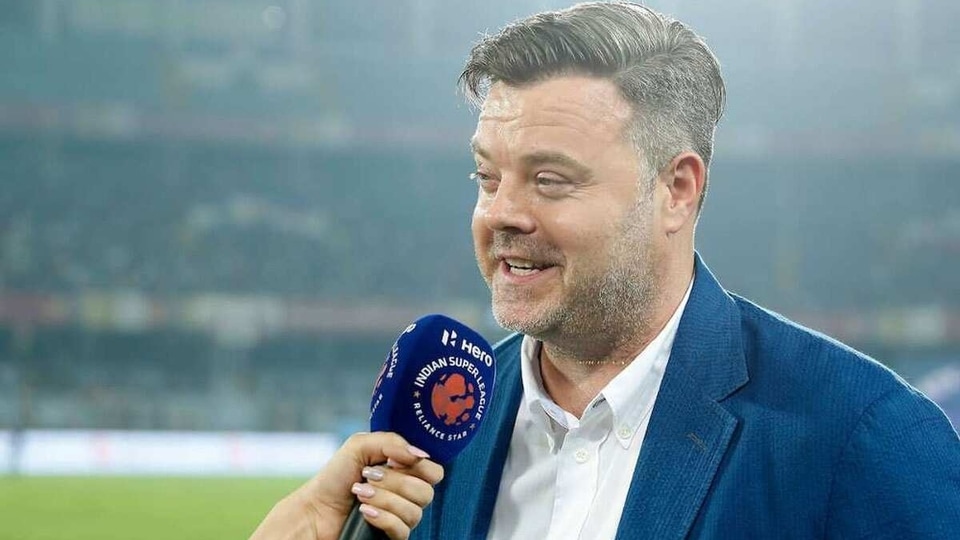
In this chat with HT, CFG’s India CEO Damian Willoughby reflects on Mumbai City’s successful season, the work put in behind the scenes to get there, why head coach Sergio Lobera ticked all their boxes to lead the charge and the group’s long-term vision for this team. Excerpts:
Satisfied with the season overall…not just with the results but with the group's vision of playing beautiful football?
Very much. When we were looking at potential coaching candidates and met Sergio, it became very clear very early that our footballing philosophy was aligned with his view of how the game should be played - the core ethos of beautiful football that we see in Manchester City, New York, Melbourne and across our other clubs. That was such a phenomenal starting base. Then we had a significant turnover, getting 17 new players in the group. They were brought in because they met certain criteria and played the game in the vision that Sergio had for this team. It’s been a pleasure to not only see the team win matches but also play a brand and style of football that’s entertaining to watch. It’s doubly satisfying, because winning is tough, and we’re able to do that while staying true to the way we believe the game should be played.
What was it about Lobera that made you confident that he was the right man for this club?
Sergio was coming off a strong track record in terms of his philosophy and development of young players, his win ratio, his accomplishments and also that he had spent a lot of time coaching in India. It ticked so many boxes for us. At the core, it was based on the fact that his view of football is the same as ours. Once you’ve got that starting point, you can build on it successfully. It’s been an open, transparent relationship. This is a perfect marriage between Sergio and the City Football Group. We couldn’t be more delighted with what he has achieved, and we’re excited with what we can achieve together in the future.
People talk about the team’s financial and technical resources, but even the best of things can take time to develop. Are you surprised at how quickly the results have come?
It was about meticulous planning through the end of last season. The planning and preparation around constructing the team and the objectives of this club was already developing before the pandemic took hold from March last year. After Sergio was brought in, our group worked extensively with him and his staff from a recruitment, planning and logistical standpoint. We really worked hard to make sure the team was prepared - players coming in the best possible shape, ensuring they had the necessary things to prepare during quarantine, dealing with a condensed pre-season window. All clubs had to deal with it, but it was tough for a new team with a new style of play and a significant volume of new players. It also helped that Sergio and his staff were very familiar with the dynamics of the ISL, the player pool in the league and number of players that we brought in.
Players have had to stay put in one place from before the league began in November last year. What did you do to ensure that the mental health of players was looked after as well?
There were a couple of elements to this. We tried to create a physical environment at the hotel that was accommodating, comfortable and where players didn’t feel claustrophobic and constrained. We created a social room with a lot of games; a space that they could relax and let off steam. We tried to create a series of social events throughout the season and create a family environment, which Sergio talked about a lot. Then on the mental wellness aspect, we were cognizant that it could potentially be something that we needed to be mindful of, given the bio-bubble duration of over 160 days. Within our group, we have specialists in sports science, sports medicine and sports psychology and we organized a few sessions where we made people aware of some of the challenges they might face and the resources they could use if they felt they wanted to speak to any expert that would help them.
Will the consistent development of Indian players be one of the group’s main objectives with Mumbai City?
Absolutely. Again, Sergio has a great track record of developing young players. He’s done it in India before, and it was something we were eager to see evolve this year. Full credit to him and his staff for the improvement we’ve seen in the likes of Vignesh (Dakshinamurthy), Amey (Ranawade), Rowllin (Borges) and Bipin (Singh), for whom we’re happy that his form has been recognized with a national team call-up. So we’re delighted that we’re seeing it this year, and it’s critical moving forward as well. To develop a sustainable Mumbai City, we need to be able to identify, nurture and develop young Indian players, and provide a sort of a conveyor belt into the national team. If we do that, Mumbai City will be successful and sustainable and hopefully the Indian national team will be in an even better position.
Looking ahead, the AFC Champions League will be a different kind of challenge. Are you confident that Mumbai can stand up against the best of Asia?
Of course. We feel that we’re a good team with quality players. At the end of this season, we’ll take some time to savour what we’ve achieved but also review and look back on the season - both on the huge positives but also the areas we can improve in terms of the squad. Next year the challenge is to come back and do better. The Asian Champions League has lots of teams from more mature Asian football markets that have got bigger budgets at their disposal. But that’s the challenge, one that we feel we can take on and succeed at.
What's your long-term vision with this team?
We’re still very early in our journey in India as a group, and so is the league. We’ve got a great base to grow. We want to make sure that Mumbai City is competitive on the pitch while playing beautiful football which fans enjoy watching. We couldn’t be more excited about the overall long-term growth trajectory that we see with the ISL and football in India. We see nothing but upside and opportunity, and we’re confident that we can add value and help the sport and the league grow. And I’m sure Sergio will continue to play a big role in our group and what we want to achieve. We’re delighted with what we’ve done this season, with one big game to go. And then we can look forward to the next season, playing in front of our fans and building the club in a sustainable way.


