
 E-Paper



Messi chaos isn't new: Pelé, Maradona saw it too. Why Kolkata's biggest football nights turn ugly
Kolkata's passion for football turns sour when VIP culture overshadows public access during visits from legends like Pelé, Maradona, and Messi.

 Prefer HTon Google


Kolkata loves football with a devotion that looks glamorous from afar and combustible up close. When a global icon arrives, the city doesn’t merely gather; it surges.
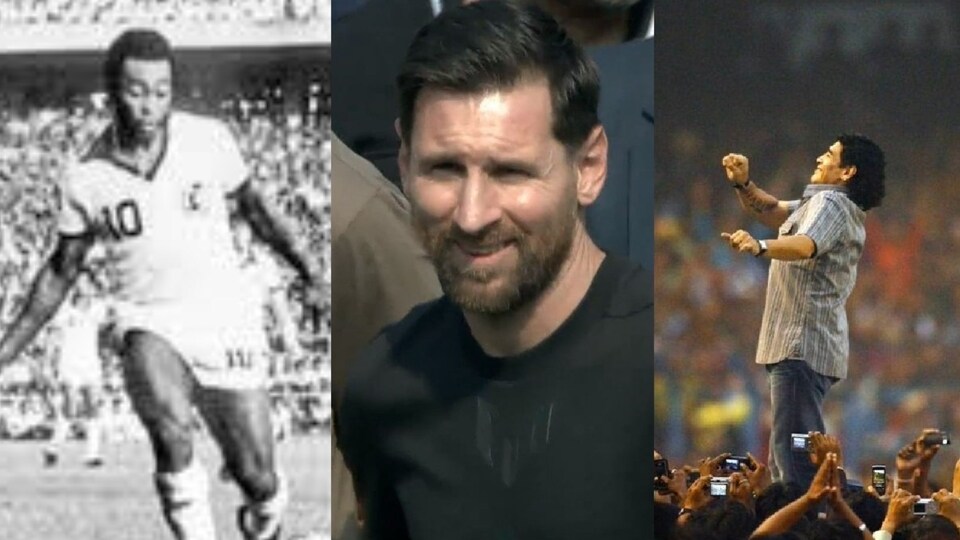
And that is where the trouble begins. Not because Kolkata can’t handle crowds, but because these visits repeatedly expose a deeper tension: who gets access, and who gets spectacle. Across decades - Pelé in the 1970s, Maradona in the 200s, Messi now, the script has stayed eerily familiar: the public pays in money and time, the powerful arrive for proximity, and the gap between the two becomes stark.
Messi: When even visibility becomes a privilege
The latest Kolkata flare-up around Messi wasn’t just about numbers. It was about visibility being denied in plain sight.
What angered people wasn’t only that the superstar’s appearance was short; it was the feeling that the moment was being swallowed by a moving wall of VIPs and officials. Fans who had paid and waited found themselves looking at shoulders, escorts, and security lines, straining to spot the star they had come to see. When a crowd believes it has been made to fund an event it cannot even properly witness, the emotion shifts quickly from celebration to humiliation.
That emotion is what makes a scene turn. A stadium crowd can accept delays. It can accept strict security. What it struggles to accept is the sense that the real event is happening inside a privileged bubble while the paying public is treated like background noise. Once the perception settles, every barrier feels like an insult, and every VIP photo-op looks like theft.
Pelé: The original VIP scramble
Decades earlier, Pelé’s Kolkata trip revealed the same fault-line in an older accent. The match itself became folklore, a packed Eden Gardens, a storied draw, a city convinced it had touched football divinity. But the most telling parts of that visit were not only on the pitch. They were in the corridors.
The crowd-control problem wasn’t just passionate supporters pushing at the edges; it was the VIP scramble swelling inside the system - officials, entourages, and the self-important treating it as a badge. The sharpest image from that era is almost comedic: a minister repeatedly attempting to enter a guarded room to meet Pelé and being rebuffed with a line that could be Bengal’s unofficial motto on such nights - everyone becomes a minister when a legend is in the town.
Also Read: What forced angry Kolkata fans to turn violent at Lionel Messi event: Paid thousands but only ministers, VIPs got access
There was also the anger that comes when organisers try to solve crowd pressure with secrecy. A diversion route here, a quiet exit there, and suddenly the people who waited at the expected spot feel cheated. In Kolkata, that sense of being outplayed can be more inflammatory than any delay. It isn’t merely disappointment; it is the crowd being told, implicitly, you don’t matter enough to be informed.
Maradona: When mismanagement turns celebration
If Pelé’s visit exposes the culture of access, Maradona’s Kolkata episodes show the other side of the problem: what happens when the event itself becomes loose, chaotic, and poorly controlled.
One of the most striking parallels between Maradona and Messi in Kolkata is the recurring detail of projectiles - bottles thrown, objects flying, the celebration curdling into confrontation. That is never a football crowd trait in isolation; it is a sign that the event has lost the basic contract that keeps masses peaceful: you will get to see what you come for, and you will not be treated like cattle while others are treated like guests.
Maradona’s Kolkata memories are often softened by nostalgia; people prefer to recall the aura, the carnival, the images. But the sharper truth is that his visit too carried reports of disorder, aggressive scenes, and a sense that management couldn’t contain the surge. Once a crowd senses that nobody is in control, it stops behaving like an audience and starts behaving like a force.
What these visits say about Kolkata
Taken together, these three icons tell a single Kolkata story: the crowd is not the problem, the hierarchy is.
Bengal’s public culture is intensely participatory. People don’t come to merely attend an event, they come to own a piece of it - to see, to chant, to feel included in the moment. VIP culture does the opposite. It turns public emotion into a stage and reserves the best seats of reality for those with power.
That is why the same triggers keep reappearing:
VIP Obstruction: ministers and officials crowding the star, blocking the public’s sightlines, and inflaming resentment.
Secrecy and diversion: attempts to out smart crowds that backfire by making people feel fooled.
Short or unclear access: moments that feel smaller than what was promised, creating a sense of being taken for granted.
Loss of control: once the event feels unmanaged, anger turns physical.
The point isn’t that Kolkata is uniquely unruly. The point is that Kolkata is uniquely honest in its reactions. When people feel respected, given clear touchpoints, predictable access, and a clean view, this city delivers the loudest, most beautiful welcome in the country. When people feel used, asked to pay, wait, and then watch VIPs collect the moment, Kolkata responds with the same volume, just in a different register.
The lesson from Pelé, Maradona, and Messi is not about policing alone. It is about choreography. A legend’s visit to Kolkata succeeds when the organisers treat the crowd as the centre of the event, not as a nuisance to be managed while the powerful take their pictures.


