
 E-Paper



From a summer-vacation hobby to pinnacle of Indian para shooting: The Avani Lekhara story
Avani, in a chat with HT, gave a peak into her champion's mindset, revealed her journey in para shooting and gave an insight on her preparation for Paralympics.

 Prefer HTon Google


There is a certain commonality in the stories that you hear from non-cricket athletes. A chance meeting is all it takes to spark that magic and induce a sense of clarity. For Avani Lekhara, shooting was merely a hobby she picked up at the age of 14 during a summer break. That was three years after an accident left her paralysed from the waist down. "Lifting the rifle, pulling the trigger, it felt like home", Avani revealed. But it wasn't until her very first medal in her maiden appearance on a competitive level did she realise, 'this is it'. Eight year hence, Avani bagged two Paralympic medals in Tokyo which included a gold, and rose to world no. 1 ranking in Women's 10m Air Rifle standing SH1, secured three World Cup medals, which comprised two golds and more recently, scripted a record-breaking show with a top-of-the-podium finish in Asian Para Games in Hangzhou.
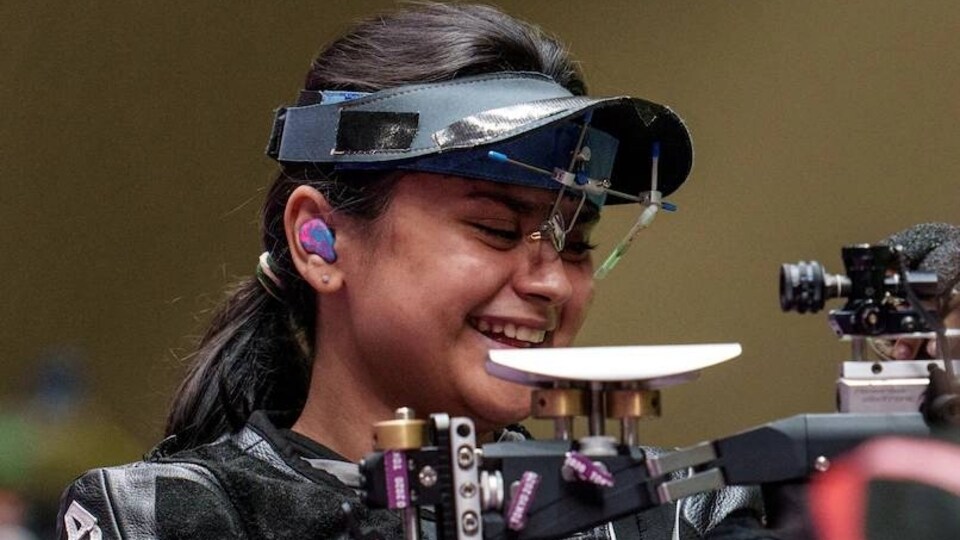
Ahead of the start of the inaugural Khelo India Para Games in New Delhi, which will showcase the incredible talent of over 1350 athletes from across 32 states and Union Territories, Avani, in an exclusive chat with Hindustan Times Digital, opened up on the event, gave a peak into her champion's mindset, revealed her journey in para shooting and gave an insight on her preparation for the Paris Paralympics next year. Here are excerpts...
Q) This is the first time Khelo India Para Games is being hosted. How important is it for budding para athletes across the nation? What impact can it have in the wake of India's stellar show in Asian Para Games?
I'm very pleased to see Khelo India Para Games getting launched for the first time. Khelo India has always been an incredible platform where we have seen so many good talents being unearthed. And it's an incredible support that has been extended towards athletes by the government of India.
I think we have been doing very well on the global stage in World Cups and Asian Games and Paralympics Olympics. So I feel that this platform will make sure that we have a set up that will ensure that we continue to produce good athletes and that more youngsters will come up and they will be going on a global stage in the future. So it will be to support the athletes from the grassroot level and then make India a global powerhouse in Parasports.
Q) Talking about your performance in the Asian Para Games, a gold medal with a record show. Talk us through that?
This was my second appearance in the Asian Games and I think it went really well for me. To be able to go out there and play four events and win a gold with an Asian record was something very special, because last time I was not able to do that, and I was really hoping to give my best this time and also to be able to play all four finals. That in particular was a big win because usually I focus on two events, but this time I tried to focus on all four. And to be able to play four finals and finish fourth in two of them, it was definitely a personal achievement for me.
Q) Obviously there were more expectations after what you achieved in the Tokyo Paralympics. Did that affect you?
I don't carry those expectations. When I am out there I just focus on shooting. I feel if I keep thinking about all these expectations, I will not be able to focus on my process after one win. I think I did my best and I've learned a lot from this competition. Hopefully I can perform even better in the next competition.
Q) Avani seems to have become synonymous with the word 'record'. In Tokyo, then in the World Cup and now in the Asian Games. Which performance would you rate higher?
I think in Parasports, I'm the first female, definitely from India, to win a gold in all these three major championships you mentioned. But I don't think about making records. I just like to take it one shot at a time and if it happens, it's like a cherry on the cake. But getting these records isn't my aim. I don't purposely go out there and try to think, okay, I'm going to make a world record today.
I think they have their different values. Tokyo was something different entirely, in terms of pressure and experience, because it was like my first ever Paralympic appearance. Naturally, there were less expectations as well. But now, after winning that gold, I see a lot of people looking up to me and it makes kind of responsible After Paralympics, it was a little difficult, but to be able to win two more golds and with the world record, it kind of took that pressure off because I felt that if I can do it two times, it's not a big of a deal, I can do it again. This subsequently gives me that strength to focus mostly on the process and not just think that I have to win a gold, and what will others say if I fail. It kind of becomes easier.
This year, the Asian Games was the biggest tournament for me, and I was focusing on it entirely right from the start of the year. It would have hence been a little heartbreaking had I not won that gold. Now that it happened, I feel that when I go out there, on the lane, when I'm playing finals, it does not matter which event it is, I try to take every competition the same. So whether it's Paralympics, Asian Games, or World Cups, I feel it is the same for me.
Q) So how have you been dealing with this fame that you mentioned?
It feels very nice and I'm grateful for the love that India has showered on me, especially being a para athlete, getting the recognition of the hard work that you do from a lot of people, it means a lot and gives a lot of motivation to perform even better in the future.
Q) Could you talk briefly about how you were introduced to the sport? And why shooting?
(Smiles) It was a summer vacation hobby. I just went to the shooting range, which is just beside my house. That's how I started. I tried a lot of other things as well. But with shooting, I think I felt connected to it. And whenever I used to lift the rifle it felt like home pulling that trigger. It is something that I like to keep doing again and again. That's how I continued it. Later when I went for my maiden international competition, and I won my first medal, it felt nice and it gave me a lot of confidence to consider this sport seriously and do it on a daily basis.
Q) Was there a financial pressure attached to picking up the sport professionally?
Definitely, because shooting is an expensive sport. In fact, almost all equipment is almost imported from other countries. Moreover, there are a lot of rifle parts that need customisation. For me, the wheelchair was a very important part. And at that time there weren't any customised wheelchairs for para shooting. So we used to get it imported. In the initial days, I played with a rented rifle. I also did not play with the kit shooting jacket that you use because it was very expensive at that time. My parents were also left in two minds on whether they should invest this much because back then it was just a hobby for me. So they were also not sure. But once I played my first national and I was absolutely sure about this sport. Then they brought me my first rifle and I'm thankful that they got to do it.
Q) Was there ever a thought of giving up?
No, because I was kind of interested since my first national. I won a bronze and I wanted to convert it into gold as soon as possible because before that I was just winning gold medals in my regional and state matches. That's how it kept going. The hunger and motivation was always there. The other reason was wanting to represent India.
Q) In addition to skill, shooting also requires a great deal of mental clarity. So how do you go about with your mental exercises before big tournaments?
I do a lot of mental training exercises with my mental trainers and we keep changing it according to competitions. I do a lot of yoga, pranayam, and breathing exercises because breathing is very important in shooting. You have to hold your breath and then shoot. If you can control your heartbeat and focus on the target, and on the process... you need immense mental strength when you're competing with the best athletes of Asia or of the world. All of us are on the same level, and hence it's just the athlete with the correct mindset that wins the medal.
Q) You are still studying law, if I'm not wrong...how do you juggle academics with sport?
Yeah, I'm currently in my fifth year. That's the final year. I would be lying if I say that it is easy because it is not. It's difficult because law is a professional degree and you have to give a lot of time to those books as well. I try to take out time and study whenever it is possible. We have our weekly tests, so I try to study and give those tests so at least I am aware of what's going on in my class. I feel I am also fortunate that I have very nice friends who help me with the notes whenever there are semester-ending exams. In fact, I have my exams around the last week of December or first week of January. So after the Nationals, I'm just going to focus on that for time. And after that, it will be like just one semester left. So maybe around the time when the Paris Paralympic comes, I'll have my degree in my hand. That would be awesome.
Q) So fifth year of law you say, you don't carry your books around, right, during tournaments?
(Laughs) No, we have a lot of weight already. I have rifles, but and so many other equipment. Sometimes it goes above 80 kgs to carry. It's difficult to carry books also, so I try to keep it online.
Q) Up next is Paris. Your thoughts on defending the title which will be probably for the first time in your career
I'm not thinking of Paralympics that way because one, I've already played there. Like, I won the quota in the same range last year. So it is something which I already know. I already know about the venue. I've already played two World Cups there before, so it is not something that will be new for me. So I'm pretty confident that I know what I have to do and how to do it going there. And we have made a schedule of the things that I have to focus on from here on - the technical aspects, mental aspects, all of it. So I don't want to jinx it, but I'm just going to focus on how I'm going to train and I'm going to give my 100 per cent in the training so that when I go there, I don't have regrets. And whatever happens that day will happen eventually. You win some, you lose some, and it's just the day. I think I'm just focusing on training right now.


