
 E-Paper



Explained: NASA to launch three sounding rockets into April solar eclipse. Why?
NASA to launch APEP rockets during total solar eclipse to study ionosphere disturbances. Read here to know why it is significant.

 Prefer HTon Google


NASA plans to launch three sounding rockets during the total solar eclipse on April 8, from its Wallops Flight Facility in Virginia. Named Atmospheric Perturbations around Eclipse Path (APEP), these rockets will lift off 45 minutes before, during and 45 minutes after the peak local eclipse.
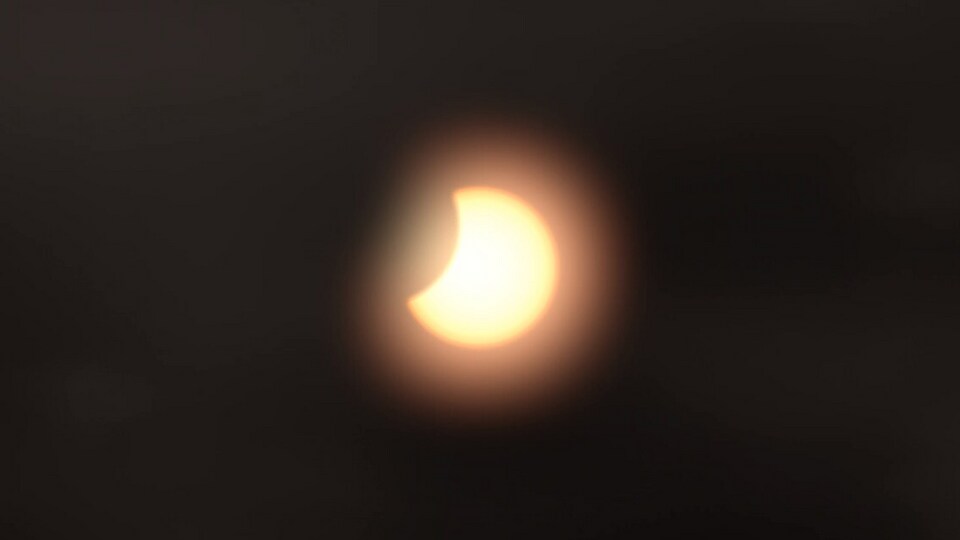
With this strategic timing, the United States space agency aims to gather data on how the sudden dimming of sunlight during an eclipse impacts the ionosphere, causing disturbances that could disrupt communications, it said in a statement.
ALSO READ- NASA spacecraft to carry special message plate on Jupiter's moon Europa. What's written?
What is the ionosphere, and why should we care about it?
The ionosphere, situated between 90 to 500 kilometres above the Earth's surface, is an electrified region in the atmosphere. According to mission lead Aroh Barjatya, it serves as a reflective and refractive medium for radio signals and significantly influences satellite communications as signals traverse through it.
Why do scientists want to study the ionosphere during a solar eclipse?
The ionosphere is like a protective layer high above Earth, acting as a barrier between our atmosphere and space. It's filled with particles that get charged up by the Sun's energy. At night, these charged particles calm down and turn neutral again. But things like Earth's weather and space events can shake up the ionosphere, making it hard to predict what it'll be like, NASA said.
ALSO READ- After Chandrayaan-3, Isro eyes return moon missions
As the eclipse moves across the sky, it creates a quick sunset effect, causing big waves and small disturbances in the atmosphere. These disturbances mess with radio signals on various frequencies. By studying these changes, scientists can make better models to predict how our communication might get disrupted, especially on high-frequency bands, NASA said.
ALSO READ- ISRO's Pushpak lands successfully in another triumph for reusable launch vehicle
Why is NASA firing sounding rockets?
A sounding rocket has the capability to transport scientific instruments to altitudes ranging from approximately 50 to 500 kilometres above Earth's surface. These heights are generally beyond the reach of science balloons and below the safe operating range of satellites, rendering sounding rockets the sole platforms suitable for direct measurements in these regions.
'April's total solar eclipse very rare'
The next total solar eclipse in the US won't happen until 2044, said NASA. So, these experiments are a golden chance for scientists to gather important data.


