E-Paper



Indian-origin woman chooses sari over dress for Royal Ascot: 'I'm a UK citizen, but...'
Indian-origin author Kamini Banga turned heads at the Royal Ascot after choosing to wear a traditional chanderi sari instead of a Western outfit

 Prefer HTon Google


Indian-origin author Kamini Banga turned heads at the Royal Ascot after choosing to wear a traditional chanderi sari instead of a Western outfit, saying that despite spending two decades as a British citizen, some connections to her roots remain unchanged.
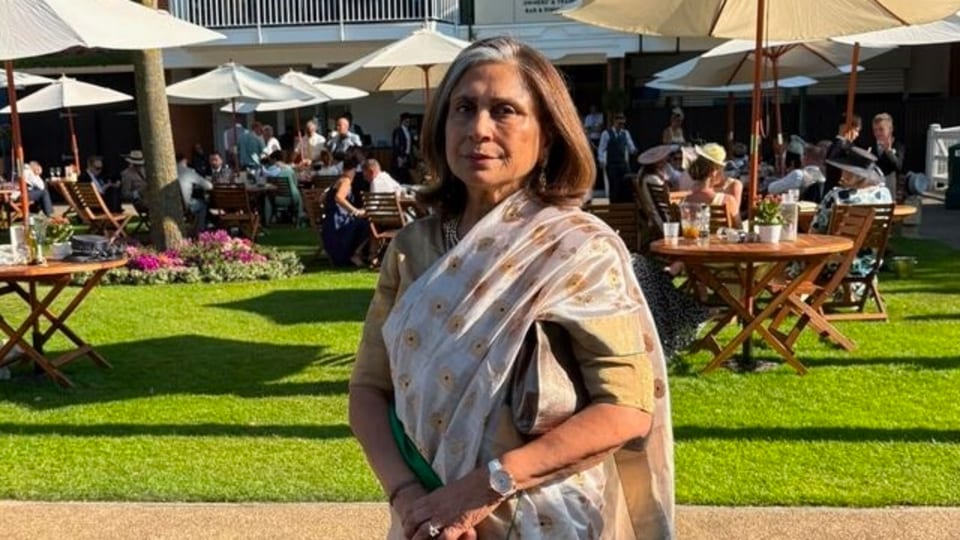
Banga shared her experience in a post titled “Wearing my Heart on my Sari at Royal Ascot”, explaining how she initially felt unsure about what to wear to one of Britain’s most famous social and sporting events.
What is Royal Ascot?
Royal Ascot is one of the UK’s most iconic horse racing events, held annually at Ascot Racecourse in Berkshire. Known for its association with the British royal family, the five-day event is as much a fashion spectacle as it is a sporting occasion, with attendees known for their elaborate outfits and statement hats.
The Royal Enclosure, the most exclusive area at the event, has a strict dress code. Women are expected to wear formal dresses with hats or fascinators, or opt for appropriate national dress.
Why Kamini Banga chose a sari
Recalling her preparations, Banga said she initially considered wearing the kind of glamorous outfits commonly seen at Ascot.
“When invited to Royal Ascot, I panicked,” she wrote. “My vision of Ascot has always been beautifully dressed women in summer dresses with the most exotic, striking and glamourous hats.”
The Indian-origin author went shopping with English friends at some of London’s top salons to find an outfit, but soon realised the traditional Ascot look did not feel authentic to her.
Banga said she went shopping with English friends at some of London’s top salons to find an outfit, but soon realised the traditional Ascot look did not feel authentic to her.
“Soon it was clear that an English dress and a hat was never going to be ‘me’,” she said.
Although her friends felt she looked beautiful in the outfits she tried, Banga said she saw something different.
“All I saw was my grandmother’s quizzical look and her bemused face in the mirror,” wrote Kamini Banga, chairperson of the Banga Family Trust.
A reflection on identity
After discussions with her friends, Banga decided to attend Royal Ascot in a chanderi sari paired with vintage jewellery.
“Final consensus reached was a sari with vintage jewellery,” she wrote.
Reflecting on her identity, she added: “I have lived in the UK, a citizen of this country for 20 years, but somethings never change.”
Banga said her friends eventually convinced her that embracing her heritage would help her stand out at the event.
“Once they realised my reluctance to don what I had always dreamed of doing one day, they then set to convince me that Vindi in an achkan and I in my chanderi sari would stand out and that the royal family, the King in particular, love things Indian,” she added.
At the event, Banga said the choice of traditional Indian clothing received warm reactions from attendees.
“On the grounds, we were stopped often and complimented by security guards to stewardesses, fair maidens, and gentlemen and ladies who shared a common history and a homeland,” she wrote.
(Also read: Prince Charles celebrates 65th b'day in Kerala resort)