
 E-Paper



Japanese fishing vessels hurriedly leave port, go into deeper waters after tsunami warning: Tracking video shows
After one of the strongest earthquakes in modern history jolted Russia, some parts of Japan, the USA have been told to evacuate due to the threat of a tsunami.

 Prefer HTon Google


The magnitude 8.8 earthquake that hit far-eastern Russia triggered a tsunami warning in Japan, Hawaii, and some parts of the USA. Amid this, a video shared by a real-time tracking site has emerged that shows fishing vessels hurriedly leaving a Japanese port to go deeper into the waters soon after the tsunami warning was issued.
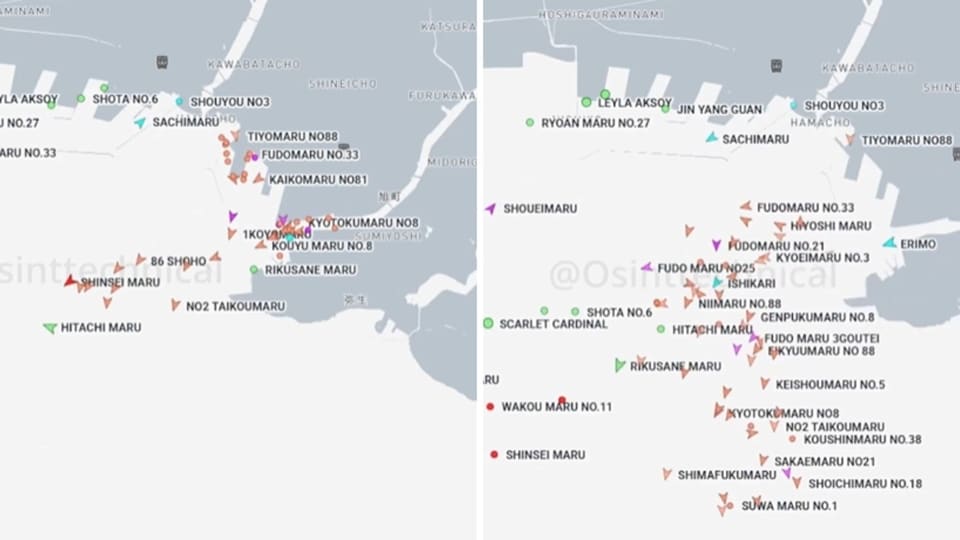
“AIS tracks of Japanese fishing vessels rapidly evacuating port for the safety of deeper water earlier today as tsunami warnings were announced,” an X profile posted, crediting MarineTraffic, a maritime analytics provider that tracks movements of ships in real time.
Also Read: Hawaii tsunami warning: Woman stays in condo with daughter, unwilling to make 15-min walk
Check out the post:
People posted varied comments. An individual posted, “Go, go, go to safety.” Another added, “Many huge countries affected tsunami warning.” A third expressed, “If anyone has learned how to respond to a tsunami it would be the Japanese.” A fourth wrote, “Tsunami waves may travel thousands of miles with devastating impact. Even if you're far from the epicenter, take the warnings seriously. Lives depend on fast action.”
What is a tsunami?
It can be described as a series of extremely long waves that can be caused by “large and sudden displacement of the ocean.” According to the US National Weather Service (NWS), tsunamis “radiate outward in all directions from the point of origin and can move across entire ocean basin.”
Also Read: Videos capture insane traffic in Hawaii: Locals, tourists try to get to higher ground amid tsunami warning
How do earthquakes generate tsunamis?
Earthquakes trigger sudden movements in the water column, which can cause tsunamis. However, most tsunamis are generated by quakes with magnitudes over 7.0. There are also other factors that decide if a quake would cause a tsunami - the earthquake’s location, magnitude, and depth. NWS states, “Generally, an earthquake must exceed magnitude 8.0 to generate a dangerous distant tsunami.”
Why move into deeper waters?
“If you are at sea and get a tsunami warning, you should move to a safe depth and stay away from harbors under warning until officials tell you the threat has passed,” as per NWS. Though safe depths vary by region, the minimum safe depth suggested by the agency is 30 fathoms (180 feet).
Due to the tsunami warning in Japan, ferry services between Hokkaido and Aomori were suspended. Routes connecting Tokyo to nearby islands are also closed. The runway at Sendai airport is temporarily closed, and some local trains have been delayed or halted.


