
 E-Paper


UC Berkeley professor stops grading students' homework over AI use, calls online exams 'a waste of time'
The professor said it has become increasingly difficult to distinguish work produced by AI from that written by students themselves.

 Prefer HTon Google


A University of California, Berkeley professor has stopped grading students’ homework for correctness after noticing that artificial intelligence (AI) tools were helping them secure high marks.
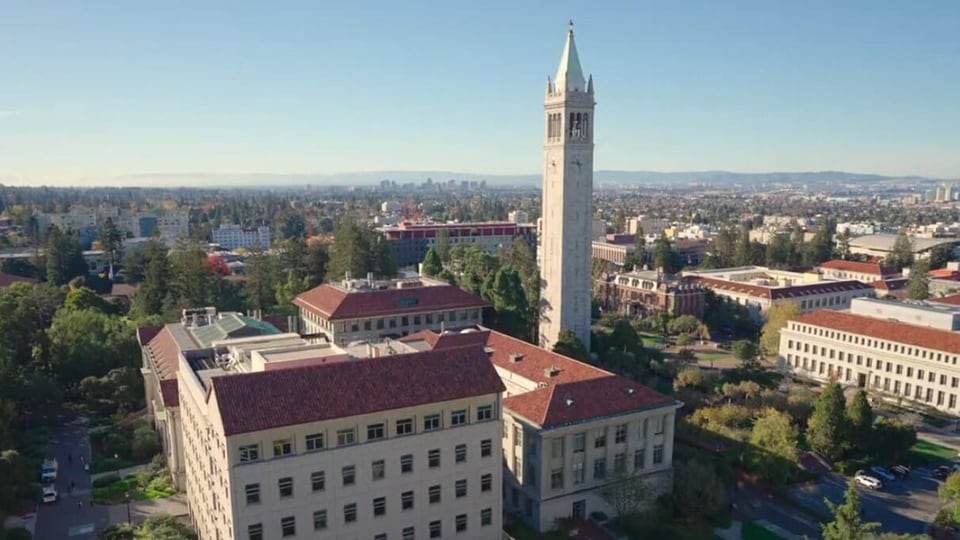
Richard Borcherds, a renowned mathematician who won the prestigious Fields Medal in 1998, said the widespread use of AI for homework has undermined the value of traditional grading. He now awards credit primarily based on whether students complete their assignments rather than whether their answers are correct.
“Student use of AI for homework is now widespread,” Borcherds said, as per a report by the New York Post. “Grading for correctness just adds a huge incentive for them to use AI for homework instead of doing it themselves, and penalizes students for honesty,” he added.
The professor also argued that paying graders to evaluate AI-generated answers was a waste of time and money. He acknowledged that he did not know of a better solution to the problem.
‘No easy way to tell’ AI-generated work apart
Borcherds said it has become increasingly difficult to distinguish work produced by AI from that written by students themselves, as the technology continues to improve.
“There is no easy way to tell the difference between human and AI-generated work. Occasionally one could tell it is AI because AI made a few characteristic errors, but AI has now improved so much that it rarely makes obvious mistakes,” he said.
His concerns extend beyond homework assessments to the future of mathematics itself. In an interview with the Daily Californian, UC Berkeley’s student newspaper, Borcherds warned that continued advances in AI could leave human mathematicians struggling to compete with the technology.
“If AI continues to improve at present rate, then, in a few years, there’ll be nothing human mathematicians can do that AI can’t do better,” he told the publication.
The professor also expressed uncertainty about what advice to give students considering careers in the field. He said mathematics had appeared relatively insulated from technological disruption just five years ago, unlike several other professions now being affected by AI.
“I have no idea what to advise. I even asked ChatGPT this exact question, and even ChatGPT said it didn’t have any idea what was going to happen,” he said.
(Also Read: Google DeepMind employees resign over Pentagon AI deals, citing ethical concerns)
Professor turns to in-person exams
With no better solution to AI-assisted homework in sight, Borcherds said he now relies primarily on in-person examinations, where students are not allowed to use electronic devices.
Online examinations, on the other hand, have become “a waste of time”, he said, because students can use AI tools to answer questions. While Borcherds said he could not identify which students were using the technology, he had observed substantially higher average scores on online exams.
He also suggested that university mathematics departments might take several years to adapt to the rapid pace of AI development, partly because academic institutions can be resistant to change.
Comparing the situation to other technological shifts, Borcherds pointed to hand weaving being displaced by looms and horses being replaced by motor cars. However, he said the disruption facing mathematics was different from previous technological changes.
“This is the first time anything like this has happened in mathematics, though,” he said.
(Also Read: Billionaire Mark Cuban compares AI hackers to cockroaches, says businesses can use AI to fight back)
UC Berkeley’s approach to AI use
UC Berkeley has issued guidance requiring faculty members to clarify expectations around AI use in their courses.
Anne Marie Richard, the university’s assistant vice provost for undergraduate education and chief academic technology officer, said the Berkeley Division of the Academic Senate asks instructors to include statements in their syllabi outlining course expectations, including rules governing AI tools. The university has also explored AI-detection software, including Turnitin and Rumi. However, these tools were reportedly not considered reliable enough to be adopted as a standard campus-wide solution. As a result, individual instructors retain control over the AI policies implemented in their classrooms.
For Borcherds, the difficulty of assessing homework is only one part of a much larger debate about AI’s potential impact on society. “If the worst effect of AI on society is that it is harder to assess homework then I will be very relieved,” he said.


