E-Paper



Russians urged to have sex during work breaks as country battles falling birth rate: Report
Vladimir Putin reportedly urged Russians to use work breaks for intimacy to boost the birth rate, currently at 1.5 children per woman, according to reports.

 Prefer HTon Google


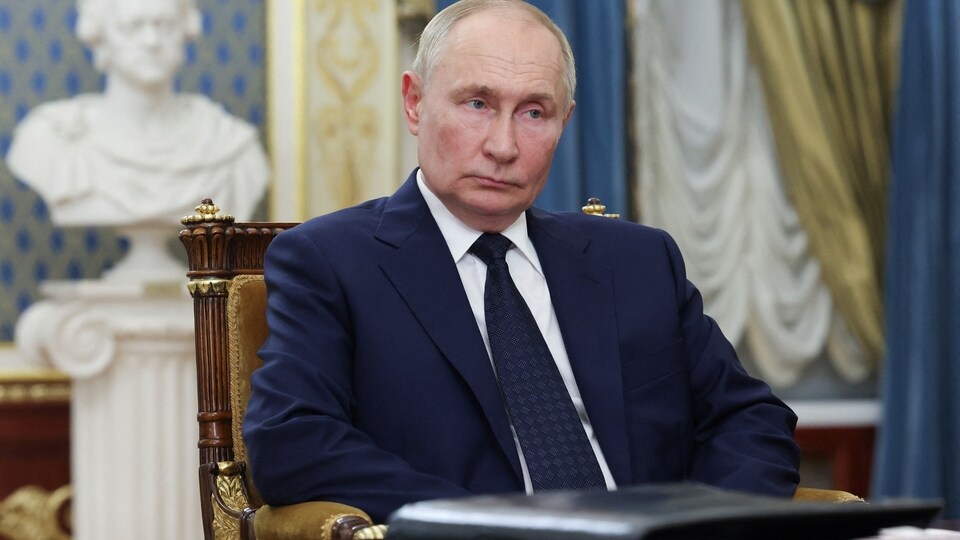
Russian President Vladimir Putin has stirred controversy by reportedly urging citizens to use their work breaks - such as lunch and coffee breaks - to have sex as part of a bold strategy to combat the nation's plummeting birth rate.
According to Metro, the fertility rate in Russia is currently around 1.5 children per woman, a significant drop from the 2.1 rate needed to sustain the population.
(Also read: Joe Biden mistakenly addresses Zelenskyy as ‘President Putin’, Ukraine leader’s reaction goes viral)
Government response to declining birth rates
In response to the alarming fertility statistics, Health Minister Dr Yevgeny Shestopalov has dismissed the argument that demanding work schedules prevent people from starting families. "Life flies by too quickly," Shestopalov remarked, emphasising that even those working 12 to 14-hour days should use their breaks for procreation.
Putin has previously highlighted the urgency of the situation, asserting, "The preservation of the Russian people is our highest national priority. The fate of Russia...depends on how many of us there will be. It is a question of national importance."
Alarming statistics and policy measures
The decline in Russia's birth rate has reached its lowest since 1999, with fewer than 100,000 live births reported in June. Euro News cites Rosstat, Russia's official statistics agency, revealing that there were 16,000 fewer births in the first half of 2024 compared to the same period last year. Additionally, population decline has accelerated by 18%, with 49,000 more deaths recorded this year, exacerbated by the ongoing conflict in Ukraine.
(Also read: Vladimir Putin greets children of 2 freed sleeper agents, who learned they were Russians on flight, in Spanish. Watch)
To address these challenges, the Kremlin has introduced a range of measures aimed at boosting the birth rate. Women aged 18-40 in Moscow are encouraged to take advantage of free fertility checks to assess their reproductive health. MP Tatyana Butskaya has proposed policies to pressure employers into motivating their female staff to have children. In addition, the Chelyabinsk region is offering £8,500 to female students under 24 who give birth to their first child. The government is also restricting access to abortion, with public figures and religious leaders advocating for women’s role in childbearing and raising. Furthermore, divorce fees have been increased to discourage separations.
Politician Anna Kuznetsova has also called for younger childbirth, suggesting women start having children at 19 or 20 to enable families to have three or more children.
The Russian government's controversial strategies reflect the severe demographic challenges the country faces and the desperate measures being taken to reverse the decline.