
 E-Paper



Ayatollah Alireza Arafi is Iran's interim leader 10 yrs after poll loss: How he rose to likely succeed Khamenei
The 2016 setback did not derail Alireza Arafi. He won upon later attempts; also got prominent appointments.

 Prefer HTon Google


The Islamic Republic of Iran's constitution has a clause for extreme moments — such as when the Supreme Leader dies, or is assassinated as has happened in the case of Ali Khamenei.
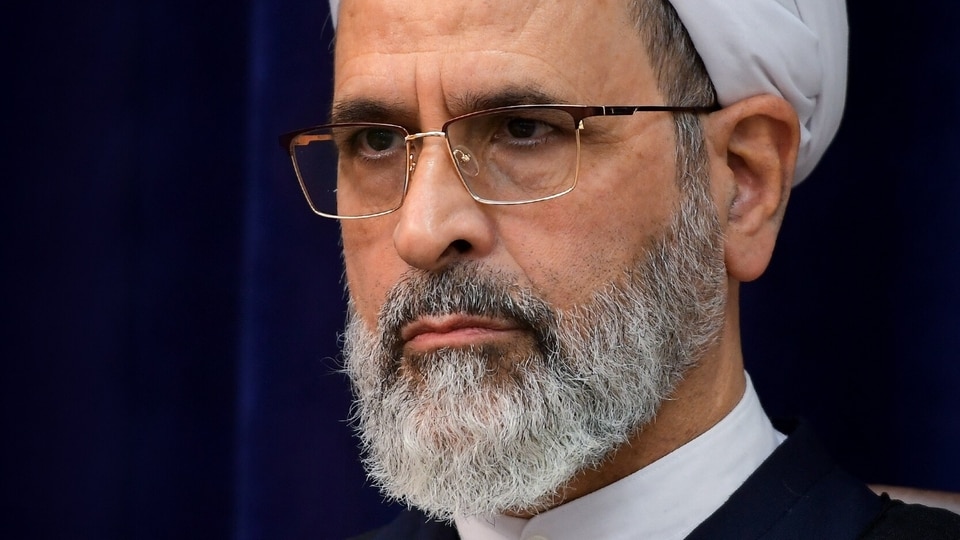
A cleric, the President, and the Chief justice step in to hold the state together until a successor is found.
The cleric's position has now gone to Ayatollah Alireza Arafi, a man who could not win an election in 2016.
Who is Ayatollah Arafi?
Arafi now sits in a provisional leadership council steering a country in crisis, following the killing of Ali Khamenei in a joint US-Israeli strike on Saturday. Alongside President Masoud Pezeshkian and Chief Justice Gholam-Hossein Mohseni-Eje'i, he forms the leadership council that will exercise the Supreme Leader's duties until the Assembly of Experts selects a permanent successor, news agency Reuters reported on Sunday.
Born in 1959 in Meybod, in Iran's Yazd Province, Arafi is a product of the Qom seminaries that form the backbone of the Islamic Republic's clerical class.
Fluent in Arabic and English, the author of more than two dozen books, he built his institutional career far from public view. He is the kind of figure who accumulates influence through appointments rather than popular politics, as per an analysis by the think tank Middle East Institute.
The election he did not win
The February 2016 Assembly of Experts election was, by Iranian standards, a rare upset. In Tehran, where 16 seats were contested, a reformist-leaning electoral list backed by the veteran pragmatist Akbar Hashemi Rafsanjani swept to victory, taking 15 of 16 available seats, news agencies reported at the time.
The wave cost sitting hardliners and it left Arafi, running as a conservative candidate then, without a seat. He had been approved to stand by the Guardian Council, passed the ideological tests, and competed. He simply did not receive enough votes from a Tehran electorate that, that year, chose to send a different message.
The 2016 setback did not derail him. He did not need to wait for the next scheduled election, in 2024. When a vacancy arose, Arafi entered through a midterm by-election in June 2021.
Khamenei, it appears, had additional work for him anyway.
Rose through ranks nonetheless
From 2009 to 2018, Arafi served as president of Al-Mustafa International University, the Qom-based institution dedicated to exporting Shia scholarship abroad. During his tenure, Arafi reportedly claimed the institute had played a role in the conversion of tens of millions to Shia Islam; he has also backed the use of AI to spread ideology.
He rose to head Iran's entire Islamic seminary system, overseeing the country's network of religious schools.
Khamenei then placed him on the Guardian Council, the body that vets laws and election candidates. According to researcher Alex Vatanka of the Middle East Institute, Khamenei's willingness to appoint Arafi to senior and strategically sensitive positions showed he had “a great deal of confidence in his bureaucratic abilities”.
Comeback from ballot setback
By the time Iranians voted in the March 2024 Assembly of Experts election — the body empowered to appoint and supervise the Supreme Leader — Arafi had accumulated enough institutional capital to run not merely as a candidate but as a frontrunner.
He emerged as the top vote-getter in Tehran, AP reported at the time.
Within this Assembly, he was elected its second deputy chairman, placing him in the core of Iran's succession machinery.
The MEI noted, however, that the 2024 election was a “heavily curated affair”: of 510 candidates who registered, the Guardian Council disqualified 366, leaving only 144 to compete for 88 seats. Critics called it a "meaningless and non-competitive" exercise.
Where he stands now
Arafi is described by observers as a regime insider but without historically strong ties to the Islamic Revolutionary Guard Corps. He is, however, known for advocating the modernisation of Iranian institutions, including the adaptation of artificial intelligence within religious governance.
Iran's 88-member Assembly of Experts must now select a permanent Supreme Leader "as soon as possible" under Iranian law.
The Council on Foreign Relations had identified Arafi as among the clerics most likely to be considered for a permanent role, alongside figures such as Ayatollah Hashem Hosseini Bushehri and Hojjat-ol-Eslam Mohsen Qomi.
For now, Iran is observing 40 days of national mourning and seeking to counter Israeli and American strikes over Tehran and other places.


