E-Paper



A coffee shop in Tehran captures relief after ceasefire, Iran shares clip | WATCH
While many in the Iranian capital remained wary that the ceasefire could unravel, others expressed relief and even a sense of pride.

 Prefer HTon Google


Scenes of everyday life are seemingly making a comeback in Tehran with the announcement of a ceasefire by the US and Iran. According to a clip shared by the Iranian embassy in India, people were seen gathering at a cafe in Tehran, even as uncertainty lingered over how long the calm would last.
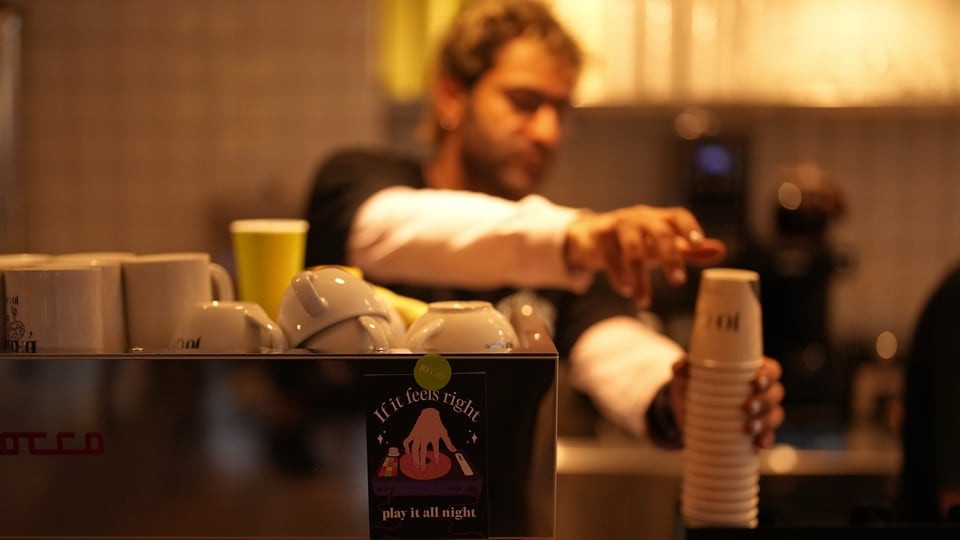
The clip captured customers lining up to collect their orders, while others sat chatting as music played in the background, a sign of normalcy in Iran.
The embassy captioned the clip: “A coffee shop in Tehran, the first day of the ceasefire.”
While many in the Iranian capital remained wary that the ceasefire could unravel, others expressed relief and even a sense of pride.
"Everyone is at ease now, we are more relaxed," Sakineh Mohammadi, a 50-year-old housewife said, adding that she was "proud" of her country, AFP reported.
Follow here for live updates on US-Iran war
What is happening in the US-Iran war?
The tentative calm comes as the fragile ceasefire between Iran and the United States entered its second day on Thursday, with Tehran cautioning that hostilities could resume.
The warning followed a major Israeli bombardment in Lebanon, raising fears that the wider regional truce could be at risk.
Both Washington and Tehran have declared victory after agreeing to a two-week ceasefire and initiating talks aimed at ending a conflict that has killed thousands across the Middle East and rattled the global economy.
Also Read | Israel envoy slams Pakistan’s credibility in Iran ceasefire, says US has ‘own reasons’ for engaging
Scars of war left on many Iranians
But for many Iranians, the scars of the war are already deeply felt - particularly in their daily expenses.
Amir, a 40-year-old from the suburbs of Tehran, described how the price of a regular grocery item surged in a matter of days. The brand of toast he usually buys jumped from 700,000 rials to 1,000,000 (around $0.75), AFP reported.
He added that a friend was forced to pay 180 million rials for a cancer treatment tablet that previously cost around three million before the US and Israeli attacks began on February 28.
"And they have to buy a tablet every 20 days," he explained.
Kaveh, an artist based in the capital, said the popular downtown cafe Dobar raised its prices by 25 percent across all items in a single day.
Even in northwestern Iran- typically well supplied with imports from neighbouring Turkey, shortages and inflation have hit hard.
Together, the fragile calm on the streets and the sharp rise in everyday costs reflect a country caught between relief and an uncertain future.