
 E-Paper



A Custody Battle Over Dogs Rocks an African Nation
Palace guard dogs are said to protect Malawi’s president from intruders and witchcraft. The outgoing leader decided to keep a few.


LILONGWE, Malawi—It’s no secret who let the presidential guard dogs out. The question roiling this southern African country is more existential: Are the animals personal pets, or furry policemen?

Former President Lazarus Chakwera insists the canines, trained to detect weapons, black-magic fetishes and other potential threats, are key members of his security detail.
After losing his re-election bid last year, he ordered all four guard dogs at the presidential palace in Lilongwe loaded into a police truck and delivered to his private residence, 6 miles away. (The four stationed at a second palace in Blantyre remained.)
His replacement argues the dogs are, in essence, civil servants and the president should have the staff that comes with the job.
A month after taking office, President Peter Mutharika dispatched 80 policemen to Chakwera’s house to retrieve the dogs. Chakwera, 70, refused to open the door, beginning a political and legal standoff.
The former president’s allies in Parliament rushed to his home to prevent the dogs’ removal. His lawyers rushed to court.
Mutharika, an 85-year-old lawyer who studied at Yale and taught at Washington University, delayed moving into the presidential palace. His full security team, he said, wasn’t in place.
The custody battle has aggravated more banal political schisms between the two parties that dominate this agricultural nation, and their loyal followers.
During the campaign, Chakwera promised to crack down on corruption while Mutharika vowed to improve the economy. Analysts attribute Chakwera’s loss to his failure to do either during five years in office, a period marked by rampant corruption and sagging growth.
“Chakwera never really came to grips with the country’s economic challenges, failed to tame inflation, and did too little to combat corruption,” said Louw Nel, a political analyst focused on African markets at research firm Oxford Economics. “His election defeat in September was not unexpected.”
Still, Chakwera’s followers were dismayed by the loss and alarmed at the prospect of him being stripped of the guard dogs. One, Pastor James Sekeya, posted a series of pro-Chakwera, pro-dog videos, including one viewed more than 12,600 times—a sizable audience in a country where just 8% of the population uses social media.
“All the people across the nation of Malawi are talking about these four German shepherd dogs,” Sekeya said in one post as generic images of the dogs scrolled behind him.
Chakwera was an Assemblies of God theologian before entering politics, and Sekeya, who describes himself as a prophet, warned anyone going after the former president not to expect help from above. “Don’t be sending me prayer requests,” he said.
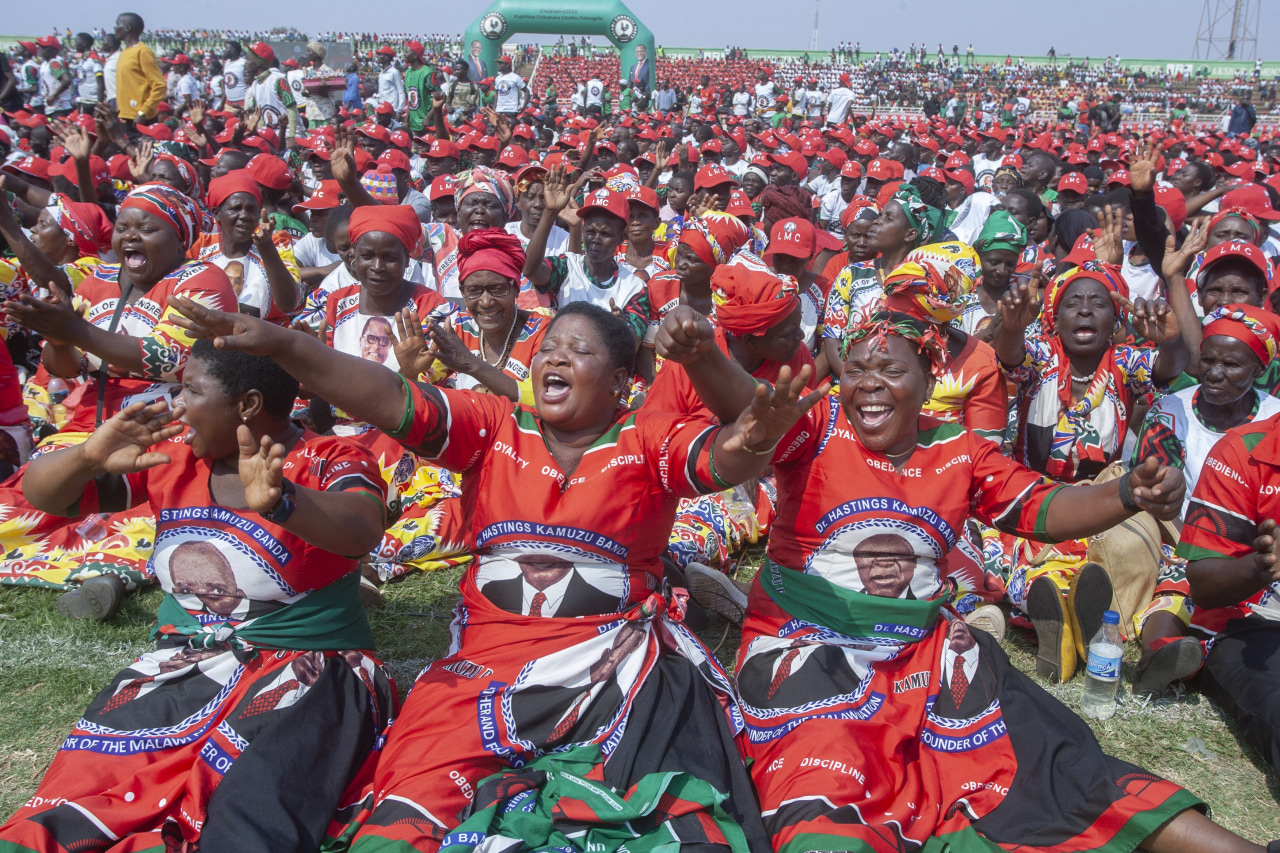
The dogs, valued at $2,300, were spirited out of the Lilongwe palace between Sept. 19 and Oct. 4, according to police records. Since then, they have guarded the main entrance to Chakwera’s home during the day. At night, they patrol the expansive property to ensure intruders don’t breach the perimeter, according to neighbors.
Supporters say the dogs protect their leader from a variety of threats, including witchcraft, which many Malawians see as a genuine, and dangerous, element of daily life.
“The former president is entitled to state security,” said Chakwera’s lawyer, George Jivason Kadzipatike.
Mutharika’s supporters counter that Chakwera, by removing the dogs days after the election, intentionally compromised his successor’s safety.
“The dogs were removed in order to weaken the security of the new president,” Comrade Ntanyiwa, who runs Radio Limpopo FM, said in one broadcast last month. “We thank God that he is still alive and well.” Mutharika finally moved into the presidential palace on Dec. 20, more than two months after his inauguration.
After Mutharika failed to get the dogs back in November, the Lilongwe Magistrate Court temporarily barred police from further attempts to seize them. The decision turned on a technicality: Police demanded the surrender of four German shepherds; the disputed dogs are, in fact, one Dutch shepherd and three Belgian Malinois.
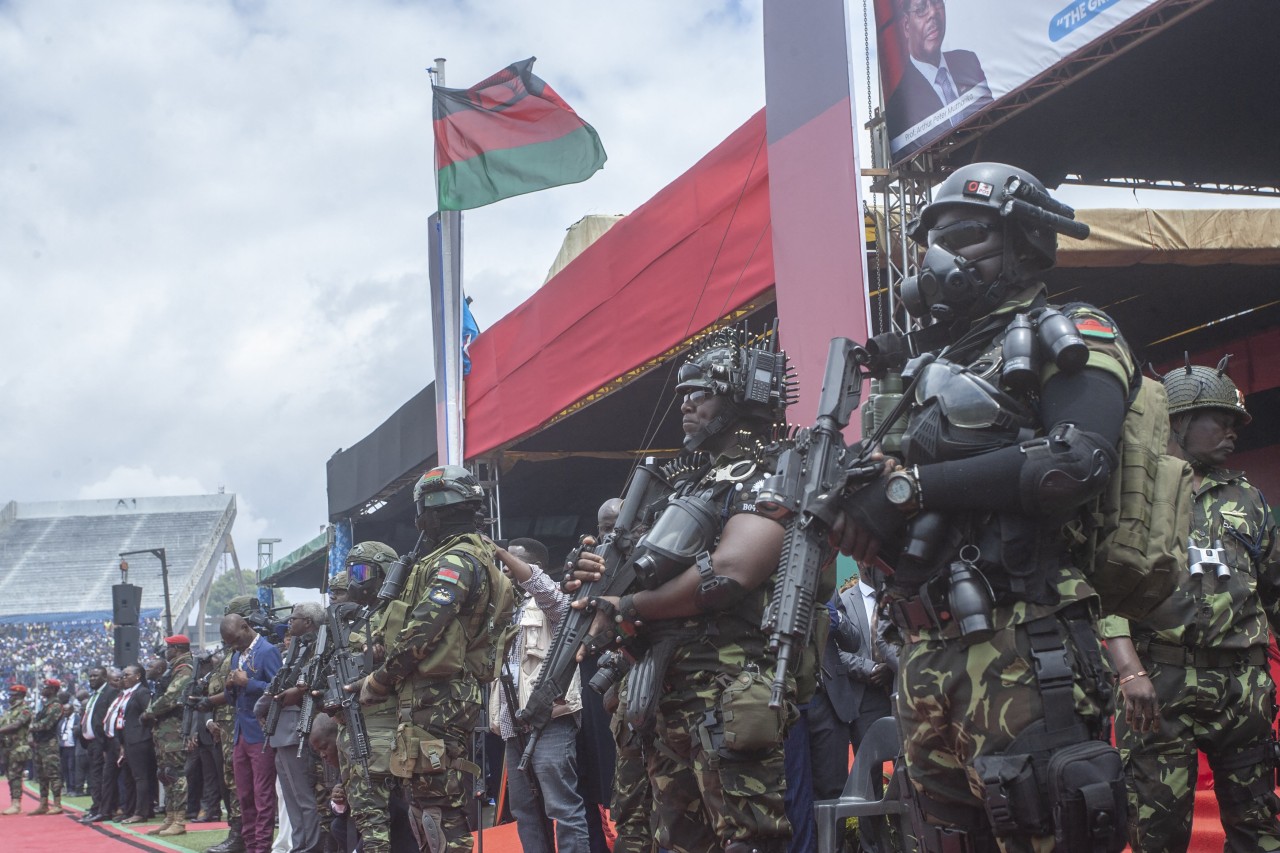
The day after the ruling, police secured a court order specifying the correct breeds. The court revoked the search warrant two days later to allow for a full hearing and ruling on the entire case. It has yet to make a final decision.
The breed mix-up has also thrown a wrench in the prosecution’s case against Godfrey Jalale, a 64-year-old retired military officer who had been Chakwera’s deputy chief of staff. He was arrested in November and accused of stealing four German shepherds.
Police and charging documents say Jalale admitted using a government vehicle, fitted with kennels and dog-food storage compartments, to transport the canines to the former president’s home.
Jalale pleaded not guilty. His attorney declined to discuss the case.
In recent days, police—on foot and in vehicles, some equipped with night-vision goggles—have been near Chakwera’s house trying to catch an incriminating glimpse of the canines, residents said.
A new search warrant requires a sighting before police can enter and search the premises, “take possession of the said articles (dogs) and produce the same forthwith before this court.” Their efforts, so far, have been unsuccessful.
“It appears these dogs have also mastered the art of hiding and staying out of sight,” said Bournemore Kapempwe, a resident of Lilongwe.
Write to Nicholas Bariyo at nicholas.bariyo@wsj.com


