
 E-Paper



Afghanistan sees sharp rise in deaths as Taliban struggle to take on ISIS, NRF
Afghanistan recorded 366 terrorism-linked fatalities in August, registering a sharp increase of 50 per cent from 244 in July. There were 367 deaths in June and 391 in May.

 Prefer HTon Google


With both the principal challengers to the Taliban regime – the National Resistance Front (NRF) and Islamic State-Khorasan Province (Da’esh) – intensifying operations, the security situation deteriorated through August in Afghanistan. Despite the Taliban's claims that Da’esh does not physically exist in Afghanistan and does not pose a threat, the group had claimed responsibility for deadly attacks on mosques, schools, and cars.
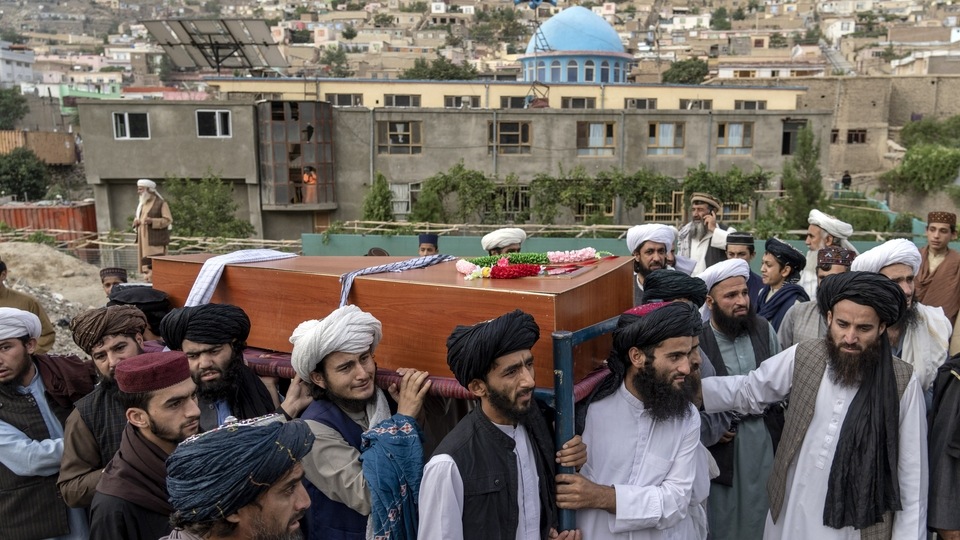
Since the Taliban took control of Afghanistan last August, the country has been mired in violence. The adverse situation is likely to persist as there have been no signs of the Taliban consolidating its dominance in the near future.
According to the data, Afghanistan recorded 366 terrorism-linked fatalities in August, registering a sharp increase of 50 per cent from 244 in July. There were 367 deaths in June and 391 in May. Thus, after registering a drop for two consecutive months, overall fatalities increased again in August. This cyclical trend has continued since March 2020, although there has been a significant diminution since the Taliban takeover in August 2021.
There were 77 civilian fatalities in August as against 68 in July, up 13.23 per cent. On August 17, at least 21 persons, including a prominent cleric Mullah Amir Mohammad Kabuli, were killed and another 33 were injured in a suicide attack at Abu Bakar Mosque located in the Kher Khanna neighbourhood of police district-17, Kabul city. The attack was not claimed by any group, but bore strong Da’esh signatures. The spike in fatalities is largely accounted for the losses suffered by the Taliban on the ground.
The internal rift within the Taliban continues to hurt the regime in its struggle for consolidation and its fight against domestic adversaries. On August 27, three Taliban members were killed due to internal conflict in the Tala Wa Barfak District, Baghlan Province. On August 21, one person was killed and one injured as a result of internal strife within the Taliban in Panjshir Province. On August 17, the Afghan ministry of defence claimed to have killed Hazara fugitive rebel commander Maulvi Mehdi Mujahid, who had split from the Taliban and launched a Hazara resistance in Balkhab district, Sar-e Pul Province.
National Resistance Front expanded operations
On August 26, urging Afghans to unite against the Taliban, National Resistance Front commander Khalid Amiri said protesting only in virtual space would not end the Taliban’s rule. He added that the Taliban were a terrorist organisation and criticism and condemnation were not enough to stop its oppression. He supported sanctions against the Taliban, for regional and international security.
The head of foreign relations for the National Resistance Front of Afghanistan, Ali Maisam Nazary, asserted that the front’s operations had expanded over the past year and the group was currently fighting against the Taliban in six provinces of the country, with 4,000 well-equipped and trained forces. These provinces were Panjshir, Kapisa, Baghlan, Badakhshan, Takhar and Parwan.
Da’esh killed 45 Taliban fighters in 12 attacks
In August, Da’esh claimed 12 attacks killing 45 and injuring 120 Taliban fighters/Shia minorities in Kabul, Kunar and Nangarhar provinces. Between January 1 and August 30, Da’esh has claimed 130 attacks in Afghanistan.
In the propaganda domain, Da’esh released a number of publications, continuing with its rhetoric against the Taliban, Pakistan, China, and India, as well as other neighbouring and regional countries cooperating with the Taliban.
On August 7, Da’esh published the 2nd Persian edition of a book titled “Characteristics of Khwariji Taliban” highlighting the differences between the Islamic State and the Taliban. The book underlined that the Taliban, by introducing ‘un-Islamic and Shia practices’ in Afghanistan, were the real Khawarij (renegades) and, since the Taliban were protecting countries like Pakistan, Iran and India, it was necessary to counter the regime in Afghanistan. Da’esh also claimed to be on the “right side”, as it had launched attacks against Shias and “infidel” countries like Tajikistan and Uzbekistan.
US refused to release foreign reserves
Citing the lack of confidence in safeguards and monitoring to manage assets responsibly, the US Special Representative for Afghanistan Thomas West disclosed on August 15 that the Joe Biden administration had decided not to release any of the USD 7 billion of Afghan foreign reserves. It has also decided to suspend talks with the Taliban over the funds after the killing of al Qaeda leader Zawahiri in Kabul.
On August 28, Afghan Taliban's minister of defence Mullah Mohammad Yaqoob said American drones were entering Afghanistan's airspace from Pakistan.
Meanwhile, UNSC members failed to reach a consensus over extending the exemption to the travel ban on proscribed Taliban leaders. The failure of the Taliban to form an inclusive government, restore women’s rights and allow girls’ education, were cited by some members as reasons for not extending the exemption. The Taliban reacted strongly and warned the west against violating the ‘Doha Agreement’.
Crackdown on women continues
The EU said it was “particularly concerned” about worsening conditions for women and girls in Afghanistan after the country's ruling Taliban violently broke up a women's rally. On August 13, a number of women held a demonstration in the Charai Sedarat area of Kabul, where they called for justice and for the upholding of women’s rights. The protestors chanted the slogan “bread, work and freedom” and urged the Taliban government to observe the rights of women and girls. Taliban fighters fired in the air and beat up protesters taking part in the protests. Some women were chased into nearby shops and hit with rifle butts. The Taliban fighters also arrested foreign journalists and a TOLO news reporter, Toba Walizada, who were covering the protests.


