E-Paper



After Ali Khamenei, Larijani killings, is IRGC calling the shots in Iran? What we know so far
Iran foreign minister Abbas Araghchi suggested earlier this month that some units were acting independently.

 Prefer HTon Google


Over the past three weeks, a wave of targeted Israeli strikes has decimated Iran’s top leadership, raising a critical question: who is now running Tehran as the war escalates?
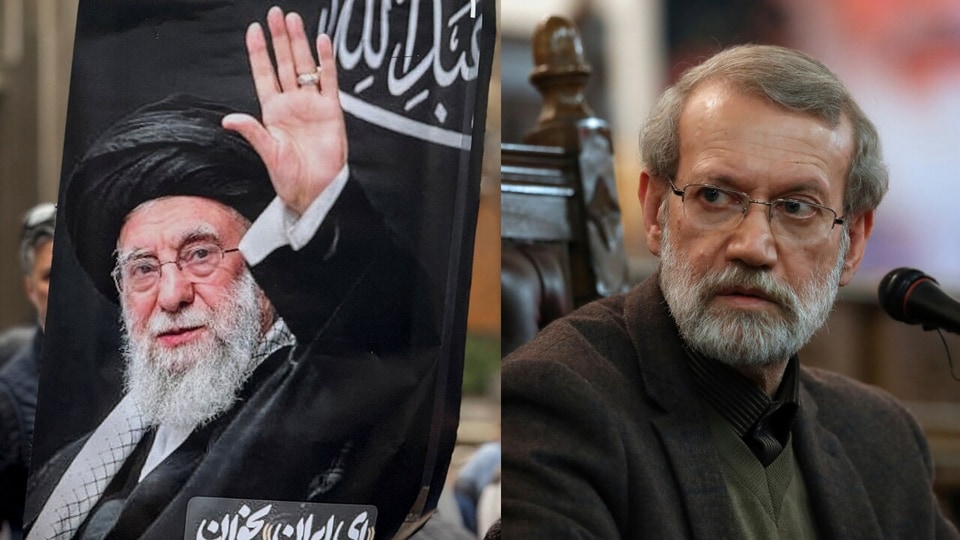
What began with the killing of Supreme Leader Ayatollah Ali Khamenei has since expanded to include the elimination of senior security figure Ali Larijani and several other high-ranking officials, leaving visible gaps at the top of the system. Here’s what is known so far and what remains unclear-
Supreme leader succession
In Iran, the Supreme Leader is regarded as the ultimate authority since the Iranian Revolution established the Islamic Republic.
Also read: 1 more Indian killed amid US-Iran war, Riyadh death takes toll to 6
Following Ali Khamenei’s killing, his 56-year-old son Mojtaba Khamenei, was elevated to the position. A leader, who has long been seen as a potential successor but has never held any elected office, is believed to have strong ties with the powerful Islamic Revolutionary Guard Corps (IRGC).
Formally, he now commands Iran’s armed forces and holds authority over key decisions, including those related to the nuclear programme.
Track live updates of Iran-US war here
However, his absence from public view since the strike and reports that he may have been wounded have raised doubts about how firmly he is in control.
Israeli Prime Minister Benjamin Netanyahu openly questioned the state of Iran’s leadership. “I’m not sure who’s running Iran right now,” Netanyahu said during a news conference Thursday night, AP reported.
“Mojtaba, the replacement ayatollah, has not shown his face. Have you seen him? We haven’t, and we can’t vouch for what exactly is happening there.”
He added: “Iran’s command and control structure is in utter chaos.”
Earlier, US President Donald Trump has also said that “I don’t know if he’s even alive. So far, nobody’s been able to show him," he told NBC News.
Also read: Iran Guard spokesman Ali Mohammad Naini killed hours after sounding big warning to US, Israel
The uncertainty is compounded by the reported killing of Mojtaba Khamenei’s wife, Zahra Haddad Adel, in the same strike that killed his father.
IRGC emerges as key power centre
Many analysts believe real authority may now lie with the Islamic Revolutionary Guard Corps (IRGC), long one of the most powerful institutions in Iran.
Ali Vaez of the International Crisis Group said the balance of power has shifted decisively. “The Revolutionary Guard is the state now,” he said, AP reported.
Before the conflict, Iran’s civilian leadership operated under the supreme leader’s authority, while the Guard functioned as the second-most powerful force. With the elder Khamenei gone and his successor lacking comparable authority, Vaez argues that “it is really the Revolutionary Guards who are running the country.”
Formed in the aftermath of the 1979 revolution, the Guard operates alongside Iran’s conventional military and has deep influence across politics, security, and the economy.
There are also indications that Iran’s military may not be operating under a single, unified command.
Foreign minister Abbas Araghchi suggested earlier this month that some units were acting independently.
“Our … military units are now in fact independent and somehow isolated and they are acting based on instructions — you know, general instructions — given to them in advance,” Araghchi had said on Al Jazeera on March 1.
This points to a system where pre-set directives and decentralised decision-making could be sustaining operations despite leadership losses.
‘Multiple layers of leadership’ may prevent ‘regime collapse’
Despite the high-profile killings, analysts stress that Iran’s system was built to withstand such shocks.
Vaez noted that Tehran had long anticipated the possibility of strikes targeting its leadership and had prepared contingency plans.
“I think the mistake in the U.S. and in Israel is that they ended up believing their own rhetoric that Iran is akin to a terrorist organization, that decapitating the regime or removing one or two layers of political elite would result in paralysis and collapse,” he said.
“Whereas this is a state, … it has multiple layers of leadership.”
Even if senior commanders are eliminated, he said, successors further down the chain can step in. “The expectation that this regime will … implode by removing a few dozen senior leaders, I think is nothing but an illusion.”
Meanwhile, Burcu Ozcelik of the Royal United Services Institute said the loss of multiple senior figures will have far-reaching consequences. The full impact, she added, may unfold slowly.
“We need to be prepared for change that may take years, not weeks or months," the news agency quted her as saying.
At the same time, she warned against focusing solely on the idea of regime collapse: “The fixation on the terminology of ‘regime collapse’ is obscuring the fact that the regime is already changing.”
(With AP inputs)