
 E-Paper



'Alarmed': UN chief on Taliban's 'head-to-toe' cover ruling for women
According to the decree, issued by Taliban leader Hibatullah Akhundzada, women should fully cover themselves in public, ideally with the traditional burqa.

 Prefer HTon Google


In one of the harshest restrictions on women since the Taliban overthrew the government in Afghanistan last year, the hardline leadership on Saturday sent shockwaves with an order making it mandatory to wear a head-to-cover, also known as ‘chadori’. The order, which is set to bring the South Asian country back to where it was over two decades ago, sparked major concerns among the international community, which already fears about the safety of women under the hardliners' rule.
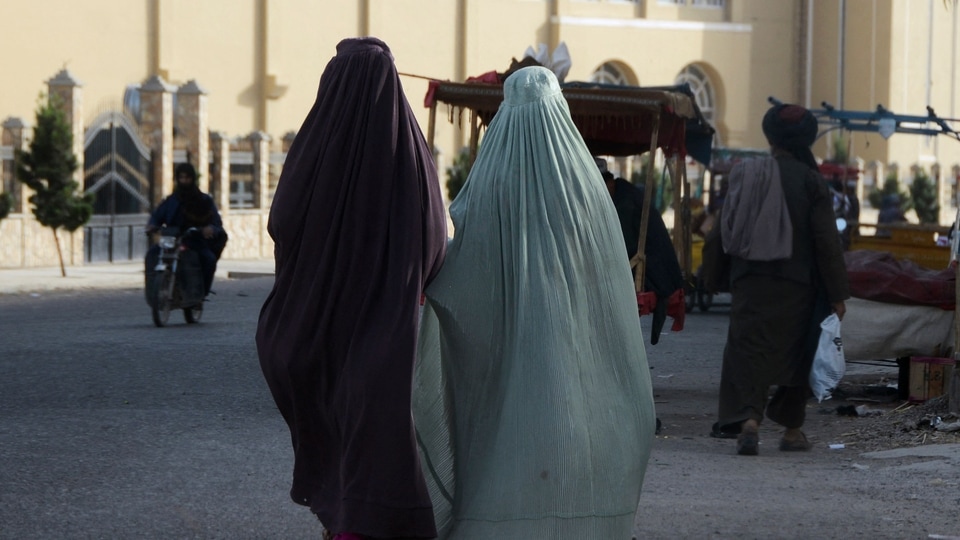
United Nations's Secretary-General Antonio Guterres also raised alarms over the development and urged the group to "keep their promises to Afghan women and girls, and their obligations under international human rights law."
"I'm alarmed by today's announcement by the Taliban that women must cover their faces in public and leave home only in cases of necessity. I once again urge the Taliban to keep their promises to Afghan women & girls, and their obligations under international human rights law," his tweet reads.
According to the decree, issued by Taliban leader Hibatullah Akhundzada, women should fully cover themselves in public, ideally with the traditional burqa.
"Those women who are not too old or young must cover their face, except the eyes, as per sharia directives, in order to avoid provocation when meeting men who are not mahram (adult close male relatives)," read the decree.
The order also asked the women to not go outside if it was not for important work. The new order also outlined punishments for their male guardians in case women do not comply with the new dress code.
Taliban took over Afghanistan in a military offensive last year, the exit of foreign troops. Following the takeover, the group promised a moderate rule than their previous stint in power between 1996 and 2001, which was marked by human rights abuses especially among women.
Though many women in the rural areas already wear burqa or niqab; in the main cities including the capital Kabul, women were reclaiming their freedom in the 20 years between the Taliban's two stints in power. They were allowed to go to school and women were able to seek employment in all sectors.
However, despite the promises, the Taliban government in Afghanistan has been realising the fears of the international community by reintroducing the regressive policies.
In March, the group ordered secondary schools for girls to shut, just hours after they reopened for the first time since their seizure of power. The officials say girls' education must be according to "Islamic principles," according to a news agency AFP's report.
Women are also ordered to visit parks in the capital on separate days from men.
In September last year, the United Nations said women's rights in Afghanistan will be a litmus test for the Taliban government. The UN also warned that the group's engagement with the world bodies will depend on the safety of women's rights in Afghanistan.
(With agency inputs)


