
 E-Paper



Amid US-China tension, Joe Biden, Xi Jinping talk over 2 hours | Top points
The call began at 8:33 am EDT and ended at 10:50 am EDT, according to the White House.

 Prefer HTon Google


US President Joe Biden and his Chinese counterpart Xi Jinping on Thursday spoke for more than two hours as they chart the future of their complicated relationship at a time of simmering economic and geopolitical tensions. This was their fifth conversation.
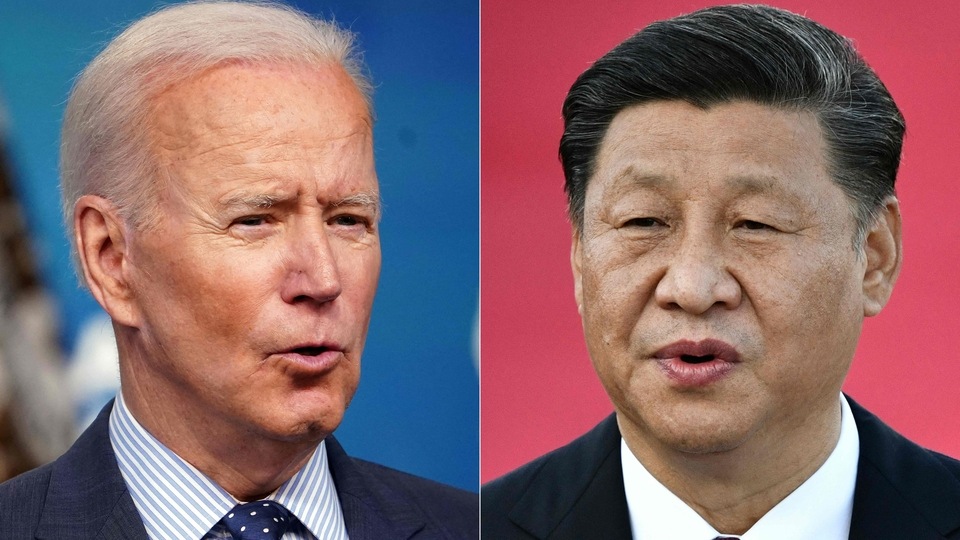
The latest tension between the two world powers has been House Speaker Nancy Pelosi's potential visit to Taiwan, the island that governs itself democratically and receives informal defensive support from the US, but which China considers part of its territory. Beijing has said it would view such a trip as a provocation, a threat US officials are taking with heightened seriousness in light of Russia's incursion into Ukraine.
Here are top updates on Biden-Xi talks
>The call began at 8:33 am EDT and ended at 10:50 am EDT, according to the White House.
>It took place as Biden aims to find new ways to work with the rising global power as well as strategies to contain China's influence around the world.
>"The two heads of state had in-depth communication and exchanges on China-US relations and issues of mutual concern," China Central Television reported on its website.
>Pelosi would be the highest-ranking US elected official to travel to Taiwan since Republican Newt Gingrich visited the island in 1997 when he was House speaker. Biden last week told reporters that US military officials believed it was “not a good idea” for the speaker to visit the island at the moment.
>Biden and Xi last spoke in March, shortly after the Russian invasion of Ukraine.
>The conversation comes as Biden has moved to shift US reliance off Chinese manufacturing, including Senate passage on Wednesday of legislation to encourage semiconductor companies to build more high-tech plants in the US.
>US officials have also criticised China's “zero-Covid” policy of mass testing and lockdowns in an effort to contain the spread of Covid-19 in its territory, labelling it misguided and fretting that it will further slow global economic growth.
>Other points of strain include China's treatment of Uyghur Muslims, which the US has declared a genocide, its militarisation in the South China Sea, and a global campaign of economic and political espionage.
(With inputs from AFP)


