
 E-Paper



Austria says won't take Afghan refugees; Chancellor Kurz explains why
Sebastian Kurz pointed to 'problems with integration' and the number of Afghan refugees already living in Austria.


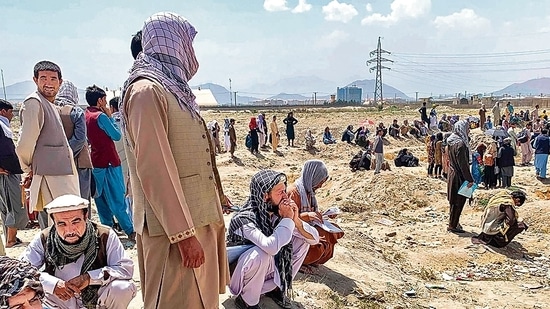
At a time when activists from across the globe have urged world governments to take in Afghan refugees leaving their country fearing persecution by the Taliban regime, Austrian Chancellor Sebastian Kurz said on Sunday the European nation “will not take any refugee from Afghanistan.” In a series of tweets, Kurz ascribed this decision to what he called “problems with integration” and the number of Afghan refugees already living in Austria.
Also Read | US may enlist commercial airlines to help evacuate Afghan refugees
“Austria has already made a disproportionately high contribution by taking in 44,000 Afghans. The Afghan community in Austria is one of the largest such communities in the world per capita, after those in Iran, Pakistan and Sweden. There are still major issues with their integration and thus we are against additional inclusion,” a rough translation of Kurz’s tweet, posted in German, read.
On the return to power of the Taliban regime for the first time since 2001, the young Chancellor described as “unacceptable” the “complete undoing of progress made in Afghanistan in the last 20 years on human rights and women’s rights.”
While he admitted that events taking place in Afghanistan are “dramatic,” Kurz warned against “repeating the mistakes of 2015.” He tweeted, “The people from Afghanistan should be helped by our neighbouring states. The European Union must secure the external borders and fight against illegal migration and human traffickers.”
The Austrian Chancellor mentioned 2015 in reference to the arrival in Europe that year of refugees from various countries.
Also Read | UK to resettle 20,000 Afghan refugees over 'long term', prioritise minorities
Austria’s ruling People’s Party, headed by Kurz, has adopted a hard line towards immigration amid the ongoing crisis in Afghanistan, whose capital Kabul fell to the Taliban on August 15. The regime first seized power in the war-torn country in 1996 but was driven away by US-led troops in 2001. The group’s recent surge towards the Afghan capital came amid the withdrawal of American troops as directed by US president Joe Biden in April.
(With agency inputs)


