
 E-Paper



Britain welcomes India, Brazil, Japan and Germany to UNSC: UK foreign minister
Foreign secretary James Cleverly used the speech, delivered at the foreign office, to explain the United Kingdom’s growing focus on the Indo-Pacific


Britain will welcome India, Brazil, Japan and Germany as permanent members of a reformed United Nations Security Council (UNSC), UK foreign secretary James Cleverly said on Monday in a speech outlining the future of his country’s global diplomacy.
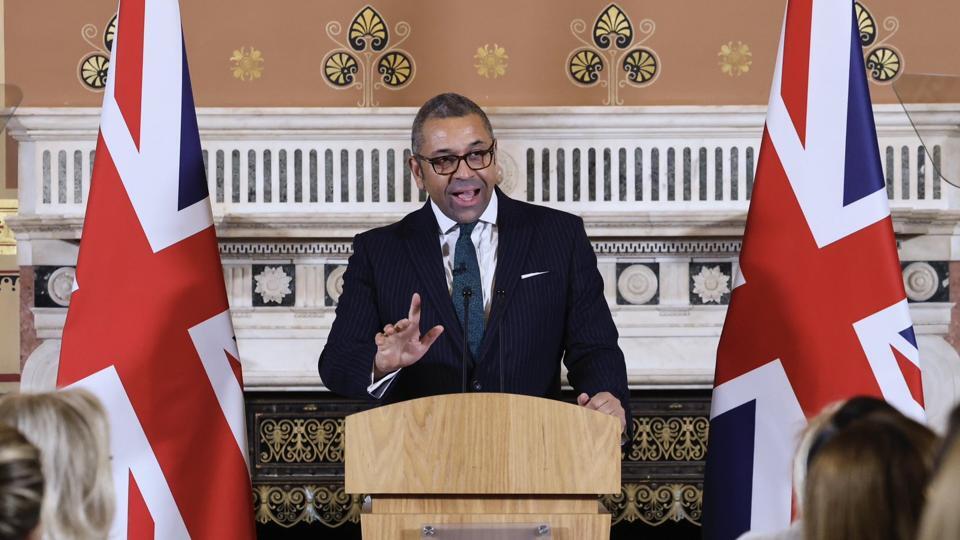
Cleverly used the speech, delivered at the foreign office, to explain the United Kingdom’s growing focus on the Indo-Pacific and to highlight the need for Britain to forge stronger relationships with “future powers” in Asia, Africa and Latin America.
Recalling how the UK joined hands with the United States, France and other nations to create the United Nations (UN) after World War 2, he said the British foreign policy strives to renew its founding principles and institutions because the rules-based global order created at that time allowed more people to live in peace and prosperity than ever before.
“Now we don’t believe everything is perfect; and we’re not standing in the way of reform,” Cleverly said. “In fact, the UK wants to welcome Brazil, India, Japan and Germany as permanent members of the UN Security Council, alongside permanent African representation.”
Outlining long-term priorities for Britain’s international diplomacy, Cleverly said some “relationships will be essential to our shared successful futures”. In this context, he cited the examples of Brazil, Indonesia and India with their young populations.
“The main focus of the future powers that I’m discussing is on securing their own economic development and their own resilience against threats, including from climate change, from disease and from terrorism,” he said.
“Many of these countries have enjoyed rapid success and, above all, they want that success to continue. Their populations are typically much younger than ours: the median age here in the UK is over 40, while in Brazil it’s 33, in Indonesia it’s 30, and in India it’s only 28.”
If the UK is not good friends with such emerging countries, “you can bet that others will try to fill that void and seize any opportunity that we might be mistaken enough to give them”, he said.
Cleverly also spoke about deeper trade cooperation in the context of Britain’s long-term commitment to the Indo-Pacific. This includes joining the Trans-Pacific free trade agreement “as soon as possible”, and deepening cooperation with India, the new president of the G20, and finalising “our trade agreement with them”.
“Now we must have strategic endurance, a willingness to commit to relationships for decades to come,” he said, adding that Britain must stay the course even if there are “no swift dividends, no windfall gains, perhaps even no visible impressions at all for a short while”.
Also Read:Russia cites India’s ‘reputation’, ‘authority’ to back permanent UNSC membership
Cleverly also recalled Prime Minister Narendra Modi’s remarks that today’s era is “not of war”, while criticising Russian President Vladimir Putin’s invasion of Ukraine.
He said that “what really chills the blood” is Putin’s readiness to destroy the laws that protect every nation, and his goal is to turn “back the clock to the era when might was right and big countries could treat their neighbours as prey”.
“And by attacking one of the world’s biggest producers of food and fertiliser, he is driving up global prices and inflicting still greater hardship on some of the poorest people around the world,” Cleverly said. “Hence it was Prime Minister Modi who told Putin to his face, and I quote: ‘I know that today’s era is not the era of war’.”
Cleverly said the “only route to peace in Europe is for Putin to end his war and withdraw his troops”.


