
 E-Paper



China hits out at US, Japan ahead of Sino-US talks in Alaska
Beijing makes stinging remarks a day before China’s top diplomats are set to meet top US officials in Alaska in their first face-to-face talks since President Joe Biden came to power in January


China on Wednesday hit back at the US and Japan for issuing an accusatory joint statement against it, saying the two countries were colluding to interfere in its internal affairs.
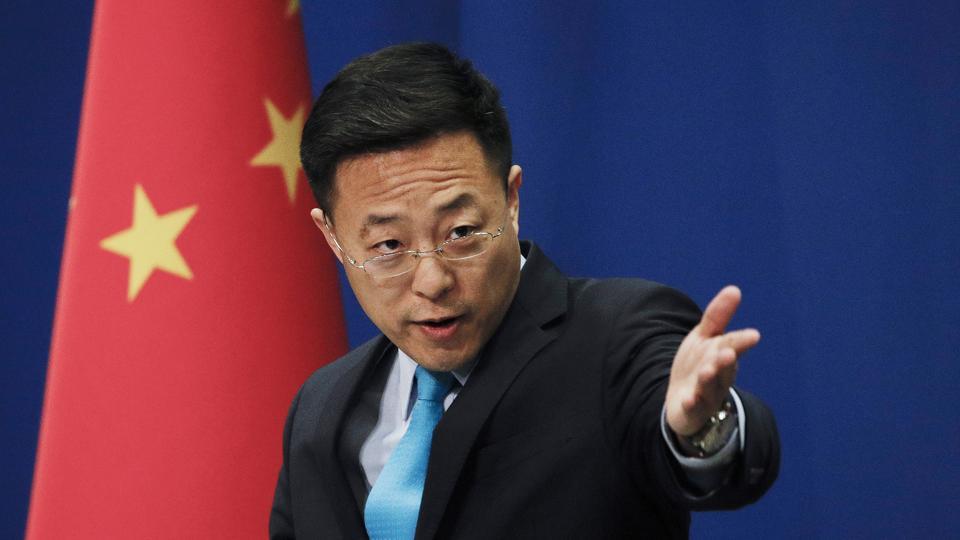
The Chinese foreign ministry’s reaction came after the two countries talked of Beijing’s “destabilising behaviour” in the region.
The Chinese response to the joint statement comes just a day before China’s top diplomats are set to meet top US officials in Alaska in their first face-to-face talks since President Joe Biden came to power in January.
“The US-Japan joint statement maliciously attacks China’s foreign policy… and is an attempt to harm China’s interests,” Chinese foreign ministry spokesperson Zhao Lijian said on Wednesday.
“This is just another clear example of the US and Japan working in collusion to interfere in China’s internal affairs,” Zhao said. “Japan’s joint statement with the US targeting China showed it was willing to depend on the pleasure of the US for its selfish purposes, and it downgraded Japan as the US’s strategic appendage.”
Temperatures are clearly rising ahead of the meet in Alaska that will see US secretary of state Antony Blinken and White House national security adviser Jake Sullivan meet senior Chinese official Yang Jiechi and state councillor and foreign minister Wang Yi, two of China’s top diplomats.
China has said it is ready for a reset of ties with Washington following four stormy years under the administration of former president Donald Trump.
But Beijing has also warned Washington to stay out of issues it perceives to be domestic concerns, from the changes to Hong Kong election laws to the treatment of Uighurs in Xinjiang.
The Biden administration has generally backed the tougher approach on China initiated by Trump by, for example, frequently deploying aircraft carriers and frontline warships in the dispute-ridden South China Sea.
Zhao Minghao, a research fellow at Charhar Institute think tank, wrote in China Daily newspaper, “Given the domestic pressure on both sides, neither China nor the US is willing to compromise on significant, sensitive issues, which is understandable. But both sides need to rediscover the art of diplomacy,”


