China has removed one of its key military commanders – who oversaw forces during the Doklam standoff in 2017 and the Galwan clashes in 2020 amid border tensions with India – from its top political advisory body.
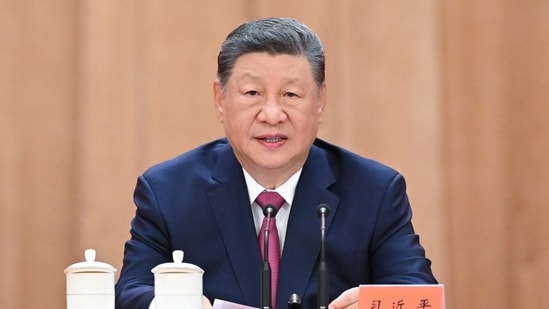
Zongqi, the former commander of the Western Theatre Command, has been stripped of his membership from the Chinese People's Political Consultative Conference (CPPCC) and removed from two other positions, news agency PTI reported.
The former commander had combat experience in the Sino-Vietnamese war, and had handled the India-China border conflicts. Apart from Zongqi, China also removed two senior military officers from its supreme military command body, the state Central Military Commission, state-run Xinhua reported. This was done after investigations into suspected serious violations of discipline and law.
Who is Zhao Zongqi?
Zongqi served as the first commander of China's Western Theater Command, and was handed the military flag by President Xi Jinping in 2016. Prior to that, he was the commander of the Jinan Military Region, and was transferred from there to the Western Command.
{{/usCountry}}Zongqi served as the first commander of China's Western Theater Command, and was handed the military flag by President Xi Jinping in 2016. Prior to that, he was the commander of the Jinan Military Region, and was transferred from there to the Western Command.
{{/usCountry}}Having risen through the ranks of war to become a senior PLA general, Zongqi was once the youngest commander among the seven military regions of the People's Liberation Army. He was born in Bin County, Heilongjiang Province in 1955, according to public reports cited by The Paper.
Military career
Zongqi joined the Chinese military in 1970 at the age of 16, having demonstrated “remarkable resourcefulness and courage at a young age”, the report stated. He was later made a reconnaissance squad leader and acting platoon leader, and was ordered to follow his unit to break through the western front of Vietnam when the Sino-Vietnamese War broke out in 1979. He was part of the battles to capture Lao Cai, Cam Duong, and Sa Pa as the head of the reconnaissance section.
Also Read | India, China agree to promptly avert any missteps on border
From 1986 to 1988, Zongqi was recommended to study Arabic at the PLA Foreign Languages Institute, and served as military attaché at the Chinese Embassy in Tanzani after his graduation. In 1989, Zongqi was transferred back to China and served as the chief of staff of a division in a certain unit, The Paper reported. The General Staff ordered the establishment of a modern independent “mountain brigade” in 1990, and Zongqi was made its first brigade commander.
He was promoted to deputy chief of staff of the Tibet Military Region in 1998, and later became became chief of staff. He served as commander of the 14th and 13th Group Armies, and was elected as a member of the 18th Central Committee of the Communist Party of China and promoted to Commander of the Jinan Military Region.