
 E-Paper



Is China suppressing flood information from Tibet side? Nepal says toll crossed 500, Beijing reports 5 deaths
China has imposed strict controls on information flows from one of its most sensitive regions, hampering the public’s understanding of events.

 Prefer HTon Google


The devastating floods have hit both Nepal and Tibet, but the flow of information coming from Kathmandu is painting a far clearer picture of the ordeal in the Himalayan nation than in China.
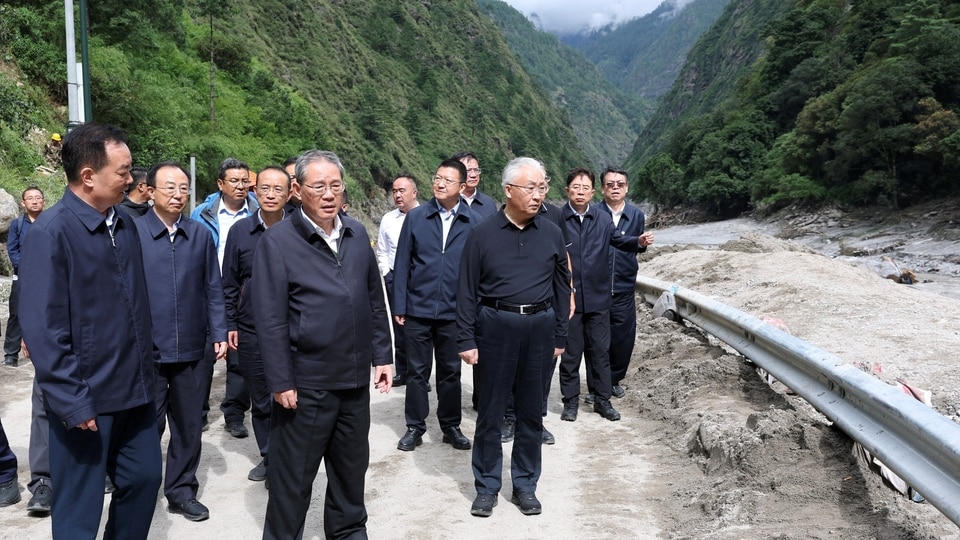
China has imposed strict controls on information flows from one of the most sensitive regions, hampering the public’s understanding of events.
The floods have devastated villages along Nepal's border and in Tibet. The official toll in Nepal on Friday rose to 579, while in China it was just five. This despite the fact that the villages around the Gyirong border crossing to Tibet side are home to several thousand people, the Guardian reported.
The contrast in information from Nepal and China
Deep Dive

Nepalese journalists rushed to get as close to the disaster zone as possible to interview survivors and rescue workers. A minute-by-minute picture emerged from there, through detailed accounts by locals of what happened when the floods tore through the homes. However, the exact cause of the floods is still being studied by scientists.
But according to a report by The Guardian, although state media in China carried several broadcasts about the floods and dispatched their own journalists to the area, the reports focused on rescue efforts rather than the scale of the devastation. The report noted that a journalist conducting one of the broadcasts from a relief centre in Tibet did not speak to any of the people seated behind him.
Why did this happen?
Tibet is one of the most sensitive and tightly controlled regions. It has seen several protests, including self-immolations, by Tibetans calling for more autonomy and religious freedom, which have faced crackdowns.
No international journalists are allowed in Tibet apart from those on what many call tightly choreographed government tours. Many Tibetans are not allowed to hold passports and can be punished for speaking to journalists. Human rights groups have for years criticised Beijing’s policies on Tibetan language and culture, which activists say are under attack.
Thus, the information coming out of the region cannot be easily verified, making coverage of the devastating floods next to impossible.
“Everything about Tibet is seen through the national security prism. And therefore nobody is going to say anything or report anything that has not been cleared from the very top,” Steve Tsang, the director of the China Institute at SOAS University of London, told the Guardian.
Journalists on the ground cannot report a higher toll until an official statement confirms it, even if the reporter witnesses more dead bodies than reported.
What is China doing?
Chinese emergency services, including the People’s Liberation Army, are vastly better resourced than their Nepalese counterparts. Navigating the difficult, mountainous terrain where conditions are still unsafe requires specialised expertise. China has dispatched hundreds of emergency service personnel, but there is scant detail on what they are doing. State media reported on Friday that Chinese President Xi Jinping chaired a meeting to direct rescue work. Xi reportedly also called on the authorities to “make every effort to search for missing people from China and abroad”.
The Chinese leader also dispatched Premier Li Qiang to visit the affected area. According to the state-run Xinhua news agency, Li “emphasised that General Secretary Xi Jinping is deeply concerned about the people in the disaster-stricken areas”.


