E-Paper



Death toll rises, 20 buildings collapse as 7.4-magnitude earthquake strikes Colombia | Top points
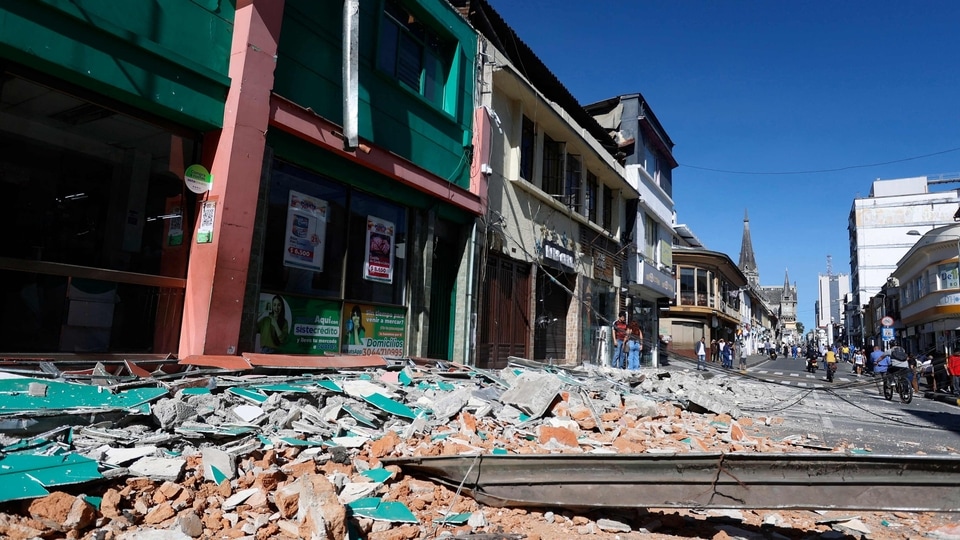
The quake caused severe damage across western Colombia, with buildings collapsing and people reportedly trapped inside.

 Prefer HTon Google


A powerful 7.4-magnitude earthquake struck Colombia on Monday morning, shaking large parts of the country and prompting people to evacuate homes and buildings.
The earthquake struck at 7:34 am local time, with the epicentre near San José del Palmar in Chocó province, around 400 km west of capital Bogotá, according to a report by The Associated Press.
The death toll from the strong earthquake that struck western Colombia on Monday has risen to at least 69, authorities said.
The quake caused severe damage across western Colombia, with buildings collapsing and people reportedly trapped inside.
In Cali, Mayor Alejandro Eder said at least 20 buildings had collapsed, while Chocó Governor Nubia Córdoba reported injuries and significant structural damage in the provincial capital, Quibdó.
Also Read | Earthquake of magnitude 7.4 shakes Colombia, neighbouring Ecuador, Venezuela
Top points
- A strong earthquake struck Colombia at around 7:34 am local time on Monday, August 10.
- At least 69 people have died throughout the country, the news agency AFP reported. Manizales Mayor Jorge Eduardo Rojas said two people were killed in the earthquake, while the mayor of Pereira reported that at least 18 people were killed in the Colombian city following the quake.
- The US Geological Survey (USGS) and Colombian authorities recorded the quake at 7.4 magnitude, although Colombia's Geological Service initially reported a magnitude of 6.6.
- The earthquake's epicentre was located near San José del Palmar in Chocó province, about 400 km west of Bogotá. The USGS placed the epicentre around 5 km east of San José del Palmar.
- Cali Mayor Alejandro Eder said at least 20 buildings collapsed in the city, with people trapped inside. The city has requested rescue teams from Bogotá and Medellín to assist with the response.
- Chocó Governor Nubia Córdoba said the provincial capital Quibdó suffered significant structural damage, with injuries reported. She said authorities were carrying out a damage assessment and warned of concerns over possible aftershocks.
- Social media footage and local media reports showed cracks and structural damage in buildings in cities including Cali, Armenia, Pereira and Medellín. Videos also showed people stumbling or rushing into the streets following the tremor.
- Strong tremors were felt in the Colombian capital, with residents rushing out of buildings and into the streets as emergency sirens sounded. Some people were seen outside in their night clothes, while the city's mayor said there was no preliminary major damage.
- Colombia's aviation authority said damage was reported at airports in Pereira, Manizales, Quibdó, Armenia, Cartago and Buenaventura following the earthquake. The earthquake was also felt in Ecuador and Panama, besides areas near Colombia's border with Venezuela.
- The quake occurred at a depth of around 79 km, according to Colombia's UNGRD. The depth was greater than that of the deadly earthquakes that struck Venezuela in June, which occurred at depths of around 10-22 km.
- Emergency authorities and local administrations have begun assessing the extent of the damage, while rescue teams are being sought for areas where people may be trapped under collapsed structures.