
 E-Paper



Decoding the boom in visual art and NFTs
Christie’s auctioned a JPG file for $69 million, catapulting its creator – digital artist Mike Winkelmann, who goes by the name of Beeple, to instant worldwide fame. The auction house said this places Beeple among the top three most valuable living artists

 Prefer HTon Google


On March 11, Christie’s auctioned a JPG file for $69 million, catapulting its creator – digital artist Mike Winkelmann, who goes by the name of Beeple, to instant worldwide fame. The auction house said in a tweet that the first purely digital artwork’s auction places Beeple among the top three most valuable living artists.
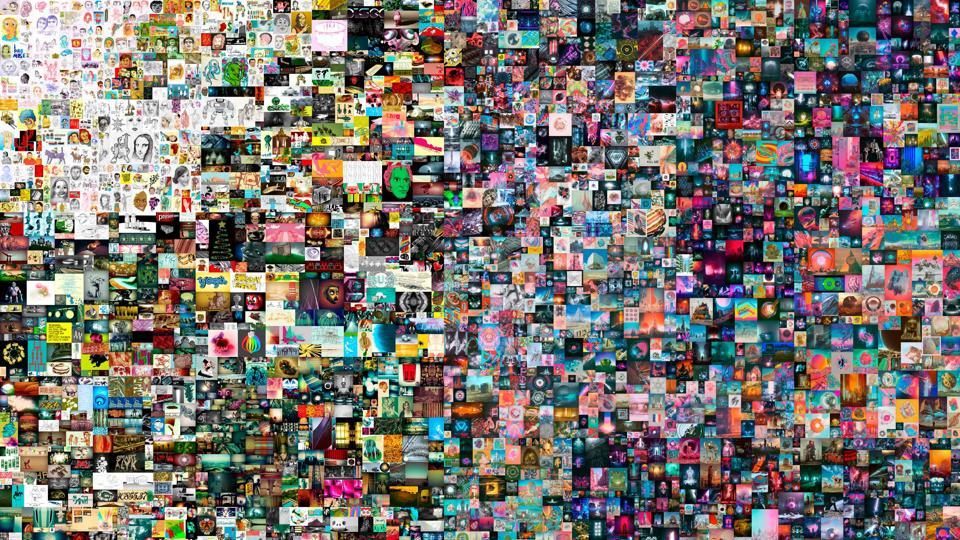
Behind this record is the story of the rise of virtual art, how it is valued and, possibly, the future of fine art collecting. The technology is known as non-fungible token (NFT).
What is it?
To understand NFTs, it is crucial to look at two concepts separated by the ages — the economic principle of fungibility (which derives its name from medieval Latin ‘fungibilis’) and the modern-day information standard known as blockchain.
A fungible is any asset that holds the same value and interchanged with another of its kind – for instance, currency. A piece of art, however, is unique – the original creation will always have a different value than, say, a copy or another piece of art perhaps even by the same creator. Hence, it is non-fungible.
The blockchain is a distributed ledger over a vast computer network, storing information, such as transactions, as an open database that is duplicated in a manner that the record becomes immutable. It has several uses (most famously known for currencies such as Bitcoin and Ethereum) due to its virtue of being authentic as well as decentralised.
Also Read | After outcry, Israeli museum calls off sale of Islamic art
As useful as it is to make an authentic record of cryptocurrency (a fungible) transactions, the blockchain can also serve as an authentic, digital database of non-fungible assets. And this has been done, since at least 2014, by NFTs.
To put it simply, an NFT is the formalisation of digital ownership, in a way that the information is decentralised and distributed, which makes its authenticity undebatable. It is the digital equivalent of establishing the Louvre owns the Mona Lisa, although its copies are ubiquitous around the world and mean little in terms of value.
The history
NFTs have existed since at least 2014. But they really began to gain popularity in 2017, particularly when people began creating and trading digital cats known as cryptokittens. Some more sought-after kitten avatars would go on to be traded for hundreds or thousands of dollars.
Over the past year, a company called NBA Top Shot has been selling officially licensed digital collectibles, similar digital trading cards. The most valuable NFT sold by it yet was in mid-February, when a video of a user paid $208,000 to acquire a clip of a Lebron James slam dunk.
The explosion
NFTs have been in mainstream news since February. It began with the auction of the Nyan Cat gif – a 12-frame animation of a cat, with a pop-tart for a torso, flying through space leaving what can only be described as a rainbow-colour contrail. The winning bid was $587,000, making it one of the most expensive pieces of digital art sold, on February 19.
But that record fell quickly. On February 21, it was shattered by a $6.6 million sale of a 10-second video, which was made by Beeple but owned and then sold by a Miami-based art collecter who originally bought it for $66,666 in October.
The explosion is such that according to nonfungibles.com, $204 million worth NFTs have been traded in the last month alone. This is almost half of the $417 mn it has tracked since June 2017.
Why the boom now?
The year 2021 appears to have brought the inflection point for NFTs even though they existed for years (and went through a largely unnoticed boom in 2017). There are several theories for why this has happened now.
Digital culture watchers believe that some of this is linked to the rise of cryptocurrencies (using which NFTs are traded at present), with crypto HNIs not just more willing to acquire more assets, but artists and musicians opening up to the idea as well.
Also Read | Lagerfeld’s art, furniture collections to be auctioned in Monaco in autumn
The Covid-19 pandemic dried up traditional sources of incomes, halting exhibitions and concerts. When some musicians (the first success stories are by Grimes and 3LAU earlier this year) began raking in top dollars, others followed. Rock band Kings of Leon, for instance, released their latest album as an NFT in early March, bundling several real-world perks as well, such as front-row tickets for life.
The future, or a passing fad?
On the face of it, the sudden explosion resembles the rapid build-up that has often been the hallmark of a bubble. Critics have pointed to how social media may be fuelling a speculative frenzy, not unlike what was seen in “meme stocks” mayhem last month. GameStop went from $20 per share in mid-January to over $480 within a month, before coming back down to the 50s, bringing major gains to those who got out on time and leading to heavy losses to that didn’t.
But NFTs are also unmatched in their utility in two crucial areas - they allow for exclusivity in a digital era and can monetise new forms of internet-birthed art, such as gifs, memes and even tweets. The March 11 auction by a major auction house will be seen as a significant endorsement, even if it lasts temporarily.


