
 E-Paper



Donald Trump lays claim on Canada, Panama Canal and Greenland
In demanding Greenland, Trump has cited American national security and Chinese and Russian activity in the region as the basis for his claim

 Prefer HTon Google


President-elect Donald Trump has laid America’s territorial claim over Canada, Greenland and Panama Canal, the first time in over 75 years that the United States (US) will seek to acquire new territories if Trump maintains this position after taking office on January 20. He has also announced his intent to rename the Gulf of Mexico as the Gulf of America.
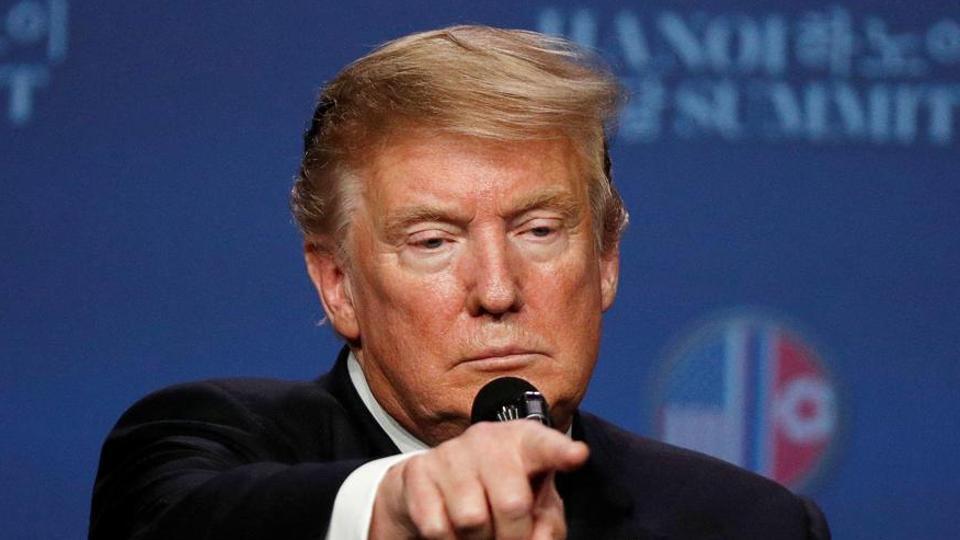
In demanding Greenland, Trump has cited American national security and Chinese and Russian activity in the region as the basis for his claim on the very day that his son, Donald Trump Jr, and Sergio Gor, appointed to run White House personnel office, travelled to Greenland in a well publicised trip to project local support for America. In the case of Panama Canal, he has cited national and economic security and Chinese “control” of the Canal as the reason. And in the case of Canada, he has cited America militarily protecting Canada and supporting it economically, yet suffering from a trade deficit, as grounds for converting it into America’s 51st state. In the first two cases, he has threatened military coercion, while in the case of Canada, he has threatened economic coercion to achieve his goals.
Trump’s stated intent to expand US territory upends centuries of history, treaties, and sovereign commitments, challenges the very basis of the international system, and strains America’s ties with three key allies and partners — Canada, Denmark which has sovereignty over Greenland, and Panama. Among them, Canada and Denmark are NATO member states, an alliance that has never seen one member attack another and commits all members to defend any member state that is under attack. The Panama Canal, which connects the Atlantic and Pacific Oceans, has a long and contentious American colonial history but was handed over to Panama by the just deceased Jimmy Carter and has been under exclusive control of Panama since 1999.
Trump’s announcements, his policy focus on immigration, and his appointments in the State Department including that of Secretary of State Marco Rubio — the first Hispanic in the position who has deep interest and expertise in both Latin America and China — also indicate that maintaining American dominance over the western hemisphere will rank among the top most priorities of the new administration.
To be sure, Trump has a history of inconsistency. He takes pride in maximalist positions and sees himself as a dealmaker. And his threats may well be just bargaining chips to force Canada on economic and immigration matters and Panama and Denmark on greater American control and reduced Chinese presence in their regions and first right of America over their resources. But the fact that an American president-elect, with a renewed mandate, in command of the world’s most powerful military and economy, has even made these claims crosses a line in contemporary global politics and severely challenges America’s claims of championing a rules-based order. The last time the US acquired territory was in 1947 when it added Mariana, Caroline and Marshall Islands to its sovereign jurisdiction.
Canada: “Get rid of that artificial line”
On Tuesday, at a press conference in Mar-Lago, Trump said, “We are not treated well.. by Canada. Canada is subsidised to the tune of about $200 billion a year plus other things. They don’t essentially have a military. They have a very small military. They rely on our military. It’s all fine, but they got to pay for that. It’s very unfair.”
Asked if he would consider using military force to annex Canada, Trump said no, immediately adding “economic force”. “You get rid of that artificially drawn line and you take a look at what that looks like and it would also be much better for national security. Don’t forget, we basically protect Canada. But here’s the problem with Canada..We are spending hundreds of billions a year to protect it..In trade deficits, we’re losing massive…” Trump then recited a list of items that the US imports from Canada, but doesn’t need to and should make at home — cars, lumber, dairy products. “We have more than they have. We don’t need anything, so why are we losing $200 billion a year and more to protect Canada?”
The claim on Canada had begun as a joke during a dinner at Mar-a-Lago at the end of November when PM Justin Trudeau visited Trump after the President-elect, on Truth Social, warned Canada it would face high tariffs if it didn’t get immigration and trade under control.
Recalling his conversation, Trump said he had referred to Trudeau as governor and asked him, “Listen, what would happen if we didn’t subsidise you?…What would happen if we didn’t do it?” Trump claims Trudeau then told him, “Canada would dissolve. Canada wouldn’t be able to function.” Trump said he then asked the Canadian PM why the US was doing it. Trudeau, in Trump’s account, responded by saying he didn’t really know.
Trump then offered his own perspective at the press conference. “He was unable to answer the question. But I can answer it. We are doing it because of habit, and we are doing it because we like our neighbours and we have been good neighbours, but we can’t do it forever, and it’s a tremendous amount of money. And why should we have a $200 billion deficit and add onto that, many, many other things that we give them in terms of subsidy? And I said, ‘That’s okay to have if you’re a state but if you’re another country, we don’t want to have it’.”
Since that meeting, Trump has, on Truth Social, referred to Trudeau, who announced his intent to resign as PM on Monday, as governor and Canada as the 51st state. But Tuesday was the first time Trump offered an elaborate theory of his case.
Trump’s demands were immediately rejected by all sides of the political spectrum in Canada. Trudeau said on X, “There isn’t a snowball’s chance in hell that Canada would become part of the United States. Workers and communities in both our countries benefit from being each other’s biggest trading and security partner.”
And his political opponent and Conservative Party leader Pierre Poilievre said, “Canada will never be the 51st state. Period. We are a great and independent country. We are the best friend to the U.S. We spent billions of dollars and hundreds of lives helping Americans retaliate against Al-Qaeda’s 9/11 attacks. We supply the U.S. with billions of dollars of high-quality and totally reliable energy well below market prices. We buy hundreds of billions of dollars of American goods…I will fight for Canada.. When I am Prime Minister, we will rebuild our military and take back control of the border to secure both Canada and the U.S. We will take back control of our Arctic to keep Russia and China out.”
Panama: “China is running the Panama Canal”
Trump’s second target on Monday was Panama. He attacked Carter, who just passed away at 100 and whose body lies in state at Capitol Hill, for having given away the Panama Canal and attacked Panama for letting China control the Canal.
He said, “The Panama Canal is a disgrace. What took place at the Panama Canal. Jimmy Carter gave it to them for $1, and they were supposed to treat us well…They don’t treat us fairly. They charge more for our ships than they charge for ships of other countries. They charge more for our Navy than they charge for navies of other countries. They laugh at us because they think we’re stupid, but we’re not stupid anymore. So the Panama Canal is under discussion with them right now. They violated every aspect of the agreement and they morally violated it also.”
Trump claimed that Panama now seeks American help for repairs and has asked for $3 billion, and instead, he had told them to get it from China. “Because China has basically taken it over. China is at both ends of the Panama Canal. China is running the Panama Canal”. He reiterated that the canal was vital to US, and that the US had given it to Panama, not to China. “And they have abused it. They have abused that gift. It should have never been made, by the way.“
When Trump first made the demand late last month, Panama’s President Jose Raul Mulino had ruled out negotiations with Trump on the issue and rejected the claim that China controlled it. “The canal is Panamanian and belongs to Panamanians. There’s no possibility of opening any kind of conversation around this reality, which has cost the country blood, sweat and tears..” He added, “There is absolutely no Chinese interference or participation in anything to do with the Panama Canal. There are no Chinese soldiers in the canal, for the love of God.”
The Greenland story and MAGA visit
And Trump’s final target was Greenland, with the man soon to be the 47th American president declaring, “We need Greenland for national security purposes..You have approximately 45,000 people there. People really don’t even know if Denmark has any legal right to it, but if they do, they should give it up because we need it for national security. That’s for the free world. I’m talking about protecting the free world.”
Like the Panama Canal, Trump linked Greenland to China as well. “You don’t even need binoculars. You look outside, you have China ships all over the place. You have Russian ships all over the place. We are not letting that happen..People are going to probably vote for independence or to come into the United States.” He also threatened Copenhagen with very high tariffs if it resisted.
Trump’s comments came on a day when his son, along with a Trump loyalist activist-campaigner Charlie Kirk and Sergio Gor, appointed to lead the White House personnel office once Trump takes over, were in Greenland, a visit that the President elect himself had announced on Monday. “I am hearing that the people of Greenland are “MAGA.” My son, Don Jr, and various representatives, will be traveling there to visit some of the most magnificent areas and sights. Greenland is an incredible place, and the people will benefit tremendously if, and when, it becomes part of our Nation. We will protect it, and cherish it, from a very vicious outside World. MAKE GREENLAND GREAT AGAIN!” Through the day, Trump Jr posted images from Greenland, giving the air of a land that was ready to join the US, and posted a video from a cafe where his father called and spoke to locals.
But Denmark’s PM Mette Frederiksen made it clear that Greenland was not for sale and cited Greenland’s PM, Prime Minister Múte Egede as being “very, very clear” that Greenland was “not for sale and will not be in the future either”. Egede had said, “Greenland is ours. We are not for sale and will never be for sale. We must not lose our long struggle for freedom.” As an autonomous territory of the European Union, Greenland’s citizens are also EU citizens.
The Western hemisphere focus
Trump’s claims over Canada, Greenland and Panama Canal can be seen as one more sign of what may be a strong Western Hemisphere focused foreign policy of his administration.
Trump’s focus on immigration, both from the southern and northern border, means that a core focus for his administration will be in dealing with Mexico, Central American states, and Canada. Trump’s appointee as Secretary of State, Marco Rubio, is not just a Cuban-American but also deeply engaged with the region and served as an unofficial advisor to Trump on the continent in his first term. Trump’s appointee as deputy Secretary of State, Christopher Landau, is a fluent Spanish speaker who studied in Paraguay and served as US ambassador to Mexico in Trump’s first term.
Explaining Trump’s comments and its genesis, Alexander Gray, a former national security official in Trump’s first term, told the Wall Street Journal on Tuesday, “What [Trump] is trying to do is reinvigorate this focus on what are the outer boundaries of the Western Hemisphere, and defending them against great power competitors.. There is this idea that our number one priority is the defence of the hemisphere, and that China and Russia are coming into our backyard. You have to see Greenland and Panama in that context.”
Trump may have made territorial claims to seek primacy in the hemisphere, just like one of his early predecessors, James Monroe, did in 1823 when he articulated what came to be known as the Monroe doctrine to assert American primacy in the Americas. He may have made these claims for attention. He may have made it to bargain with the three countries and extract better deals. He may have made it because he genuinely wants more territory as a party of his legacy and will put the weight of the American state behind it. But irrespective of the motivations and intent, by doing what he has done, Trump has once again rewritten the rules of global diplomacy in ways that may have unforeseen consequences.


