
 E-Paper



Earthquake of magnitude 3.5 jolts Pakistan
A shallow earthquakes pose greater risks, making Pakistan vulnerable due to its location on major tectonic plate boundaries.

 Prefer HTon Google


An earthquake of magnitude 3.5 struck Pakistan, the National Center for Seismology (NCS) said.
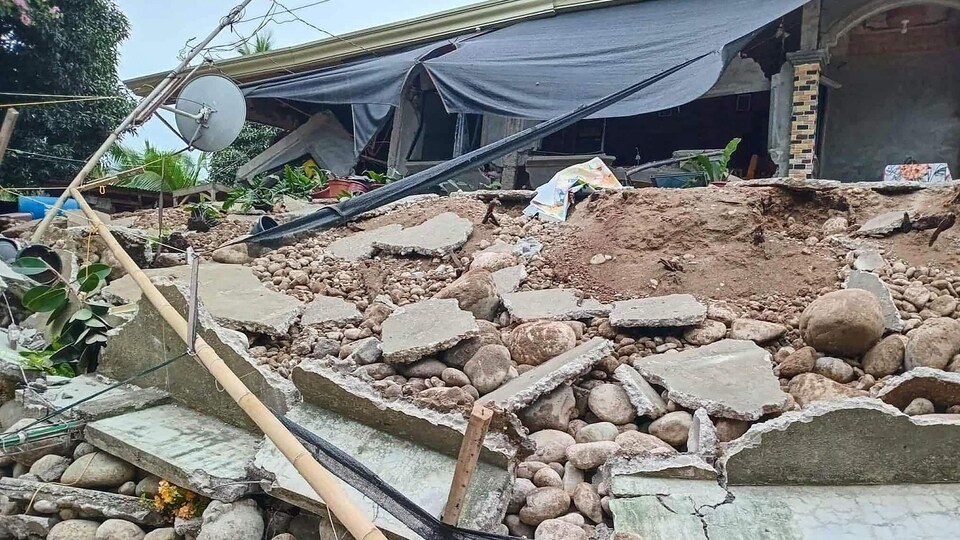
As per the NCS, the earthquake occurred at a depth of 10km, making it susceptible to aftershocks.
In a post on X, NCS said, “EQ of M: 3.5, On: 18/10/2025 05:04:04 IST, Lat: 36.64 N, Long: 72.96 E, Depth: 10 Km, Location: Pakistan.”
Earlier in the day, another earthquake of 3.9 magnitude struck the region at a depth of 10km.
In a post on X, NCS said, “EQ of M: 3.9, On: 18/10/2025 03:25:49 IST, Lat: 36.68 N, Long: 72.85 E, Depth: 10 Km, Location: Pakistan.”
On Friday, an earthquake of magnitude 4.2 struck Pakistan at a depth of 10km.
In a post on X, NCS said, “EQ of M: 4.2, On: 17/10/2025 20:20:20 IST, Lat: 36.39 N, Long: 72.38 E, Depth: 10 Km, Location: Pakistan.”
Shallow earthquakes are generally more dangerous than deep earthquakes. This is because the seismic waves from shallow earthquakes have a shorter distance to travel to the surface, resulting in stronger ground shaking and potentially more damage to structures and greater casualties.
Pakistan is among the seismically active countries in the world, crossed by several major faults.
This collision zone makes the country highly vulnerable to violent earthquakes. Provinces such as Balochistan, Khyber Pakhtunkhwa, and Gilgit-Baltistan lie on the southern edge of the Eurasian plate, while Sindh and Punjab are located on the northwestern edge of the Indian plate, contributing to frequent earthquake activity.
Balochistan is located near the active boundary between the Arabian and Eurasian tectonic plates.
Other vulnerable regions, such as Punjab, which lies on the northwestern edge of the Indian plate, are susceptible to seismic activity. Sindh, though less prone, is still at risk due to its location.
One of the most significant earthquakes in Pakistan's history is the 1945 Balochistan earthquake (8.1 magnitude), the largest earthquake in the country's history.


