
 E-Paper



ETIM may shift to ISKP with Taliban-China alliance over Xinjiang
UN reports indicate that around 500 fighters of East Turkestan Islamic Movement form the bulk of Taliban force along with Tajiks, Uzbeks, Hazara and Chechen fighters not Pashtuns in Badakhshan province adjoining Chinese Xinjiang via Wakhan corridor.

 Prefer HTon Google


With the US completely handing over Kabul and the country to the Sunni Pashtun Islamists on August 31, the fundamental question from the Indian perspective is whether Afghanistan will stabilize under the American army fatigue and M-4 carbine carrying Taliban or the latest Islamic emirate will still carry the burden of history and remain unstable as ever. UK, Soviets and now US have burnt their hands in Afghanistan and presumably have no appetite for any military adventure in that country. Will China with its client state Pakistan, the mother of Taliban and all assorted terrorist groups, will be able to capitalize on the situation with the former exploiting the mineral resources of Afghanistan under the garb of Belt Road Initiative (BRI) and Rawalpindi getting its so-called strategic depth against India?
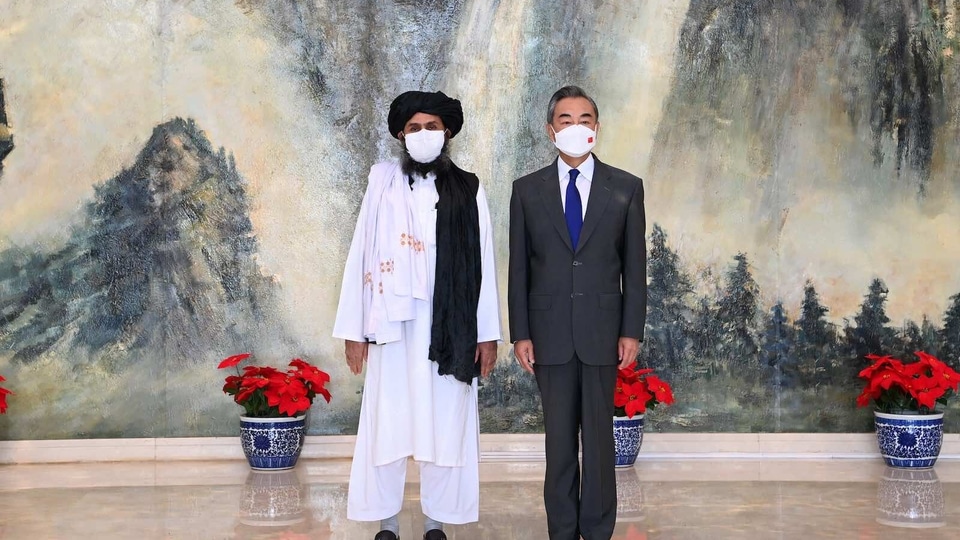
Despite Beijing’s tremendous financial and military clout and its hold on the Pakistan’s military and civilian set-up, the answer to the above questions is no as Afghanistan has been and will be hopelessly split on tribal and ethnic lines and there are fractures within the ultra-conservative Pashtuns. Already, there are intelligence reports coming about infighting in Kandahar among the Taliban leadership for the share of political pie in Kabul.
While the Chinese Communist Party (CCP) unlike the US and Soviets is not expected cross the Rubicon by becoming political or militarily active in Afghanistan, it will surely use its new friend, the Taliban, for taking action against some 500 East Turkestan Islamic Movement (ETIM) fighters whose goal is to liberate Xinjiang Uighurs from the yoke of Beijing. The ETIM fighters are mostly located in Badakshan province in north Afghanistan which links with Xinjiang in China via the Wakhan corridor. Even though the Taliban have traditionally a close relationship with the ETIM, the Pashtuns are concentrated in south and its is the minority Tajiks, Uzbeks, Hazaras, Uighur and Chechen who comprise the bulk of Taliban cadre in north Afghanistan. If the Taliban start harassing the Afghan minorities, it is these non-Pashtun elements who will join the core of Panjshir resistance in future. Already, intelligence reports from Afghanistan and Turkey indicate that the ETIM group will shift its allegiance to Islamic State of Khorasan Province (ISKP) as they fear Taliban will act against them and hand them over to the MSS, the Chinese secret service. It is for this very reason that China wants US to redesignate ETIM as a global terrorist group, which is rather rich for a country that sat on the UN designation of Jaish-e-Mohammed chief Masood Azhar as global terrorist for nearly three years.
The other Chinese interest in Taliban regime in Kabul is to ask the Islamist leadership of Sunni Pashtun force to put pressure on their blood brother, the Tehreek-e-Taliban, across the Durand line to buy peace for their CPEC project in Pakistan. While the TTP is attacking the Chinese nationals involved in CPEC projects in Khyber-Pakhtunkhwa (KPK) and Occupied Kashmir, the Balochistan insurgents are militarily taking on both the Chinese and the Pakistanis in the Gwadar deep sea project. While the TTP has sworn allegiance (Bayat) to Taliban’s never to be seen supreme leader Mullah Haibatullah Akhundzada, it has made it amply clear that it will continue to target the Rawalpindi GHQ from within Pakistan and does not need the safe terror sanctuary of Afghanistan.
China’s client state Pakistan may be gloating about Taliban breaking the shackles of slavery by humiliating the US forces in Afghanistan, but the future does not look so rosy for Islamabad as billions of dollars’ worth of aid in the name of war against terror from west will dry up. US and West were giving aid and grants to Pakistan, China gives only loans and that too on a souped-up interest rate and collaterals.
While Pakistan may get deniability of terror attacks against India by allowing all terror factories to shift to Afghanistan under Taliban, the economic and military gap between New Delhi and Islamabad is ever widening under the Modi regime and there is a sea change from India of the 1990s. With the abrogation of article 370 and 35 A in August 2019, the union territory of Jammu and Kashmir, and Ladakh is directly under control of the Central Government and the room for Pakistan supported Hurriyat and other local parties has nearly disappeared. To top it all, the Modi regime refuses to get black-mailed over Pakistan’s nuclear status and is ready to militarily respond to any terror attack inspired and orchestrated by Rawalpindi. Fact is that actually the strategic space for Pakistan has shrunk with China demanding its share of pie for CPEC and resurgent Taliban becoming the radicalizing force for not only all the Pashtuns on both sides of Durand Line, which is not recognized by Taliban, but also jihadists of all genre in the region. US is gone and the new Great Game has just begun.


