Pakistan Prime Minister Shehbaz Sharif raised the sensitive issue of the Indus Waters Treaty (IWT) during an event on the eve of Pakistan’s Independence Day, warning India that Pakistan would give a “direct response” if its water supplies were threatened. India had put the IWT in abeyance last year following a terror attack in Jammu and Kashmir's Pahalgam, which claimed 26 lives.
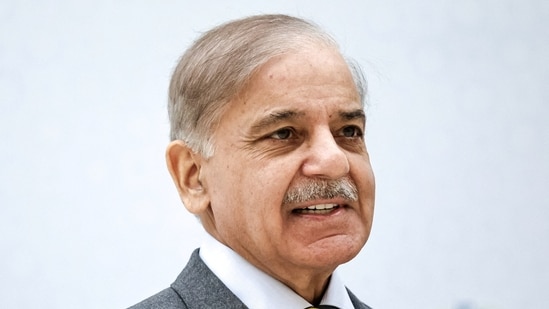
Sharif said Pakistan wanted peace and not war, but warned that its desire for peace should not be seen as weakness.
“Every drop of water is our red line,” Sharif said, as quoted in a report by the Associated Press. He warned that Pakistan would respond if India threatened its water supplies, adding that any threat to Pakistan’s sovereignty would draw a strong response, referring to the four-day conflict between India and Pakistan in May 2025.
Also Read: Indians three times more likely than Pakistanis to favour US: Pew
The Pakistan Prime Minister’s Office said Sharif described India as an “enemy of peace” over New Delhi’s decision to keep the Indus Waters Treaty in abeyance. The PMO said the prime minister had made it clear that there would be “no compromise” on the water issue and warned that Pakistan would give a “direct response” if India did not “come to the right path”.
Pakistan has repeatedly sought to internationalise the dispute over the Indus Waters Treaty, raising concerns over India’s decision with the international community and portraying the move as a threat to Pakistan’s water security.
{{/usCountry}}Pakistan has repeatedly sought to internationalise the dispute over the Indus Waters Treaty, raising concerns over India’s decision with the international community and portraying the move as a threat to Pakistan’s water security.
{{/usCountry}}The latest remarks from Sharif come amid continuing tensions over the treaty, a decades-old, World Bank-brokered agreement governing the sharing of waters from the Indus River system between India and Pakistan.
Treaty suspension and India's clear stand
India’s decision to keep the treaty in abeyance came only after the Pahalgam terror attack on April 22, 2025, in which 26 people were killed.
Following the attack, the Cabinet Committee on Security met on April 23, 2025, after which India announced that it was keeping the Indus Waters Treaty in abeyance. New Delhi said the conditions under which the treaty had been negotiated had fundamentally changed.
India has maintained that the treaty can no longer function in its present form and will remain in abeyance until Pakistan “credibly and irrevocably” ends its support for cross-border terrorism.
Prime Minister Narendra Modi has also defended the decision, saying that “water and blood cannot flow together”. The government has described the suspension of the treaty as part of the measures taken in response to the Pahalgam attack.
A fortnight after the brutal terror attack, India and Pakistan exchanged missile, drone and other strikes before a ceasefire halted the four-day military conflict.
India's last response to Pak's IWT warning
This is not the first time Pakistan has issued threats over the IWT suspension. India issued a response to such threats last month, with MEA spokesperson Randhir Jaiswal saying the treaty stands in abeyance due to Pakistan's ‘continued sponsorship of cross-border terrorism’.
“India's position on the Indus Water Treaty is consistent. The IWT stands in abeyance in response to Pakistan's continued sponsorship of cross-border terrorism. Pakistan must credibly and irrevocably abjure its support for cross-border terrorism,” Jaiswal had said.
His clarification came after a Pakistan minister had issued a stark warning to India over the treaty and said Islamabad would “cut off those hands” that he claimed sought to control the Indus water.
(With inputs from agencies)