E-Paper



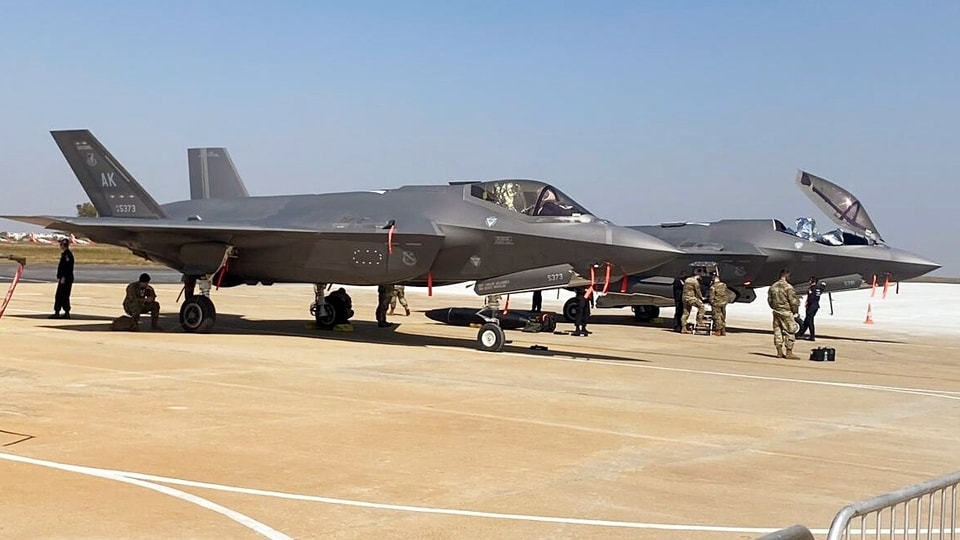
F-35 fighter jet sale to Turkey at centre of Trump's Ankara visit: Why Israel opposes it
The July 7-8 summit, hosted by Turkish President Recep Tayyip Erdogan, is expected to bring together leaders of NATO's 32 member states.

 Prefer HTon Google


A possible shift in the United States' approach to Turkey's long-stalled bid to rejoin the F-35 fighter jet programme has emerged ahead of the NATO summit in Ankara, where US President Donald Trump, who arrived in Turkey on Tuesday, is expected to back the potential sale of the stealth aircraft to the country.
Trump has also said the US will lift sanctions imposed on Turkey over Ankara's purchase of the Russian S-400 missile defence system, news agency Associated Press (AP) reported.
Also read | Israel approves multi-billion deal for new F-35, F-15IA fighter jets: All about the agreement
The July 7-8 summit, hosted by Turkish President Recep Tayyip Erdogan, is bringing together leaders of NATO's 32 member states. Trump's visit is expected to provide fresh momentum to discussions on Turkey's long-pending defence demands, including regaining access to the F-35 programme and securing F110 fighter jet engines.
Why Turkey was removed from the F-35 programme
Turkey was removed from the F-35 programme in 2019 after purchasing Russia's S-400 air defence system. The following year, Washington imposed sanctions on a major Turkish defence company and prohibited F-35 sales to Turkey as long as Ankara retained the Russian missile system, arguing that it posed a security risk to US-made combat aircraft.
Also read | US F-35 fighter jet makes emergency landing after suspected Iranian fire: Report
The restrictions remain in place, and under current US law, Turkey cannot operate or possess the S-400 system if it wants to rejoin the F-35 programme.
Reportedly, one proposal that has recently gained attention involves transferring the Russian missile system to a third country. However, no agreement has been reached, and it remains unclear whether Russia would approve such a move because of end-user obligations attached to its weapons sales.
Ankara hopeful of easing sanctions
Turkey believes recent engagement between Erdogan and Trump could help resolve long-standing defence issues.
Turkish Foreign Minister Hakan Fidan said last week that the two leaders share a "strong political will" to remove US sanctions imposed on Turkey, although he did not provide a timeline.
Also read | Turkey eyes F110 fighter jet engines ahead of Trump's visit for NATO summit
In December, US Ambassador to Turkey Tom Barrack also said the improving relationship between Trump and Erdogan had led to "the most fruitful conversations we have had on this topic in nearly a decade."
The latest developments also follow the Trump administration's decision to notify Congress of its intention to sell F110 jet engines worth more than $700 million for Turkey's indigenous KAAN fighter aircraft project. Although some members of Congress raised objections, the administration proceeded with the proposal.
Netanyahu opposes any fighter jet sale
The prospect of Turkey regaining access to the F-35 programme has drawn sharp opposition from Israel.
Speaking to Fox News on Monday, Israeli Prime Minister Benjamin Netanyahu said the United States should not approve the sale of either F-35 fighter jets or fighter jet engines to Turkey.
"I don't think they should be given F-35s or the engines for their fighter jets," he said, warning that such a move could "upset the power balance in the Middle East."
Turkey dismisses Israel's criticism
Turkey rejected Netanyahu's remarks, accusing Israel of running a coordinated campaign against Ankara's defence ambitions.
"The baseless allegations recently circulated by Israeli officials in a coordinated manner and with calculated timing are part of a disinformation campaign," Turkey's foreign ministry said.
“Netanyahu and his partners in crime deliberately distort any criticism directed at them and seek to divert attention through a systematic propaganda effort.”
Defence talks
Analysts say Turkey is seeking F110 engines for its KAAN stealth fighter programme as it aims to join the small group of countries capable of producing fifth-generation combat aircraft.
Erdogan is expected to hold talks with Trump on the sidelines of the NATO summit, with Turkey hoping its improving ties with Washington will help advance its defence requests, including regaining access to the F-35 programme.
(With inputs from agencies)