
 E-Paper



Fire at Fujairah oil storage in UAE as Iranian drones threaten oil infra in Middle East
Visuals from Fujairah thick plumes of smoke emanating from the oil refinery, which is one of the key energy export hubs of the UAE.

 Prefer HTon Google


As the war between the US and Iran continued on Day 4, a fire broke out in the Fujairah oil industry in the UAE, due to the falling debris from a drone interception on Tuesday.
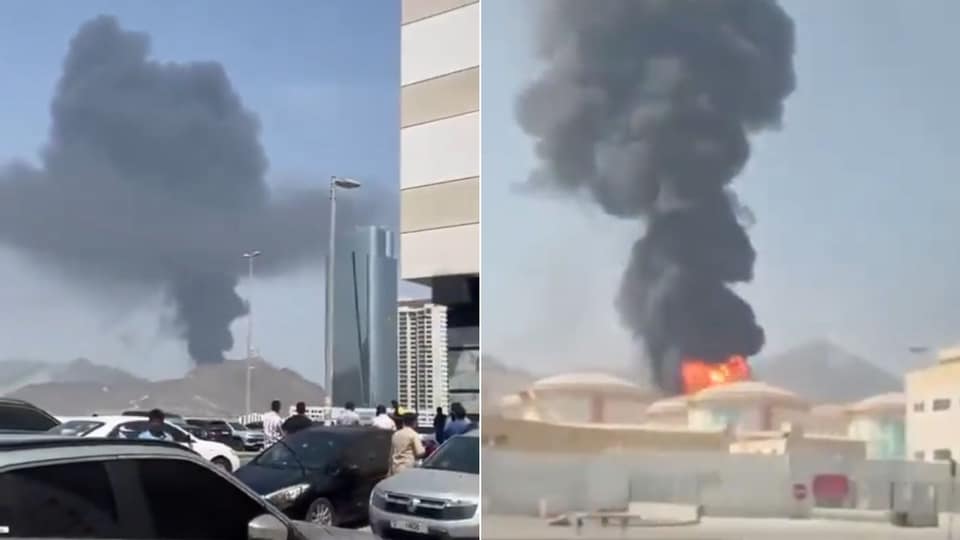
Visuals from Fujairah thick plumes of smoke emanating from the oil refinery, which is one of the key energy export hubs of the UAE.
The UAE authorities confirmed the fire, which broke out at an oil storage and trading zone in the emirate of Fujairah on Tuesday morning. The authorities said the fire was brought under control and normal operations in the area have resumed. There were no reported casualties.
"Relevant authorities in the Emirate of Fujairah responded to a fire that broke out this morning in the Fujairah Oil Industry Zone (FOIZ), resulting from falling debris following the successful interception of a drone by air defense systems. No injuries were reported, the fire was brought under control, and normal operations in the area .have resumed," a statement of the Fujairah media office read.
The Emirati authorities also urged public to obtain information from official sources and to avoid against rumors or unverified information.
Another video on social media showed a group of onlookers watching the thick cloud of smoke emerging from the Fujairah oil depot. However, Hindustan Times couldn't independently verify the authenticity of the videos.
Oil infrastructure under attack in UAE, Oman
Amid the ongoing conflict in the Middle East, several oil infrastructure in the Gulf states were hit by drones and missiles as Iran widened its targets to include infrastructure in Saudi Arabia, the Emirates and Qatar, sending European energy prices skyrocketing.
Apart from the fire in Fujairah, a fuel tank in Oman was hit in a drone strike. The drone attacks targeted the port of Duqm on Oman's eastern coast.
The Iranian attack has dealt a blow to the oil and energy supply, along with crippling the Strait of Hormuz, a key passage for the ships transporting oil and gas from the Middle East to global centres.
Meanwhile, QatarEnergy, one of the world's biggest liquefied natural gas (LNG) exporters, suspended production due to drone strikes against two of its sites on Monday.


