
 E-Paper



Gaza peace plan: Arab, Muslim leaders pushing Hamas to accept Trump's deal as deadline looms
Trump said on Tuesday that Hamas had "about three or four days" to accept his 20-point Gaza plan and warned the group would "pay in hell" if it refused.

 Prefer HTon Google


With hours to go for Trump's deadline for the Gaza plan, Arab and Muslim world leaders are pushing for Hamas to accept the peace proposal, pushed by the US President earlier this week.
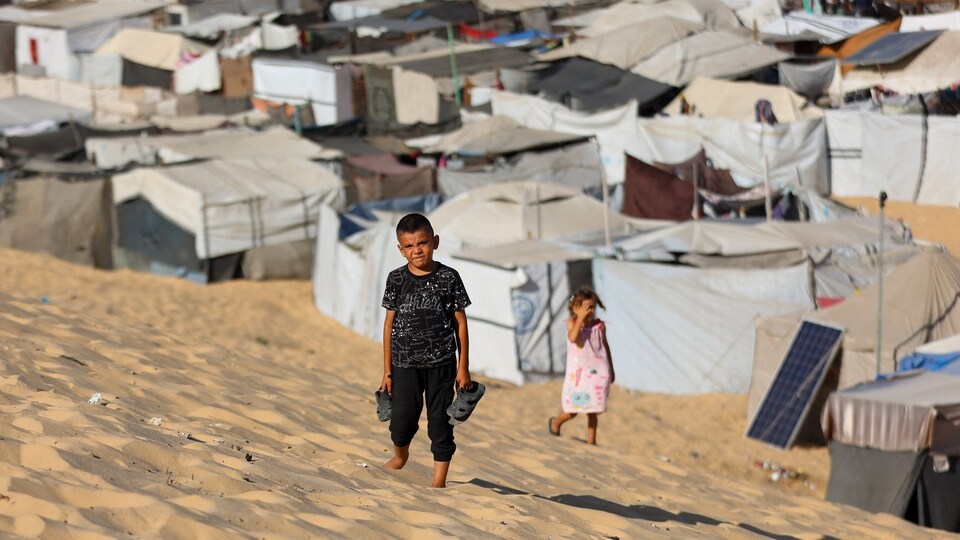
Though the leaders differ with some aspects of the 20-point proposal, the Muslim leaders have said that the need to end the fighting in Gaza surpasses the concern about the finer details, Bloomberg reported.
After Trump released the Gaza peace plan on Monday during Israeli Prime Minister Benjamin Netanyahu's visit to the US, Hamas said it was examining the proposal.
The peace plan calls for a ceasefire, the release of all the hostages, dead or alive, within 72 hours, Hamas's disarmament and a gradual Israeli withdrawal from Gaza. Hamas was not part of the negotiations that led to the proposal.
Trump said on Tuesday that Hamas had "about three or four days" to accept his 20-point Gaza plan and warned the group would "pay in hell" if it refused.
However, a Palestinian source close to Hamas leaders told AFP that "no final decision" had been made and that "the movement will likely need two to three days".
Why are Muslim leaders pressing Hamas to accept peace plan?
The reason behind Arab and Muslim leaders pushing for Hamas to accept the deal stems from multiple factors — in order to end the two-year war in Gaza and prevent further escalation in the Middle East, and partly to cut any threat to their own national security.
The leaders see the Israeli campaign in Gaza since the October 2023 attacks and the recent escalation as a threat to their own national security, people aware of the matter told Bloomberg.
Though Israel has not been able to destroy Hamas despite the air attacks and ground incursions, the conflict has expanded to Israeli fresh attacks against Hezbollah targets in Lebanon, Houthis in Yemen, as well as Iran, Syria and Qatar.
Israel targeted Hamas leadership in an attack in Doha, killing six people, but failing to eliminate any Hamas leaders. Netanyahu later called the Qatari Prime Minister and issued an apology over the strike.
Arab leaders supported Trump's peace plan
Before releasing the Gaza peace plan, it was presented to influential Arab states last week during a meeting between Trump and Arab leaders at the United Nations General Assembly.
When the peace plan was finally released, the foreign ministers of Saudi Arabia, Jordan, the United Arab Emirates, Indonesia, Pakistan, Turkey, Qatar and Egypt endorsed the statement.
Qatari Prime Minister Sheikh Mohammed bin Abdulrahman Al Thani said that his country and Egypt had handed the plan to Hamas on Monday night.
An official, who was part of the Arab leaders in New York last week, said that Hamas has little choice but to accept the deal. The acceptance of the plan would require the disarmament of the militant group. The peace plan also states that amnesty will be offered to those “who commit to peaceful co-existence” and will be given safe passage to leave.
Meanwhile, Islamic Jihad, a Palestinian militant group fighting alongside Hamas, had slammed the plan, saying it would fuel further aggression against Palestinians.
"It is a recipe for continued aggression against the Palestinian people. Through this, Israel is attempting - via the United States - to impose what it could not achieve through war," the group said in a statement.
"Therefore, we consider the American-Israeli declaration a formula for igniting the region," the group added.


