
 E-Paper



US just lifted the president of Venezuela. Is it allowed to do so? What international law says
While many allies and Republicans have praised Trump for his actions, the US president is also facing heat for the military attack.

 Prefer HTon Google


The United States government, led by President Donald Trump, on Saturday, captured Venezuelan President Nicolas Maduro and his wife Cilia Flores. The head of state of the Latin American country was captured during a military operation, which caused explosions across the capital city of Caracas.
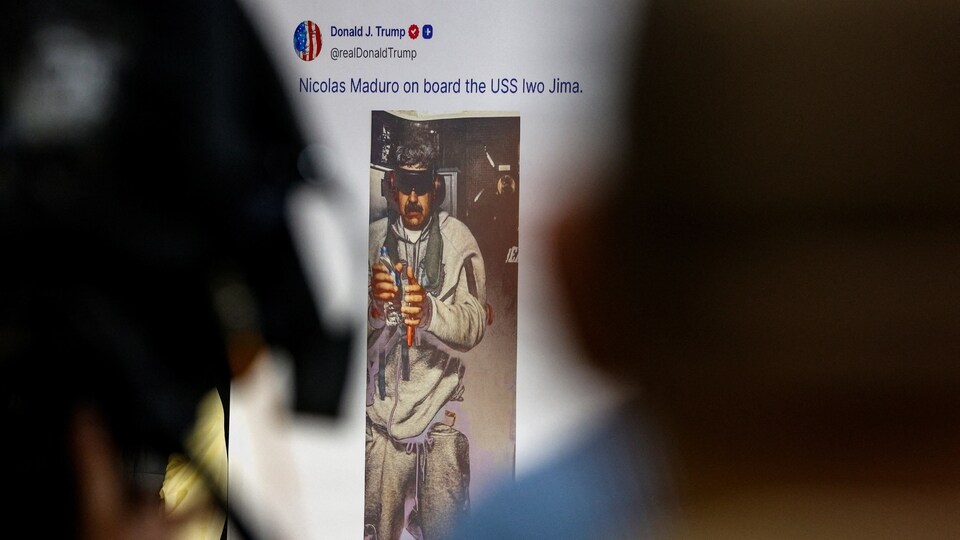
Maduro, who has been condemned as an illegitimate leader, is now in New York with his wife, where they are set to be tried on charges of drug trafficking. Follow LIVE updates on Maduro's capture here
While many allies and Republicans have praised Trump for his actions, the US president is also facing heat for the military attack, which counts as a violation of the Latin American country's territorial sovereignty.
Also Read | ‘Perp walked’: Visuals of handcuffed Nicolas Maduro at DEA headquarters emerge after capture from Venezuela
Amid all the noise, a key question remains - Is the US allowed to enter a country and capture its head of government?
What does international law say?
Under international law, the United States does not hold the power to capture the working head of state of any country.
The United Nations, also on Saturday, stated that the American move sets a dangerous precedent for the world, especially as we try to put behind a year of conflicts behind us.
Trump's capture of Maduro is a clear violation of the UN Charter, signed in October 1945. A central provision of the agreement is article 2(4) which says that states must refrain from using military force against other countries.
“All Members shall refrain in their international relations from the threat or use of force against the territorial integrity or political independence of any state, or in any other manner inconsistent with the Purposes of the United Nations,” reads the UN Charter article.
“The reality is that America is in breach of the United Nations charter. It has committed the crime of aggression, which the court at Nuremberg described as the supreme crime, it’s the worst crime of all,' said Geoffrey Robertson KC, a founding head of Doughty Street Chambers and a former president of the UN war crimes court in Sierra Leone to the Guardian.
"You cannot say this was a law enforcement operation and then turn around and say now we need to run the country," Jeremy Paul, a professor at Northeastern University specializing in constitutional law told Reuters.
"It just doesn't make any sense," he added further.
Despite Maduro not being recognised as the legitimate leader of Venezuela following the "rigged elections," international law prohibits the use of force in international relations, uncles approved by the United Nations Security Council.
Based on its reaction, the UN was clearly not informed of such an attack. But what is more surprising is that the Trump administration did not approach the Congress either.
How has the US justified the action?
The second Trump administration has stated that its capture of Maduro was part of a military operation, which was devised after the Department of Justice sought military assistance to apprehend the Venezuelan president.
Attorney General Pam Bondi took to social media and said that Maduro, his wife and two sons "will soon face the full wrath of American justice on American soil in American courts."
However, Trump did not maintain this story. In a press conference to address the strikes, the US President accused Caracas of "stealing US oil interests", following it by saying that the US will be "running the country" for some time.
US Secretary of State Marco Rubio said the administration did not inform before the operation.
While such military operations must be cleared by Congress, previous administrations have also justified military action in foreign land as long as it is in a limited scope and in national interest.
Trump's justification for Maduro's capture is the same. However, experts believe that Washington's argument will not hold.
Susan Breau, a professor of international law and a senior associate research fellow at the Institute of Advanced Legal Studies, told the Guardian that the attack could have only been considered lawful had the US got a resolution from UNSC or was acting in self-defence.
“There is just no evidence whatsoever on either of those fronts,” Breau said, adding that "the United States is going to argue vigorously that drug trafficking is a scourge and it’s killing many people, and I agree. But a lot of international law experts have been looking at this and there wasn’t even clear evidence that those drug traffickers were from Venezuela, let alone that they were governed by Maduro in any sense.”
A dangerous precedent
Nicolas Maduro's capture does indeed set a dangerous precedent for the world, especially in times of global turbulence. Conflicts such as the China-Taiwan dispute, the Russia-Ukraine war and the Israel-Palestine conflict could escalate.
Similar actions could be taken by any powerful against a relatively weaker one to justify its invasion or genocide.


