
 E-Paper



Moderate Taliban is an oxymoron
India is on a wait and watch mode on Afghanistan as its approach towards the Taliban ruled Kabul will depend on the relationship of Sunni Pashtun group with Pakistan and Pakistan based terrorist groups like Jaish-e-Mohammad and Tehreek-e-Taliban.

 Prefer HTon Google


Delivering a lecture a month after 9/11 attacks, Jaswant Singh, then external affairs minister in Atal Bihari Vajpayee's cabinet, described a moderate Taliban an oxymoron. Two decades later, after US and allied forces literally ran away from Afghanistan leaving Kabul to the mercy of ultra conservative UN designated terrorist group, the debate has again started on moderate Taliban after its spokesperson promised to fully implement more than a 1000-year-old Islamic Sharia code under the new Emirates of Afghanistan. The assurances of the Taliban spokesperson are hardly of any value to Afghanistan watchers as the Sunni Pashtun group was planning a pincer attack on Kabul while talking about a so-called negotiated settlement in Doha, Qatar. Fact is that the Taliban, under the smokescreen of talks, was allowed to make a fool out of Americans (all thanks to Zalmay Khalilzad) and the Sunni group is in no mood to share spoils of its victory with anyone.
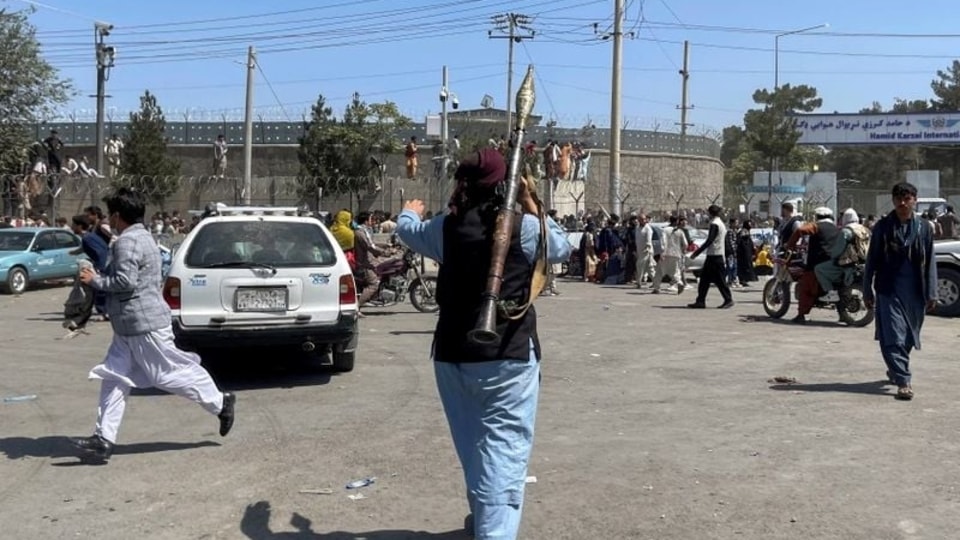
When the Taliban last captured Kabul in 1996, there was a power vacuum in Afghanistan with the Soviets running away with their tails firmly tucked between their legs and the West led by the US in retreat mode as their objective had been achieved. The situation on August 15, 2021 was no different. Only this time the US ran away from Kabul and so did its appointee Ashraf Ghani and anti-US forces like China, Russia, Iran and Turkey are all breathing a sigh of relief as America is no longer patrolling their backyard. However, what has changed is that the Taliban, after showing tremendous resilience and motivation for two decades, have come out much stronger this time with even north Afghanistan under its control and powers like China and Russia unilaterally offering to smoke the peace pipe. Of course, the principal role of Pakistani deep state and Taliban Deobandi ideological brothers like Jaish-e-Mohammad and Tehreek-e-Taliban cannot be forgotten in nourishing the Sunni terrorist group. All the talk of the Afghan led-Afghan owned peace process has been consigned to the pathetic dustbin of history.
With a force of over 75,000 hardline cadre and top of the line US weapons surrendered by pusillanimous 300,000 Afghan Army personnel, the Taliban are really not looking for recognition from the democratic world as they now have territory to rule and enforce the Islamic law. Last time, mother Pakistan, Saudi Arabia and UAE recognised the Taliban, this time the number led by China, Russia, Iran and Turkey will be much higher.
Under the circumstances, India is in no hurry to take a position on Taliban even if the US is looking for an excuse of a negotiated settlement to recognise the radicalised Sunni force. After all, the US invaded Afghanistan to get rid of Al-Qaeda led by Osama bin Laden not the Taliban. And withdrawal of US forces from Afghanistan was first proposed by Democrat President Barack Obama in his 2011 way forward speech with the support of his then Vice President Joe Biden.
For “India First” Narendra Modi government, the parameters of engaging the Taliban are based on its relationship with Pakistan and Pakistan-based Deobandi terrorist groups with India in their cross-hairs. There is also a serious incoming internal security threat to India as the victorious Taliban will be the galvanizing force for the Ummah, leading to increased global radicalisation as witnessed when the so-called Islamic State captured Mosul in 2014. Today, the Taliban have become the beacon of political Islam and will attract followers from all over the world.
While for the time-being it is a win-win situation for the Taliban, this may not be so in the coming months after reality of the Sunni Pashtun group dawns on the minorities. One must remember that 40 per cent of the Afghan army was of Tajik ethnicity and they may take to weapons under the leadership of young Ahmed Massoud and Amrullah Saleh, provided the two survive the Taliban onslaught on Panjshir Valley. Historically, the military situation in Afghanistan is known to change at the drop of a dime or dollar.
While the Taliban have traditionally maintained that they have no interest in Kashmir issue and has always rejected the Durand Line, India is waiting on whether the Sunni Islamist force, which draws inspiration from Wahhabism as Deoband does, cuts a deal with TTP in favour of Pakistan Army. TTP leader Mufti Noor Wali Mehsud has already made it clear that it will continue to fight Pakistan Army while thanking Haibatullah Akundzada for releasing their deputy leader Maulvi Faqir Mohammed from Bagram highest security prison. No less than 7,000 hardcore and most brutal terrorists were let go by the Taliban from Bagram prison and the US will have to answer for future terror attacks. It will become clear to India on Pakistan’s leverage on the Afghan Taliban if they try to get their Pakistan namesake on the peace table for Rawalpindi GHQ.
The other issue being watched by Indian counter-terrorism experts is the relationship between the Taliban and Bhawalpur based Jaish-e-Mohammed (JeM) group, which has vowed to target India on Kashmir. One must remember that Jaish Emir Maulana Masood Azhar was taken directly to Emir-ul-Momeen Mullah Omar after he was freed by India in the 1999 IC-814 hijacking at Kandahar. The Taliban have no love lost for Ahle-Hadith Lashkar-e-Tayebba group and are now low on priority of the Pakistani ISI.
If Taliban have no overt interest in Kashmir, then they will not supply top of the line US made weapons, drones and military vehicles or provide terror training camps to Azhar gang in Afghanistan for targeting India. If India is targeted under the umbrella of Taliban despite their public and private assurances, then the next Balakot will be in Afghanistan.


