
 E-Paper



‘More fun to sink them’: Donald Trump's comment on Iran navy draws ‘grotesque’ response
“(Iranian) Navy is gone,” Trump claimed, “46 ships, can you believe it?” He said he had asked US officials why they did not capture the ships.

 Prefer HTon Google


When US President Donald Trump said on Monday (US time) that the American and Israeli forces have already achieved "ultimate victory" against Iran, one of his comments stood out and drew immediate attention online.
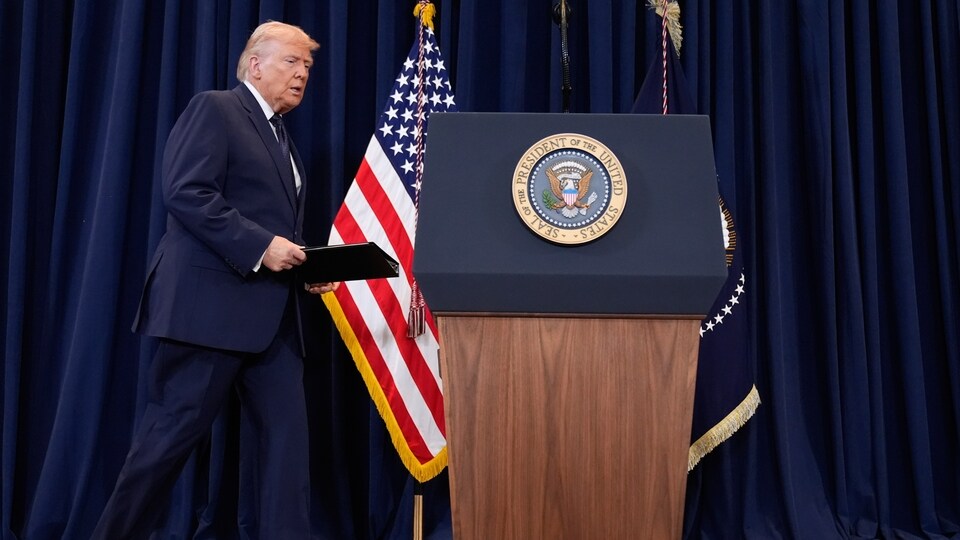
“The (Iranian) Navy is gone,” he claimed, “It's all lying at the bottom of the ocean. 46 ships, can you believe it?” He said he had asked US officials why they did not capture the ships of they were indeed “top of the line".
"They said it is more fun to sink them. They like them sinking better. They say it is safer to sink them — I guess it's probably true," Trump said.
Follow: Live updates on the US-Iran conflict
One of Iranian Navy ships, IRIS Dena, was sunk by torpedo by the US forces in the Indian Ocean near Sri Lanka as it was returning from an exercise in India. More than 85 sailors died. The ship was reportedly unarmed, and the US forces did not stay back to rescue the sailors, thus violating a convention of war.
Several commentators and analysts among a large number of social media shared a clip of Trump's “more fun” comment, calling it “disgusting”, “his true face”, and revelatory of the “real” nature of the US aggression in the Persian Gulf.
His remarks, at the Republican Members' Issues Conference, come amid heightened tensions in West Asia as military operations and retaliatory actions involving Iran, the United States and Israel continue to escalate across the region, following the killing of Iran's Supreme Leader, 86-year-old Ayatollah Ali Khamenei, in joint military strikes by the US and Israel on February 28.
The strikes also killed several senior leaders of the Islamic Republic.
In retaliation, Tehran launched counter-strikes targeting American military bases in multiple Arab countries and Israeli assets across the region.
Trump further said in his Monday speech, reasoning why he and Israeli PM Benjamin Netanyahu attacked Iran at all: "If we didn't go in, they would have come in after us...Within a week, they were going to attack us 100 per cent. They were ready. They had all these missiles far more than anyone thought and they were going to attack us. They were going to attack all of the Middle East and Israel. If they had a nuclear weapon, they would have used it on Israel. This was going to be a major attack. They had all of those missile sites and all those launchers that we got rid of about 80% of them right now...They have very few launchers left. What our military has done is amazing..."
Iran has denied it was planning any attack, or that its nuclear energy programme was for a weapon. It has underlined that talks were on between them and the US when the American attack took place.


