
 E-Paper



Musharraf, betrayer of Lahore Declaration and architect of Kargil war, dies
Former Pakistan Army Chief and military dictator Gen Pervez Musharraf was a military risk taker at heart with excellent tactics but poor strategic understanding. He led Pak Army into war with India at Kargil to avenge 1971 defeat and loss of Siachen Glacier in 1984.

 Prefer HTon Google


The betrayer of the 1999 Lahore Declaration and the architect of the subsequent Kargil war, former Pakistan Army chief and military dictator Gen Pervez Musharraf is dead. A commander of the elite Special Services Group (SSG) of the Pakistan Army, Gen Musharraf was a high-risk taker as he showed in the Kargil war against India with excellent military tactics but poor strategic appreciation. It was during his tenure as a military dictator that Pakistan expanded its nuclear arsenal and revealed its low nuclear threshold and first-use policy with his then strategic plans division chief identifying the four red lines before Rawalpindi would use the nukes.
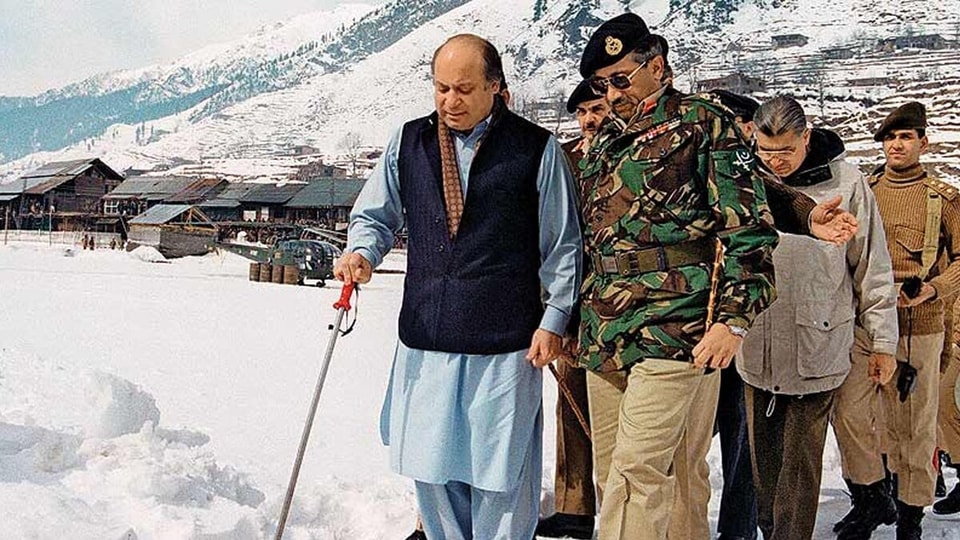
A Mohajir from Delhi in Punjab-Pashtun-dominated Pakistan Army, Gen Musharraf tried to overcompensate for this vulnerability by trying to outshine his military colleagues and launched audacious military operations against India along the Mushkoh-Drass-Kargil[-Batalik front in Jammu and Kashmir in March 1999, a month after Lahore Declaration was signed on February 21.
His plan was to do a Bangladesh on India and cleave Ladakh and Siachen from Indian hinterland with an offensive to severe Indian territory Mushkoh Valley upwards by capturing the National Highway 1 Alpha and then starve Indian military positions in South Siachen glacier. This was Musharraf’s revenge for the 1971 war and 1984 Operation Meghdoot by the Indian Army.
In doing so, he not only embarrassed his own then-Prime Minister Nawaz Sharif post Lahore visit of Indian PM A B Vajpayee but also humiliated Pak PM at Washington with the US ordering Sharif to announce unilateral withdrawal of Pak forces from Kargil Theatre on July 4, 1999. The war ended on July 26, 1999, with the Pakistan Army facing a disgraceful defeat and the Indian Army coming on top without losing even an inch of land in the war theatre. Musharraf then overthrew Sharif on October 12, 1999, and became the military dictator of Pakistan.
It was after the military coup that Gen Pervez Musharraf tried to play a statesman by coming to India for a summit with then Prime Minister Atal Bihari Vajpayee on July 14-16, 2001 at Agra. Despite the military dictator being able to sell a lemon to western and Indian media about his sincerity to solve the Kashmir issue and cross-border terrorism, the Vajpayee government saw through the Kargil General and refused to give in to any demands of Pakistan. The summit failed and the two countries almost came to war after the December 13, 2001, Jaish-e-Mohammed terror attack on Parliament.
Coming under pressure from the west and the Indian Army mobilization post terror attack, Gen Musharraf again changed tactics and assured India and the world that it would not allow its territory to be used for terror attacks against India. His duplicitous side was again revealed as Pakistan-based Lashkar-e-Taiba terrorists massacred innocent women and children at Kaluchak Army Camp in Jammu on May 14, 2002, while the Indian Army was still forwardly deployed against Pakistan in Operation Parakram. It was on the sidelines of the SAARC summit in Islamabad in January 2004 that Musharraf assured Vajpayee that he would not allow any territory in Pakistani control (read Occupied Kashmir) to be used to support terrorism in any manner. This kick-started the bilateral composite dialogue between the two countries and the normalization of relations with several peace and security confidence-building measures including the Srinagar-Muzaffarabad bus service in 2005.
While Pervez Musharraf tried to play the peacemaker with India post 2004, his run-ins with the Chief Justice of the Supreme Court and Pakistan-based terror groups weakened him politically, and militarily with General Ashfaq Kayani taking over as Army Chief in 2007. He went into political oblivion after November 2008 even though he tried to make a comeback in the 2013 Pak general elections. He left for exile in Dubai the second time in 2016 and passed away this morning without any lasting legacy except the man who betrayed Pakistan at Kargil.


