
 E-Paper



Nepal: Kathmandu International Airport closed with immediate effect amid violent protests
Protests outside Parliament began Monday over the social media ban but quickly escalated amid public anger over political corruption and ruling party failures.

 Prefer HTon Google


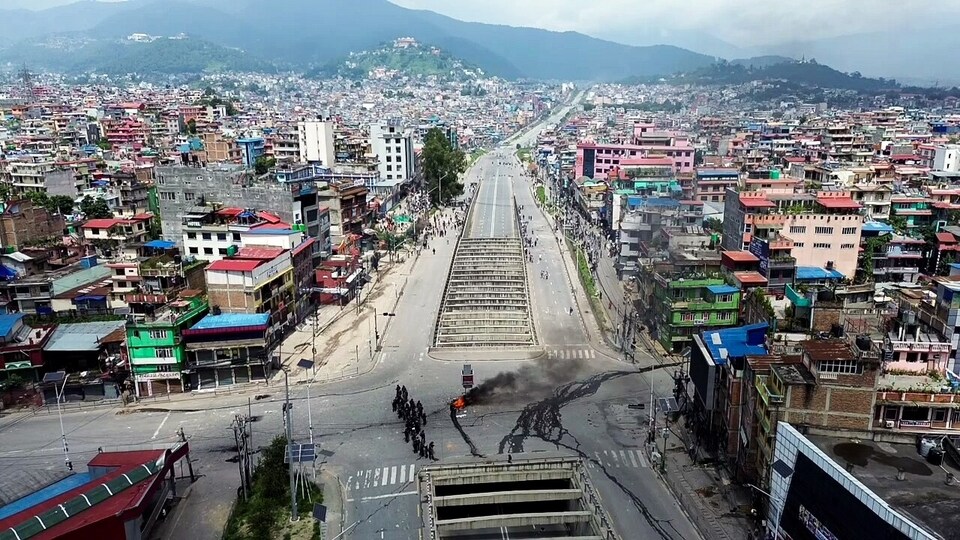
The Kathmandu International Airport has been closed with immediate effect amid violent protests in Nepal that led to the death of at least 19 people so far, Reuters reported, citing the civil aviation authority.
Follow live updates on Nepal protests
Airlines including Air India and IndiGo issued travel advisories for flights to Kathmandu due to ongoing unrest.
An Air India spokesperson said, “In view of the current situation prevailing in Kathmandu, the following flights AI2231/2232, AI2219/2220, AI217/218 and AI211/212 operating on the Delhi-Kathmandu-Delhi route have been cancelled today. We are closely monitoring the situation and will share further updates. At Air India, the safety of our passengers and crew remain top priority.”
IndiGo added, “Travel Advisory. In view of the prevailing situation in #Kathmandu, the airport has been closed for operations. Consequently, all flights to and from Kathmandu stand suspended as of now. If your travel is impacted, you may conveniently opt for an alternate flight or claim a refund by visiting our website. We are closely monitoring the developments and coordinating with local authorities to resume operations at the earliest. Customers are advised to keep checking our official channels for the latest advisories and updates. We look forward to the restoration of normal operations and sincerely appreciate your patience and understanding.”
Also Read | Anger over 'Nepo Kids' fueled Nepal Gen-Z rage: How protesters gathered amid ban
Protesters attack residences of political leaders
Local reports and videos circulating on social media showed protesters attacking the residences of senior political leaders in and around Kathmandu. The unrest began over a social media ban in the Himalayan nation. Authorities imposed a curfew in the capital and other cities, and schools in Kathmandu were closed.
Nepal’s Prime Minister, Khadga Prasad Oli, resigned on Tuesday following the violent demonstrations against the social media ban and alleged government corruption. Oli announced he was stepping down with immediate effect.
His resignation came after protesters set fire to the homes of several of Nepal's top political figures, including Sher Bahadur Deuba, leader of the largest party Nepali Congress; President Ram Chandra Poudel; Home Minister Ramesh Lekhak; and Communist Party of Nepal Maoist leader Pushpa Kamal Dahal. A private school owned by Deuba’s wife, Arzu Deuba Rana, who currently serves as Foreign Minister, was also set ablaze.
Also Read | Nepal Parliament breached, building set on fire by Gen Z protesters | Watch
What are the protests about?
The protests, which began on Monday outside Parliament, initially targeted the social media ban but quickly escalated, driven by widespread public anger over political corruption and dissatisfaction with the ruling parties.
Last week, several popular social networks, including Facebook, X, and YouTube, were blocked in Nepal after failing to comply with a new requirement to register with the government and submit to oversight.
The violence erupted as the government sought to regulate social media more broadly through a proposed bill, aiming to ensure platforms are “properly managed, responsible and accountable.” Critics have described the bill as a means of censorship and a tool to punish government opponents who voice dissent online.
The legislation would require companies to establish a liaison office or point of contact in Nepal. Rights groups have condemned it as an infringement on freedom of expression and fundamental rights.
Despite the ban on platforms such as Facebook, WhatsApp, and Snapchat, thousands of protesters gathered in Kathmandu and other cities on Monday. They relied on alternatives like TikTok and technological workarounds, including VPNs, to spread their message.
What began as a hashtag campaign against nepotism quickly escalated into a full-scale “Gen-Z Protest” after the government implemented the ban on the most widely used social media apps, effectively curbing dissenting voices. The initial call for protests came from a Kathmandu-based group mostly under the age of 28, which was later joined by another youth-led group campaigning under the banner “Nepo Kids.”
Following the protests, the government lifted the social media ban late on Monday night. The registration requirement applied to around two dozen widely used social networks in Nepal.
(With inputs from agencies)


