
 E-Paper



Pakistan grapples with sky-high inflation; Wheat flour costs 800 Pak rupees, Chapati worth 25 Pak rupees
Pakistan is currently engaged in negotiations with the International Monetary Fund (IMF) for a three-year fresh bailout program.

 Prefer HTon Google


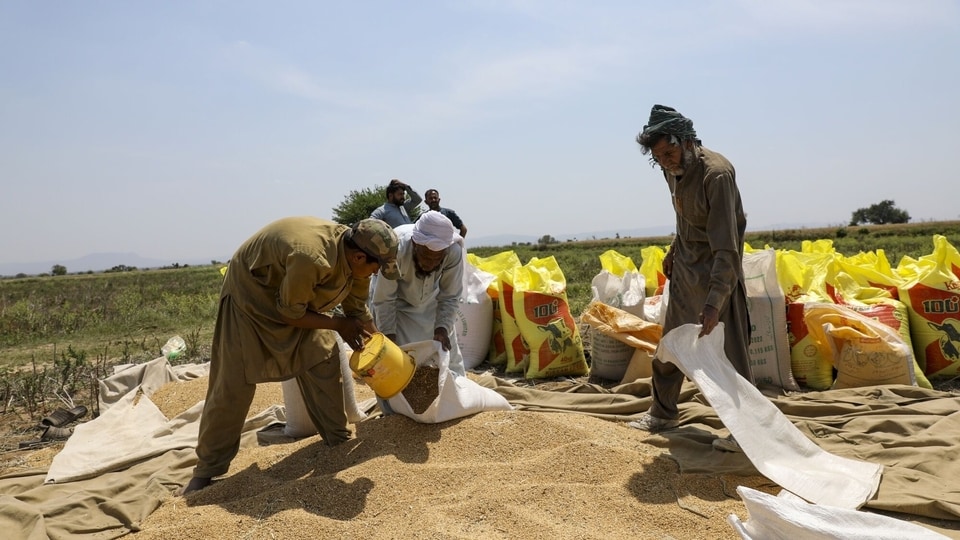
Inflation is steeply rising in Pakistan, causing citizens to struggle to afford essential items to provide basic meals for their families, news agency ANI reported. People in the country's Karachi city have stated that the increasing rates of basic amenities are adversely affecting the common public. A kilo of flour now stands at 800 Pakistani rupees (PKR), compared to the previous price of 230 PKR. Additionally, a single roti now costs 25 PKR, leading the public to lament that the “government is ignoring their needs.”
Also Read | Pakistan's foreign minister Ishaq Dar appointed as deputy prime minister
Pak citizens explain their problems:
Karachi shop owner Abdul Hameed expressed concern over rising prices of essential commodities, criticising the government for “neglecting the needs of the common people.” He lamented the public's inability to afford basic amenities due to increasing costs of electricity, water, and gas, while the “country's leaders seemingly enjoy without addressing these concerns.” Hameed highlighted that the price of a single ‘Roti’ is now exceeding PKR 25, making it unaffordable for many families.
Primary school teacher Abdul Jabbar echoed similar sentiments, stating that basic necessities are now beyond the reach of ordinary citizens. He questioned the government's claims of arranging for affordable gas (LPG), citing the high costs faced by consumers. Jabbar noted that despite being the wheat harvest season, the price of flour remains excessively high, reaching PKR 800, far above its previous price of PKR 230.
Also Read | 14 Pakistani nationals arrested off Gujarat coast with drugs worth ₹600 crore
In discussions with the IMF for a bailout
Pakistan is currently engaged in negotiations with the International Monetary Fund (IMF) for a three-year fresh bailout program. Analysts suggest this program could significantly influence major economic decisions, including interest rate adjustments, as Bloomberg reported. The country is transitioning from one bailout to another, with the IMF slated to evaluate a final loan instalment of $1.1 billion under the existing program on Monday.
Discussions with the IMF involve seeking a new loan of at least $6 billion for at least three years, which the government aims to secure as early as June.
Bloomberg report further said that despite Pakistan maintaining the fastest inflation rate in Asia, consumer price growth has recently fallen below the interest rate for the first time in three years. This development is a crucial indicator for economists awaiting potential interest rate cuts by the central bank.
In anticipation of an IMF mission visiting next month to negotiate a new loan program, Pakistan's central bank has opted to maintain its interest rate at an all-time high. On Monday, the State Bank of Pakistan announced that it will maintain the target rate at 22%, indicating a “delay in the monetary easing cycle.”
Prime Minister Shehbaz Sharif affirmed his commitment to adhere to the structural reforms recommended by the IMF during a meeting with Managing Director Kristalina Georgieva at the World Economic Forum in Riyadh on Sunday.
Citing concerns about inflation risks stemming from global oil prices, energy sector debt resolution, and increased taxes, the central bank stated on its website that it is “wise to continue the current monetary policy stance for now, with significant positive real interest rates.”
(With ANI, Bloomberg inputs)


