
 E-Paper


Follow the latest breaking news, major developments and agenda-setting stories from India and around the world with the newsdesk at Hindustan Times. Operating round the clock, the desk brings together experienced editors, reporters and correspondents to deliver fast, accurate and contextual reporting across subjects that influence public policy, governance, business, society and international affairs. The HT News Desk covers politics, elections, government policies, the economy, business and markets, science and technology, the environment, law and order, infrastructure, education, climate issues and geopolitics, while closely tracking developments across states, institutions and global capitals. The team also leads coverage of major breaking news events, policy announcements, court proceedings, natural disasters, public emergencies and significant international developments. Reports published by the newsdesk are based on information gathered from reporters on the ground, official statements, government agencies, court records, regulatory filings, recognised institutions and other authoritative sources. Stories undergo editorial scrutiny and verification processes to ensure accuracy, fairness and relevance, and are updated as events evolve and additional information becomes available. Whether covering a key political decision in New Delhi, an economic policy shift affecting millions, a landmark court ruling or a major global event, the HT News Desk aims to provide readers with reliable, fact-based journalism that delivers not only the latest developments but also the context and analysis needed to understand their wider implications.
 Trending News
Russian president Vladimir Putin signs law to label journalists as ‘foreign agents’
Foreign agents, defined as involved in politics and receiving money from abroad, must register with the justice ministry, label publications with the tag and submit detailed paperwork or face fines.


Russian President Vladimir Putin has signed a controversial law allowing independent journalists and bloggers to be labelled as “foreign agents”, a move that critics say will violate media freedom.
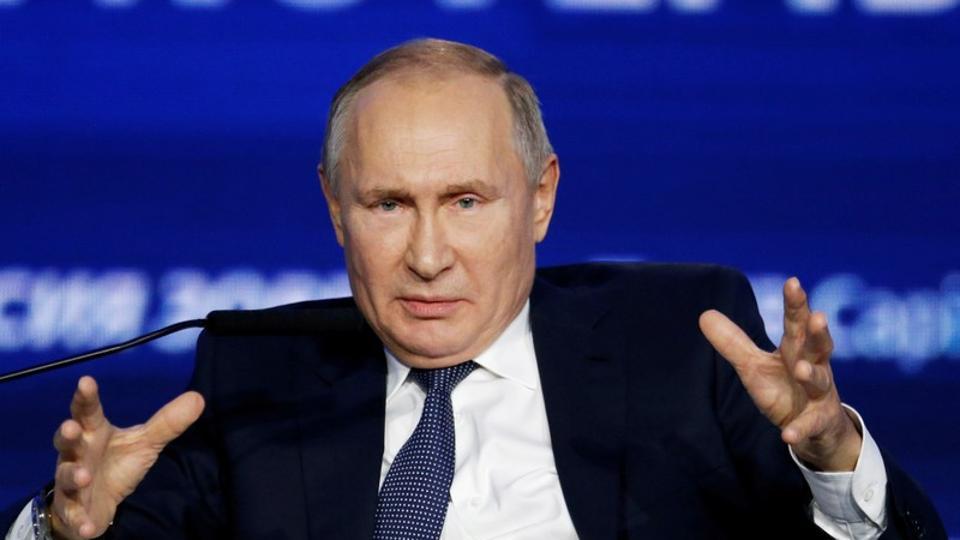
Russian legislation passed in 2012 already gave authorities the power to brand media organisations and NGOs as foreign agents, a term that has Soviet-era overtones. The new law, which now extends to individuals, will come into effect immediately, according to a document published on the Russian government website.
Foreign agents, defined as involved in politics and receiving money from abroad, must register with the justice ministry, label publications with the tag and submit detailed paperwork or face fines.
Nine human rights NGOs, including Amnesty International and Reporters Without Borders, have expressed concern that the amendments may be aimed not only at journalists, but also at bloggers and internet users who benefit from scholarships, funding or revenues from a relevant media outlet.
NGOs said in a joint statement last month the law was “a further step to restrict free and independent media” and “a strong tool to silence opposition voices”.
Authors of the bill have said it is intended to “perfect” existing legislation on “foreign agents” that already covers NGOs and media organisations. Russia says it wants the law as a tit-for-tat mechanism if its journalists are defined as foreign agents in the West. Russia first passed legislation allowing media organisations to be slapped with the label in 2017, after Kremlin-funded RT television was declared a foreign agent in the United States. Russian opposition politician Alexi Navalny’s organisation has been branded a foreign agent, as has US-financed media outlet Radio Liberty/Radio Free Europe and Voice of America.
The term foreign agent was used negatively during the Stalinist era in the 1970s and 1980s for opponents accused of being paid by the West.


