
 E-Paper



Scientists unearth 220 million-year-old dinosaur fossils in Argentina
The find was discovered in September last year in San Juan province, about 1,100 kilometres (680 miles) west of Buenos Aires.


A site containing the 220-million-year-old fossilised remains of nearly a dozen dinosaurs has been discovered in western Argentina, researchers said Wednesday.
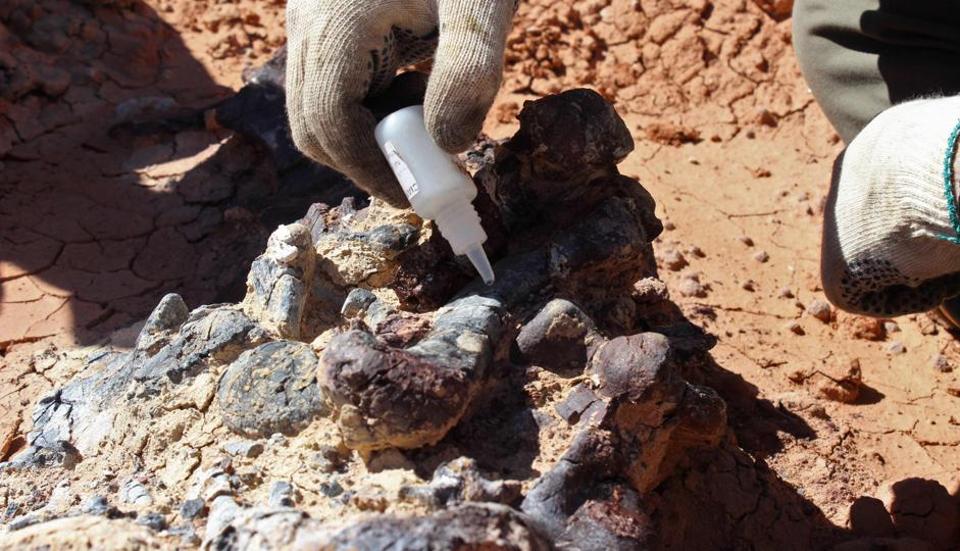
“There are almost ten different individuals, it’s a mass of bones, there’s practically no sediment,” said Argentinian paleontologist Ricardo Martinez.
“It’s very impressive.” According to Martinez, of the University of San Juan, the fossils are approximately 220 million years old, belonging to “an era of which we know little”.
“This discovery is doubly important because there are at least seven or eight individuals of dicynodonts, the ancestors of mammals, the size of an ox,” he said.
He said there were also remains of archosaurs, reptiles that could be the ancestors of great crocodiles “that we do not know about yet”.
The find was discovered in September last year in San Juan province, about 1,100 kilometres (680 miles) west of Buenos Aires.
The site is between one and two metres (yards) in diameter and about the same depth, leading scientists to speculate it was a former drinking hole at a time of great drought, and the creatures died of weakness at the spot.
Argentina has been a rich source of fossils from the Triassic, Jurassic and Cretaceous eras over the years -- most, of creatures not found in the northern hemisphere.


