
 E-Paper



Sunita Williams back on Earth. Here's what happens now
NASA astronauts Sunita Williams and Butch Wilmore returned to Earth after a prolonged nine-month mission aboard the ISS due to technical issues.

 Prefer HTon Google


Sunita Williams and Butch Wilmore, two NASA astronauts, returned to Earth from the International Space Station (ISS), where they had been living for nine months in a drawn-out mission fraught with technical challenges, schedule changes and politics.
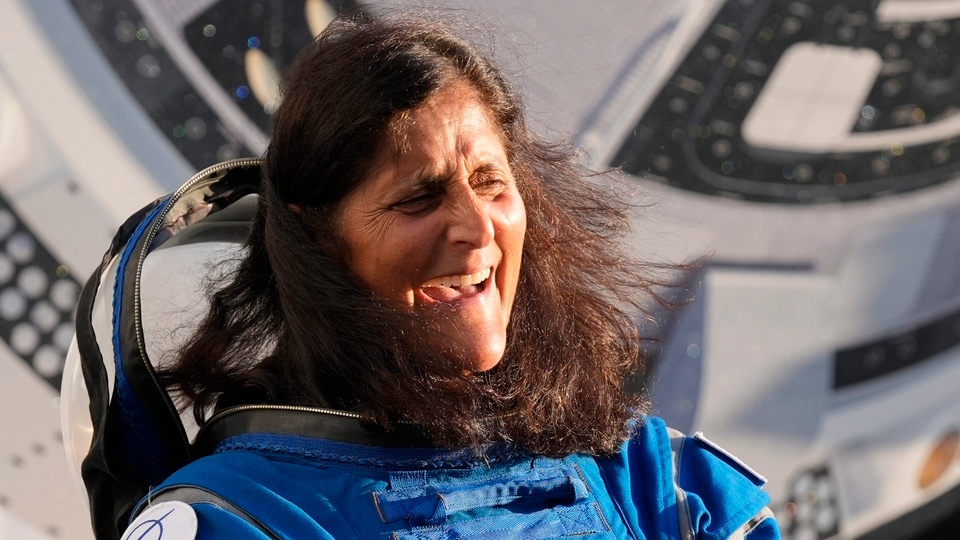
Sunita Williams, 59, and Butch Wilmore, 62, had been stuck on the ISS after their faulty Boeing Starliner craft upended what was to be a roughly week-long test mission.
Follow Sunita Williams return LIVE updates
The four-person crew, formally part of NASA's Crew-9 astronaut rotation mission, splashed down off Florida's coast on Tuesday at 5:57 pm ET (Wednesday at 3:27am India time).
Several key events would follow as part of her post-mission recovery and debriefing:
- Immediate medical attention: Upon splashdown off the Florida coast, Sunita Williams and her fellow astronauts would be assisted out of the SpaceX Crew Dragon capsule and placed on stretchers for initial medical examinations. This standard procedure addresses the physical challenges astronauts face after prolonged exposure to microgravity, such as muscle atrophy and balance issues.
- To be shifted to Johnson Space Center: The astronauts will be flown to their crew quarters at the space agency's Johnson Space Center in Houston for several days of health checks, per routine for astronaut returns, before NASA flight surgeons approve they can go home to their families.
- Post-mission debriefings: The astronauts are likely to participate in debriefings to discuss their experiences, challenges, and successes during the mission.
- Family reunions: After her long mission, Sunita Williams is expected to prioritise spending time with family and friends. Personal time plays a crucial role in an astronaut’s psychological well-being, helping them reconnect with loved ones and smoothly transition back to everyday life on Earth. Williams told reporters earlier this month that she was looking forward to returning home to see her two dogs and family. "It's been a roller coaster for them, probably a little bit more so than for us," she said.
Challenges for astronauts: Dizziness, weightless tongue, baby feet
The absence of gravity has its effects on long-duration space travellers, who experience dizziness, nausea and an unstable gait when they return to Earth.
For Williams and Wilmore, test pilots for Boeing's new Starliner capsule, the eight-day mission stretched to more than nine months as a series of helium leaks and thruster failures deemed their spacecraft unsafe and had to return empty in September.
Astronauts who have travelled on space missions earlier have reported facing difficulty in walking, having bad eyesight, dizziness, and a condition called baby feet where space travellers lose the thick part of the skin on the soles that become soft like a baby's.
"Once the astronaut returns to Earth, they are immediately forced to readjust again, back to Earth's gravity, and can experience issues standing, stabilising their gaze, walking, and turning. For their safety, returning astronauts are often placed in a chair immediately upon return to Earth," news agency PTI reported, citing the Houston-based Baylor College of Medicine in a note on body changes in space.
It takes astronauts several weeks to re-calibrate themselves to life on Earth.
The vestibular organ deep inside the ear helps humans keep their bodies balanced while walking on Earth by sending information about gravity to the brain.
On Earth, gravity pulls blood and other body fluids into the lower part of the body, but for astronauts experiencing weightlessness in space, these fluids accumulate in the upper parts of the body, making them look bloated.
"Astronauts returning to earth often experience dizziness when standing up, known as orthostatic hypotension. This occurs because gravity on the earth is stronger than in space, and it is more difficult to deliver blood from the heart to the head," the JAXA said.
The lack of gravity causes significant and often irreparable bone density loss. According to NASA, for every month in space, astronauts' weight-bearing bones become roughly one per cent less dense if they don't take precautions to counter this loss.
(With inputs from Reuters, PTI)


