
 E-Paper



$1.5bn goal: UN body to set up Early Warning System covering the entire world
Over the past 50 years, a weather, climate or water-related disaster has occurred on average every daysomewhere in the world - taking the lives of 115 people and causing $202 million in losses daily.

 Prefer HTon Google


The number of recorded disasters increased by a factor of five over the 50-year period between 1970 and 2019, driven by the climate crisis and improved reporting, the World Meteorological Organisation (WMO) said on Wednesday.
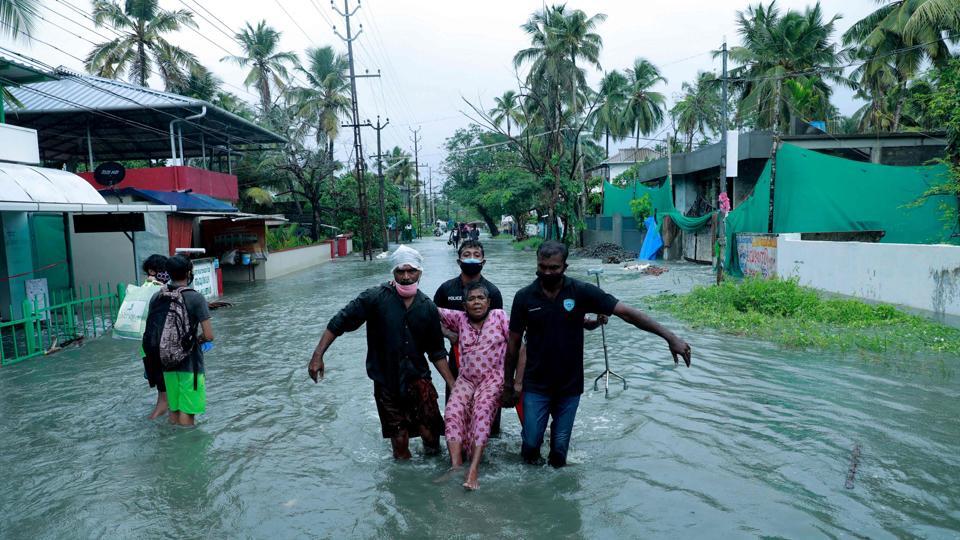
To deal with the increasing threat of the climate crisis, WMO announced a new United Nations goal - an early warning system that covers every person in the world in the next five years. The agency has estimated that the cost of covering everyone with an early warning system will be around $1.5 billion .
The 2019 Global Commission on Adaptation flagship report “Adapt Now” found that Early Warning Systems provide more than a tenfold return on investment - the greatest of any adaptation measure included in the report.
The report also found that just 24 hours warning of a coming storm or heatwave can cut the ensuing damage by 30% and spending $800 million on such systems in developing countries would avoid losses of $3-16 billion a year.
India Meteorological Department is aligned to the WMO target, said M Mohapatra, director general of the Indian weather office, adding that the country is seeing a similar rise in extreme weather events. The number of severe cyclones over the Arabian Sea has risen by 1 per decade and maximum temperature has increased by 0.99 degree C since 1901 in India - small numbers that are big when it comes to weather.
“There is a significant rise in heavy rainfall events also over India. In order to address this crisis we have a goal of ensuring every household gets weather information,” said Mohapatra ahead of WMO’s announcement on Wednesday on the occasion of World Meteorological Day. To meet the goal, IMD, apart from issuing early warning on traditional media like TV and radio, has developed three apps: Mausam for general weather information; Meghdoot for farmers; and Damini for lightning alerts. The last may surprise some but lightning strikes killed 787 in India in 2021.
Now, IMD is developing an app solely for fishermen which is already being piloted among fishermen in Tamil Nadu.
“All populations are not covered by smart phones. So, now we are also developing a common alert protocol so that those not using smart phones get SMS. These alerts will be in local languages. We are collaborating with state governments to reach our information through their networks and apps. WhatsApp messages have become very popular with farmer groups so we try to reach them through stakeholder groups. We hope to cover farmers in all 7,000 blocks in the country soon,” added Mohapatra.
That’s on the information dissemination front. On the information collection front, IMD plans to cover the entire country with 65 radars, of which 33 have already been installed.
Over the past 50 years (1970-2019), a weather, climate or water-related disaster has occurred on average every day somewhere in the world - taking the lives of 115 people and causing $202 million in losses daily, according to a 2021 WMO report on disaster statistics.
While announcing the new target, Antonio Guterres, UN secretary-general said, “Keeping 1.5 degree C target alive requires a 45% reduction in global emissions by 2030 to reach carbon neutrality by mid-century. But, according to current national commitments, global emissions are set to rise by almost 14% this decade. The world must end its addiction to fossil fuels, especially coal. At the same time, we must invest equally in adaptation and resilience. That includes the information that allows us to anticipate storms, heatwaves, floods and droughts.”
Around one-third of the world’s population, mainly in least developed countries and small island developing states, are still not covered by early warning systems.
“The growing number of disasters due to climate change is endangering implementation of a large number of Sustainable Development Goals. Besides very critical mitigation it is growingly important to invest in climate adaptation. One of the highest returns of investments is reached by improving the weather, water and climate early warning services and related observing infrastructures. There is a need to invest $1.5 billion during the coming five years to improve the quality of the services and related infrastructures especially in the least developed countries and small island countries,” said WMO secretary-general Petteri Taalas.
“It will not be easy, it will be challenging, but when one looks at the potential costs of mobilizing the resources to make this a reality, it’s a mere fraction, a mere rounding error of the $14 trillion mobilised by G20 countries over the last two years to recover their economies from Covid 19,” said a senior UN official during an informal briefing for media on Tuesday.
An early warning system for floods, droughts, heatwaves or storms, is an integrated system which allows people to know that hazardous weather is on its way, and informs how governments, communities and individuals can act to minimise the impending impacts, WMO said.
“These systems allow us to monitor the real time atmospheric conditions on land and at sea and to effectively predict future weather and climate events using advanced computer numerical models,” WMO added in a statement.
The agency is expected to present the plan to cover each person with early warning at COP 27 in Egypt.


