
 E-Paper



The Controversial Academic Who Ignited the Jason Arday Furor
Nathan Cofnas doesn’t regret publishing allegations of plagiarism against the late professor, but says the media and Cambridge let Arday down.


 Prefer HTon Google


LONDON—A few months ago, Nathan Cofnas was at a low ebb.
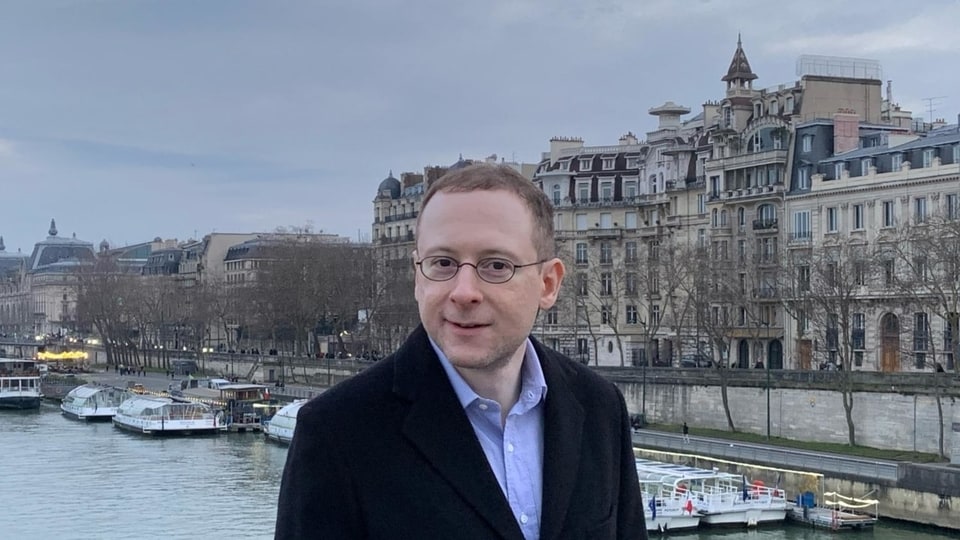
The American self-styled “race realist” was no longer working at the University of Cambridge after his fringe views on genetics and intelligence caused a campus controversy.
“I am hanging on to an academic career by my fingernails,” the 39-year-old wrote in May, as he plied his trade as a part-time postdoc at a public university in Belgium.
Then a former colleague sent him an email: had Cofnas heard of Jason Arday?
That email set off a chain of events that led to one of the biggest academic scandals in Cambridge’s recent history and ended in tragedy when Arday was found dead in south London last week.
A few weeks after that initial email, Cofnas published a post on Substack under the title “DEI Fraud and Cover-Up at Cambridge,” in which he cast doubt on the academic integrity of Arday. The English academic had been named Cambridge’s youngest-ever Black professor a few years previously and had since become a minor U.K. media celebrity.
The Substack post showed that Arday’s Ph.D. included numerous passages lifted directly from another thesis and questioned the autistic professor’s claim that he was mute until the age of 11 and once ran 30 marathons in 35 days. Cofnas’s takeaway: Arday was both a fraud and the tip of a woke iceberg. Across Western institutions, he concluded, there are thousands of Jason Ardays, promoted because of what they represent rather than their ability.
The story became a social media sensation, seized on by the right as an example of the quest for diversity corroding academic integrity and by the left as a racist attempt to hound a successful man because he was Black. The British press went to town with tale after tale, which gradually picked apart Arday’s at times fantastical back story.
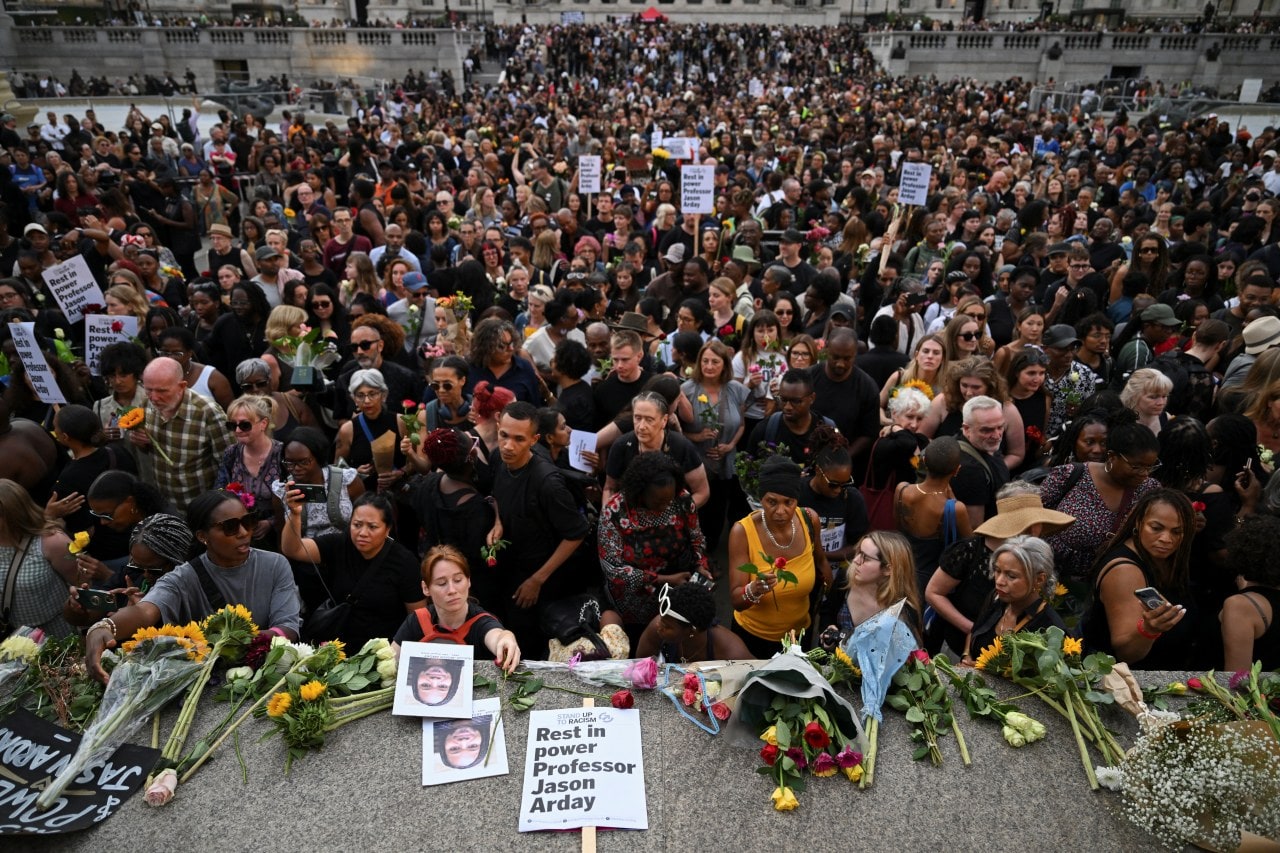
Arday, who denied plagiarism, quit his professorship at Cambridge. Last week, he was found dead in what is widely presumed to be suicide, triggering a wave of angst and finger-pointing in Britain over who was to blame.
Cofnas, speaking from Belgium in one of his first interviews since Arday’s death, said he doesn’t regret publishing his Substack post. But he also said Arday was unfairly hounded by the press and let down by Cambridge University, which overpromoted him then abandoned him when under scrutiny. Cambridge said it provided Arday with mental health support, and has launched an investigation into its hiring practices.
“I was part of a series of causes that led to that outcome,” but “you have to be allowed to criticize powerful people,” Cofnas said of Arday and his death. “The British media published 249 articles about Arday in a 22-day period. I published one article, which was 100% factual,” he said.
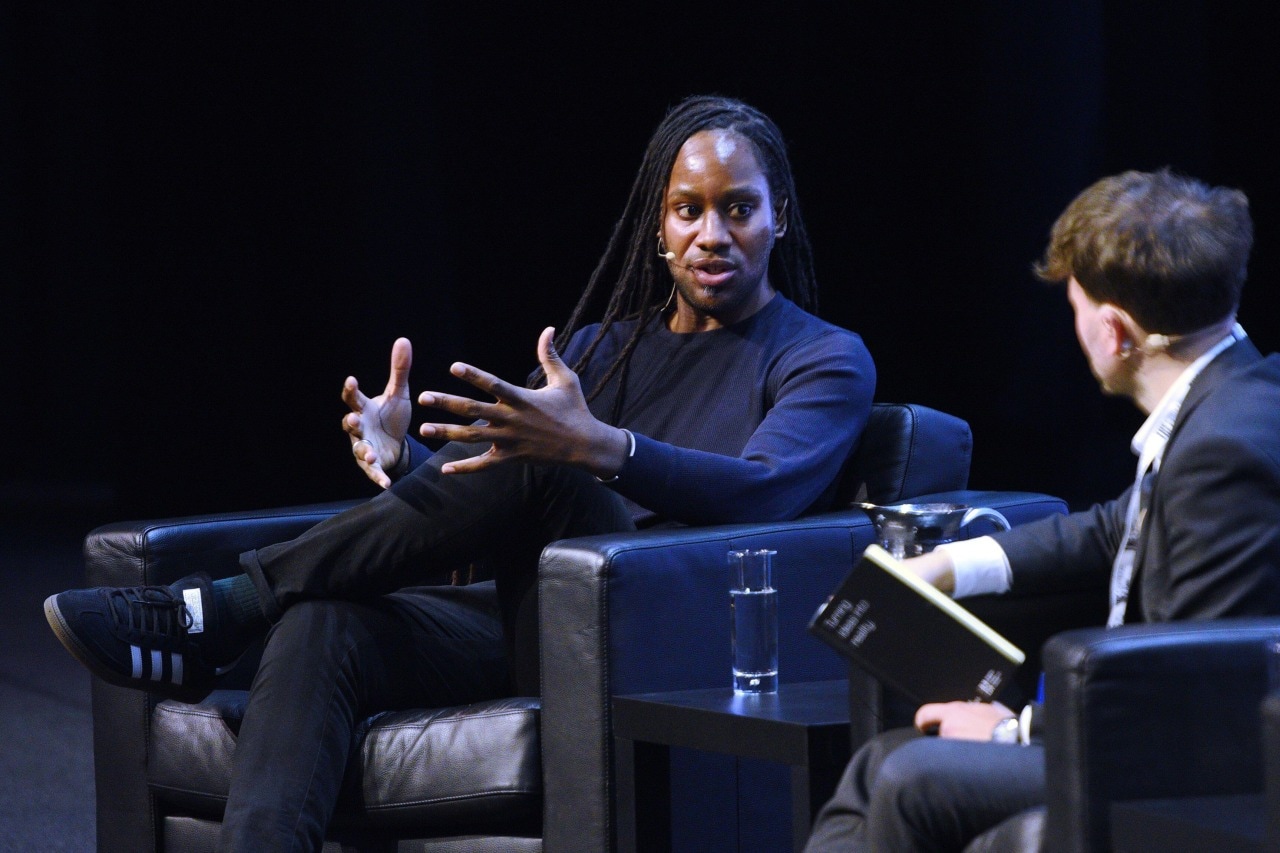
The case has thrown Cofnas—and his controversial research on race and intelligence—to the forefront of a debate on diversity. Cofnas is both blamed for the tragic end to Arday’s life and praised for calling out Arday’s promotion when Cambridge colleagues and the British press didn’t. He has received death threats and a wave of hate mail.
On Thursday, Cofnas said on X that he had been suspended by the University of Ghent, his employer. Cofnas said he would likely be fired. “I’m the scapegoat for everyone,” he told The Wall Street Journal.
The university confirmed the suspension of Cofnas on its website. “We attach great importance to academic freedom and to open academic debate, even when views are controversial. However, that freedom is not unlimited. It goes hand in hand with responsibility and may be restricted in order to protect the rights of others,” wrote Rector Petra De Sutter and Vice-Rector Herwig Reynaert.
The U.S. has for years had raging debates over race and merit, with the Supreme Court ending affirmative action based on race in college admissions in 2023 and the Trump administration attempting to eliminate DEI programs and policies. Increasingly, this debate has spread to the U.K., where traditionally class, not race, has proved the main barrier to social mobility.
Cofnas, who grew up in New York, is no stranger to courting controversy. He says he discovered the idea of “hereditarianism” when he was 17 years old. The theory, which was invented in the 19th century by Francis Galton, an English polymath who coined the term eugenics, is that human intelligence and personality are largely shaped by a person’s inherited genetics, rather than the environment they grew up in.
Critics of that theory have long argued that humans are a product of both genes and environment, and that disaggregating the two is impossible.
Research over decades shows a strong interaction between most biological traits and the environment, debunking the idea that genetics is the main determinant of behavioral traits like intelligence, said Marcus W. Feldman, biology professor at Stanford University. Feldman says making such claims is also dangerous.
“I’m worried that [that] the rise of hereditarianism is taking along with it racism,” he said. “Strong hereditarianism can be the antecedent to very bad social policies,” Feldman explained, citing the Nazis’ use of eugenics to pursue racial purity as an example.
Cofnas denies that he is racist and says academics have a duty to question the assumption that all groups of humans are born intellectually equal. In 2018, Cofnas argued in a paper that technology would soon allow this unknown to be hurdled. “We have failed to work through the moral implications of group differences to prepare for the possibility that they will be shown to exist,” he wrote.
In 2022, Cofnas went to Cambridge to teach the philosophy of biology, after an undergraduate degree in philosophy at Columbia in New York and master’s degrees at Cambridge and Oxford. He says he took the three-year fellowship in England because he was assured that Cambridge had an ironclad attachment to free speech.
Cofnas, wiry and bespectacled, soon put this to the test with a series of provocative Substack posts in which he said “hard truths” about race needed to be accepted to end wokeism. “When the elites accept race realism, we can construct a better world,” he wrote in 2024 in a piece titled “A Guide for the Hereditarian Revolution.”
“In a meritocracy, Harvard faculty would be recruited from the best of the best students, which means the number of black professors would approach 0%,” he wrote. “Blacks would disappear from almost all high-profile positions outside of sports and entertainment.”
His work was picked up by both Cambridge student journalists and English tabloids, who questioned why the illustrious institution had hired him. A petition citing Cofnas’s “abhorrent research” and calling for his dismissal gained more than 1,200 signatures. There were protests, and 58 students launched formal complaints against him for discrimination.
Cofnas argues that hereditarianism isn’t about skin color per se. He has written that in the U.S., for instance, “rednecks” are likely to have lower IQs than other American whites. He points out that Blacks who migrated to the U.K. on average perform better in school than British whites.
“I think he’s dangerously tactless in a radioactive topic” and “should exercise more caution,” Steven Pinker, author and Harvard University evolutionary psychologist, says of Cofnas’s rhetoric on genetics’ role in intelligence. Pinker said examining potential racial discrepancies in intelligence “could cause harm to African Americans” and lead to discrimination against them. “There’s times in science where the best policy is don’t go there,” he said in an interview.
Cofnas’s case soon mushroomed into a test of free speech at Cambridge, with academics publicly urging Cambridge to either terminate Cofnas or keep him on at all costs. Cofnas, meanwhile, says he was frozen out at the university. A three-year fellowship came to an end on schedule, though his position as an unpaid college research associate at Emmanuel College was terminated in 2024. The university said last year it investigated Cofnas and that while his published views are seen by many as offensive, they didn’t breach university rules.
Helped by £85,000 in donations, Cofnas sued Cambridge’s Emmanuel College alleging discrimination. He lost. While the Cambridge County Court found that hereditarianism is a “protected philosophical belief,” it also concluded that the way Cofnas had expressed it didn’t “abide with the college’s culture of respect.” Cofnas is appealing the decision.
Cofnas moved to Ghent University to undertake a postdoc at the Department of Philosophy and Moral Sciences. In April, after a talk on wokeism to the Catholic Flemish Student Union, a student threw a bottle filled with yogurt at his face. Cofnas says he was treated for concussion.
It was around this time that a former colleague at Cambridge got in touch and tipped Cofnas off about Arday. Questions about the professor’s meteoric rise and astonishing back story had been circulating for a few years in academic circles.
Arday, born to immigrants in London, said he had been diagnosed with autism as a child and only learned to write when he was 18. He achieved a Ph.D. from Liverpool John Moores University, and soon began to climb the academic ranks. Along the way, in videos and media interviews, Arday sketched out a remarkable life story, claiming to have raised millions for charity, run multiple marathons including with a hairline fracture in his leg, and played semipro soccer.
When in 2022 he was named professor of sociology of education at Cambridge at the age of 37, his achievement was feted in the press and championed as a symbol of how an 800-year-old institution was moving with the times.
Cofnas wasn’t the first to find Arday’s work suspicious. Soon after Arday was hired at Cambridge, a retired British professor called David Harris read Arday’s work and flagged a series of apparent errors, which appeared to include passages taken from other works without citation. Harris said Arday initially ignored his emails but then eventually replied: “Instead of spending your time trying to dismantle racism and ableism, you have spent what I assume is hours combing through my work looking for mistakes and then reporting them to various institutions. I have no problem with constructive criticism, but the tone of your emails are unkind and hostile.”
Eventually, the journals where the work was published issued corrections, and Cambridge stood by Arday, telling Harris in an email that they met with Arday, who “spoke movingly about his ongoing experiences of direct and indirect racism.” Harris says he later found out Arday had reported him to the police.
Two years later, a reporter at the Times Higher Education—a respected specialized media that focuses on the university sector—investigated Arday and put together a 97-page dossier of evidence of his plagiarism. But the reporter said the story was spiked after the publication was threatened with legal action by Arday’s lawyers. Arday also reported the journalist to police, alleging harassment. The journalist said police asked him not to contact Arday again to protect his mental health.
So Cofnas took it upon himself to break the story. He says he had no qualms about publishing. “Arday was a powerful, influential, famous person who sought his position, who manipulated people to obtain it,” he said.
Cofnas now says he hopes to get a position one day at a “mainstream institution.”
Write to Max Colchester at Max.Colchester@wsj.com and Chao Deng at chao.deng@wsj.com


