
Sign in

Iran denies US 'talks' claim, says Trump has backed down on Hormuz Strait threat

Iran's Fars news agency, citing an unnamed source, said “there are no direct or indirect communications” with the United States.

Updated on: Mar 23, 2026 8:24 PM IST
Share
Share via
  • facebook
  • twitter
  • linkedin
  • whatsapp
Copy link
  • copy link

After President Donald Trump on Monday said the US and Iran have held “productive” talks over the past two days to end the ongoing war, the Iranian foreign ministry denied ay such talks took place.
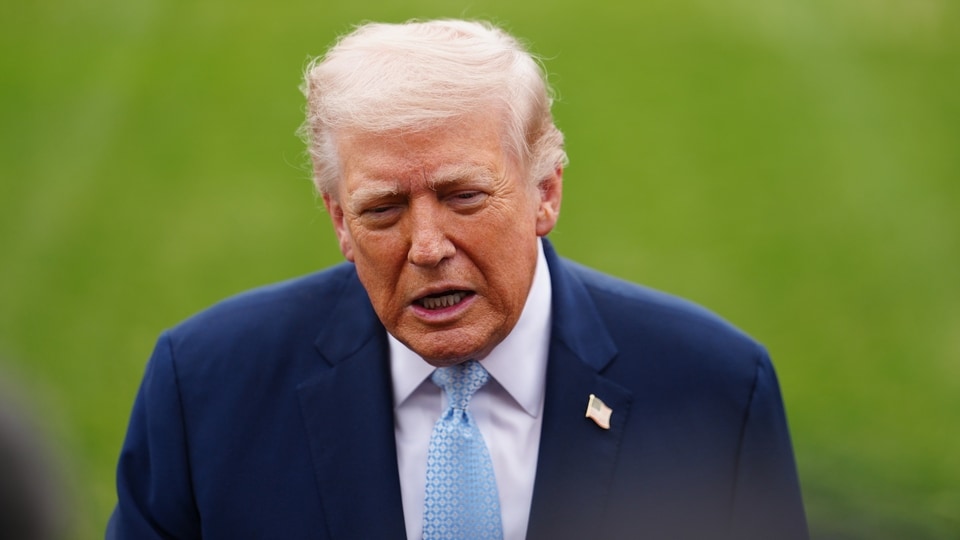
President Donald Trump speaks with reporters before departing on Marine One from the South Lawn of the White House recently. (AP File Photo)

The Iranian state media also said the country has not held any such talks, while the country's embassy in Kabul posted a caustic response titled “Trump's Retreat After Iran's Firm Warning”.

Track live updates of Iran-US war here

"After the Islamic Republic threatened that in the event of any US attack on Iran's energy infrastructure, it would target the energy infrastructure of the entire region, Trump backed down and stated that he had issued an order to postpone the attack,” read a post on the X handle of Iran's Afghanistan diplomatic mission on Monday.

This post did not deny Trump's dramatic statement that talks were being held for two days now. But Iran's Fars news agency, citing an unnamed source, said “there are no direct or indirect communications” with the United States.

Fars also said Trump “backed down” on targeting Iranian power plants after Iran warned it would target power plants across West Asia in response.

Iranian state television also offered Tehran's reaction to Trump's decision to extend his threat deadline for reopening the Strait of Hormuz by five days. It flashed a graphic on screen: “US president backs down following Iran's firm warning.”

The US President, in his Truth Social post, said that based on the “tenor” and “tone” of the talks, he instructed his Department of War to “postpone” any attack on the power plants and energy infrastructure of Iran for five days.

He described discussions he claimed were held as “very good and productive”, without giving out much detail. He also claimed the two sides talked about “a complete and total resolution of our hostilities in the Middle East”.

Trump on Friday had expressed willingness to engage in talks with Tehran, but with a signature contradictory bit added to it.

“Nobody wants to be a leader over there anymore. We’re having a hard time. We want to talk to them, and there’s nobody to talk to… And you know what? We like it that way,” he said last week.

  • Aarish Chhabra
    ABOUT THE AUTHOR
    Aarish Chhabra

    Aarish Chhabra is an Associate Editor with the Hindustan Times online team, writing news reports and explanatory articles, besides overseeing coverage for the website. His career spans nearly two decades across India's most respected newsrooms in print, digital, and broadcast. He has reported, written, and edited across formats — from breaking news and live election coverage, to analytical long-reads and cultural commentary — building a body of work that reflects both editorial rigour and a deep curiosity about the society he writes for. Aarish studied English literature, sociology and history, besides journalism, at Panjab University, Chandigarh, and started his career in that city, eventually moving to Delhi. He is also the author of ‘The Big Small Town: How Life Looks from Chandigarh’, a collection of critical essays originally serialised as a weekly column in the Hindustan Times, examining the culture and politics of a city that is far more than its famous architecture — and, in doing so, holding up a mirror to modern India. In stints at the BBC, The Indian Express, NDTV, and Jagran New Media, he worked across formats and languages; mainly English, also Hindi and Punjabi. He was part of the crack team for the BBC Explainer project replicated across the world by the broadcaster. At Jagran, he developed editorial guides and trained journalists on integrity and content quality. He has also worked at the intersection of journalism and education. At the Indian School of Business (ISB), Hyderabad, he developed a website that simplified academic research in management. At Bennett University's Times School of Media in Noida, he taught students the craft of digital journalism: from newsgathering and writing, to social media strategy and video storytelling. Having moved from a small town to a bigger town to a mega city for education and work, his intellectual passions lie at the intersection of society, politics, and popular culture — a perspective that informs both his writing and his view of the world. When not working, he is constantly reading long-form journalism or watching brainrot content, sometimes both at the same time.Read More

Get the latest headlines from US news and global updates from Pakistan, Nepal, UK, Bangladesh, Russia, and get all the latest headlines in one place on Hindustan Times.