E-Paper



Trump Plans to Get Putin and Zelensky Talking. That’s Not Even the Hard Part.
Even if the Russian leader supports a pact, skepticism is likely to follow as Moscow has previously broken promises not to attack Ukraine.


 Prefer HTon Google


WASHINGTON—After months of effort and two grinding summits over four days, President Trump says an agreement between the leaders of Russia and Ukraine to directly negotiate a deal ending Moscow’s invasion is close at hand.
Now comes the hard part.
It would be no small feat to get Russian President Vladimir Putin and Ukrainian President Volodymyr Zelensky in a room together. But brokering a cease-fire—let alone a lasting peace that deters Russia from invading Ukraine again—will be an even greater diplomatic challenge than Trump has faced so far.
There will be questions about whether the front lines should be frozen in other regions of Ukraine; what role, if any, European countries will have either at the negotiating table or in a reassurance force that protects Kyiv long term; and what security guarantees from Europe and the U.S. Zelensky wants that Putin can accept.
Even if Putin supports a pact, there will be rampant skepticism about whether he will honor his promises, as Russia has broken formal commitments not to invade Ukraine.
“Is he prepared to let the rest of Ukraine go? Is he ready to acknowledge that he has lost Ukraine for good?” asked Charles Kupchan, who handled European affairs in former President Barack Obama’s National Security Council. “We need answers to these questions to determine whether Putin is simply playing for time or negotiating in good faith.”
A meeting between Putin and Zelensky for the first time since 2019 would be dramatic, if one even comes together in the coming days. The format and the timing is still unclear, but if the high-profile gathering materializes, it would only signal that the toughest phase of negotiations had just begun—and with no guarantee of success.
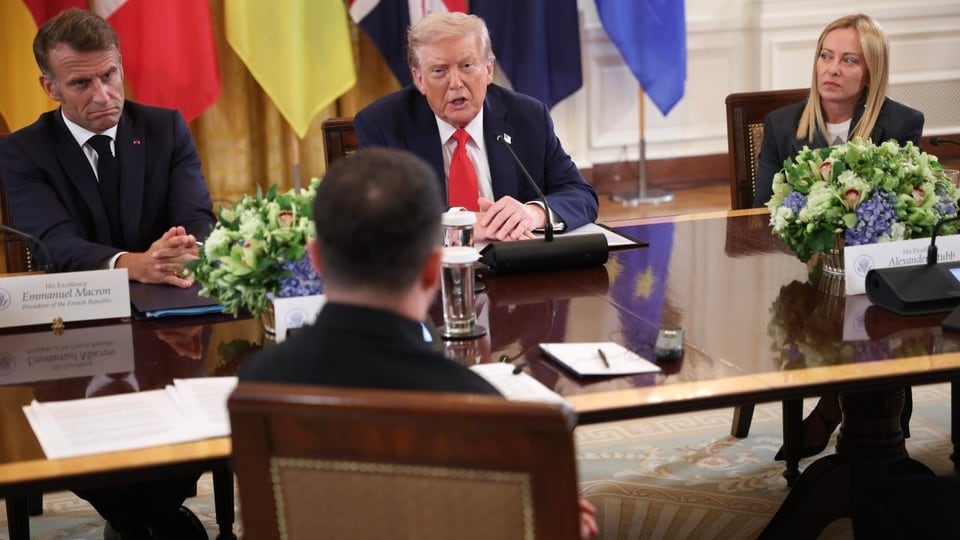
“The next steps ahead are the more complicated ones now,” German Chancellor Friedrich Merz told Trump during Monday’s summit with Zelensky and top European leaders, offering a more sober assessment amid projections of unity at the White House.
Trump has acknowledged that ending the Ukraine-Russia war was harder than he expected, after boasting on the campaign trail that he could finalize a deal in 24 hours. The conflict, which began in 2014 with Russia’s seizure of Crimea and involved years of low-grade fighting before Moscow launched its full-scale invasion of 2022, has become the world’s signature battle pitting a nuclear-armed aggressor against a smaller, former satellite state yearning to align itself more with Europe.
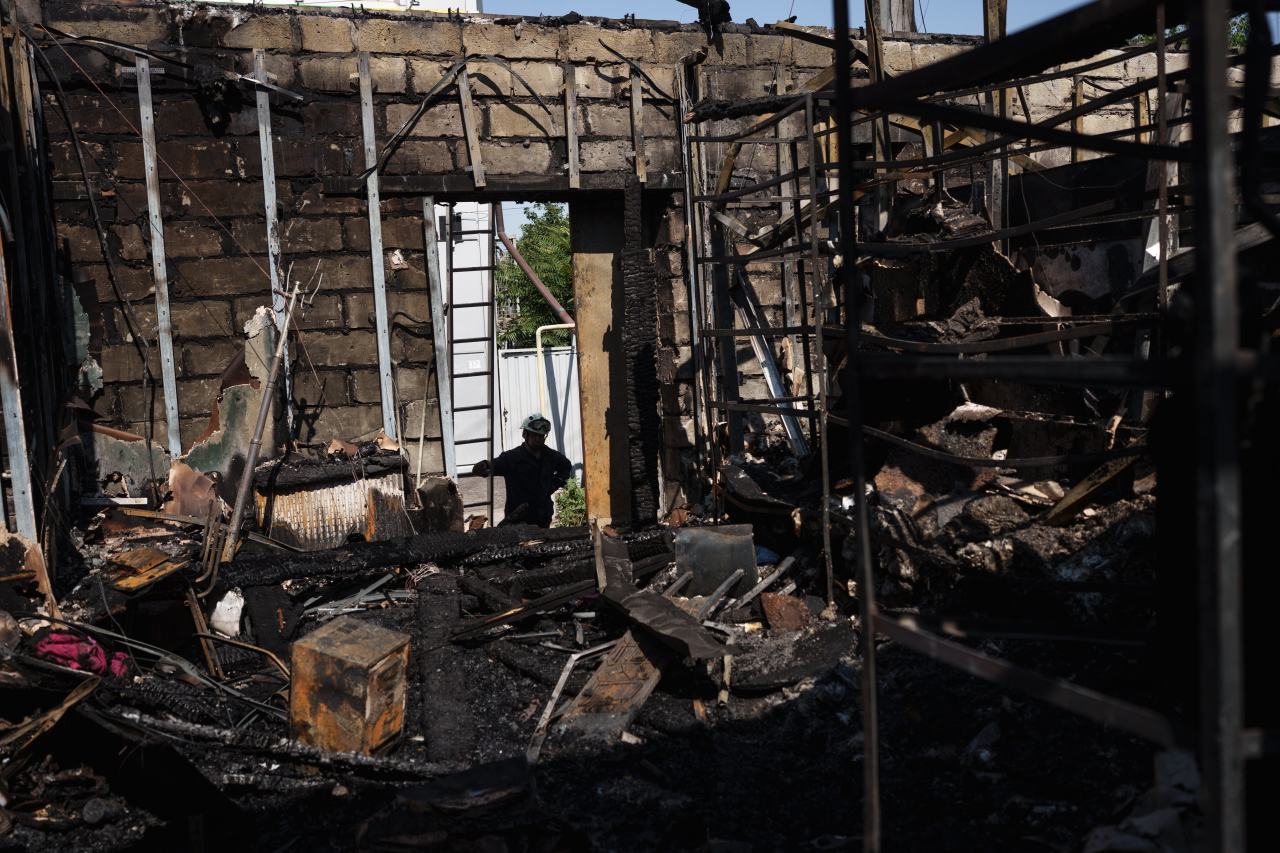
Forging a durable agreement that finally stops the bloodshed would prove a diplomatic coup for Trump, potentially defining his presidential legacy. But in a brutal sign of the difficulty, Russia launched deadly attacks at Ukraine the night before Zelensky’s Monday visit to the White House as well as drone and missile strikes during the summit.
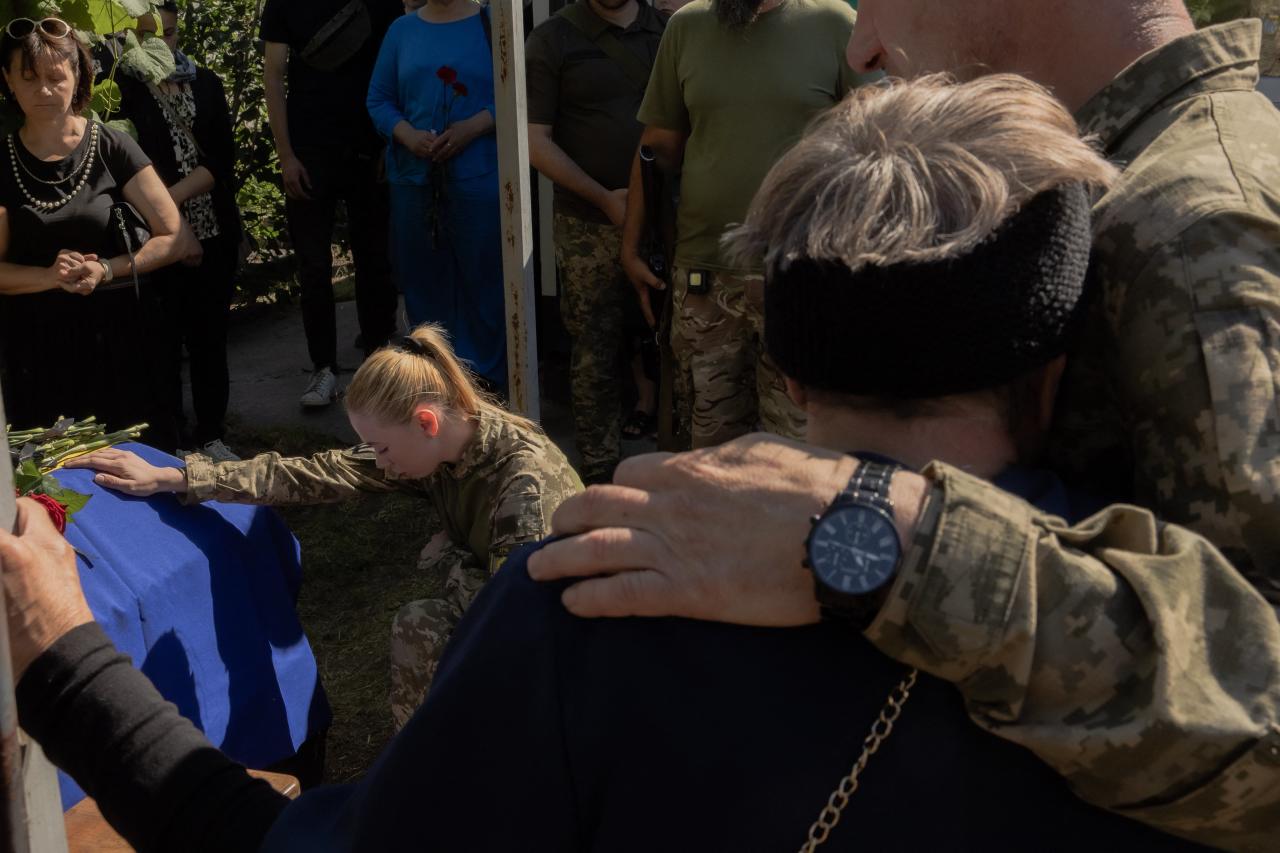
Loved ones mourn over the coffin of a Ukrainian soldier on Monday.The site of a strike in Zaporizhzhia on Monday.
Moscow also said on Monday that any peacekeeping efforts involving North Atlantic Treaty Organization members, a proposal floated by Europeans and deemed by Zelensky as critical to Ukraine’s survival, are unacceptable.
Four days of negotiations that saw Trump host Putin at a military base in Alaska and Zelensky in Washington is already showing the warring parties remain far apart on a peace agreement.
Under a deal proposed by Putin during his Friday meeting with Trump, Ukraine would surrender its eastern Donbas region, including parts of Donetsk that Ukrainian forces still control. Ukraine has repeatedly said its constitution prevents it from surrendering territory to Russia, and it is busy building deep fortifications stretching hundreds of miles across the Donbas, a region roughly the size of West Virginia.
Some European officials believe that Putin’s demands were calculated precisely to produce a Ukrainian rejection—shifting the blame for a breakdown in talks to Kyiv and allowing Russia to press on with the war without a response from Washington.
Three days later, Zelensky has instead called on Russia to accept a cease-fire that would allow for fighting to stop while talks proceed, a position pushed by some of the European leaders at the table with Trump. Putin has rejected an immediate fighting pause and Trump has said one isn’t necessary as a precondition to peace talks, arguing that wars are often solved while hostilities are taking place.
But Zelensky said he is pleased that Trump is open to the U.S. joining European countries in providing security guarantees to Kyiv, possibly in the form of a security force stationed in Ukraine. But U.S. troops, according to administration officials, wouldn’t have a permanent presence in Ukraine, though the exact shape of American support—or what the force’s ultimate composition would look like—remains unclear.
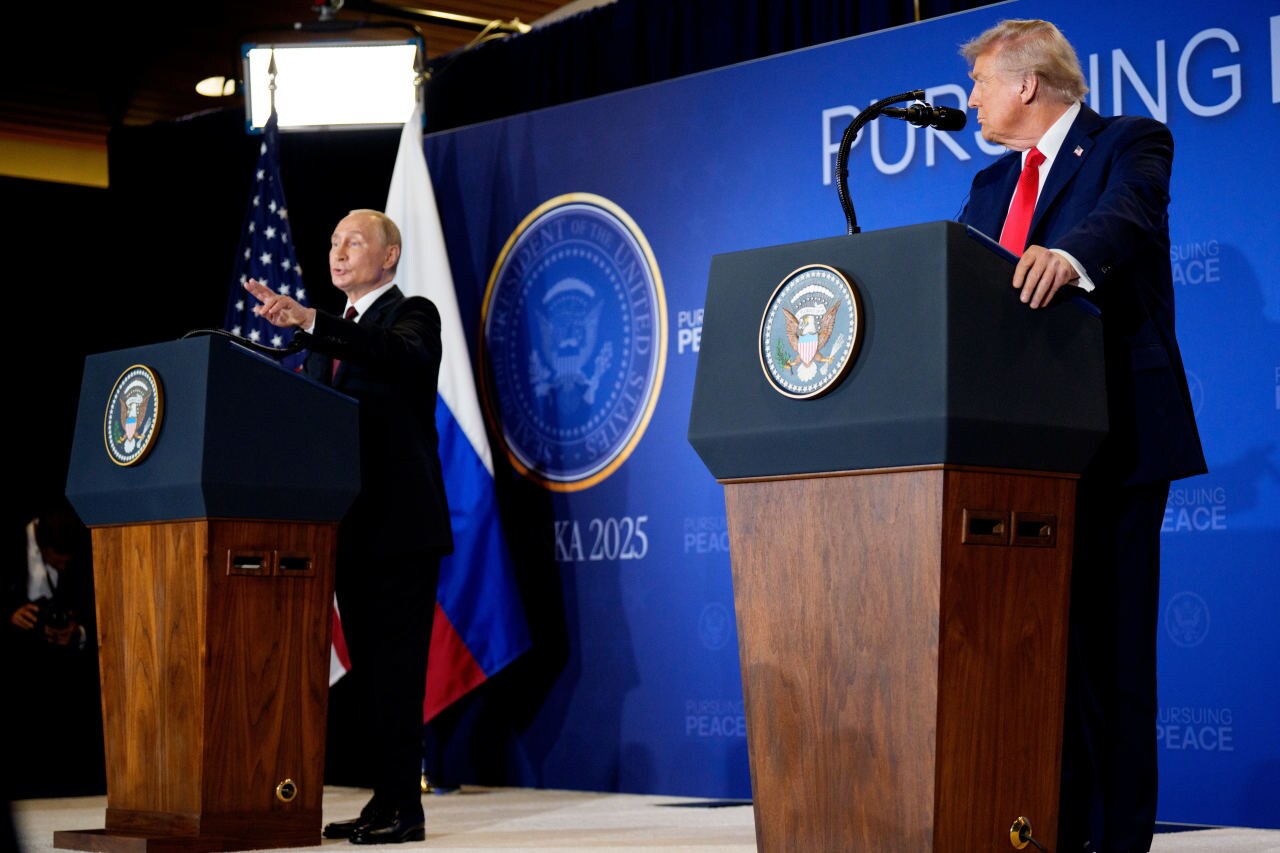
Russian President Vladimir Putin and Trump at a press conference in Anchorage, Alaska.
“It’s very important that the United States gives a strong signal and is ready for security guarantees,” Zelensky said after the meeting with Trump.
The yawning chasm between Kyiv and Moscow would normally be narrowed before organizing a high-profile meeting between Putin and Zelensky. The U.S. president has also waffled on where he stands, siding with Putin’s no cease-fire position in Alaska and dropping his sanctions threat while supporting Ukraine’s long-term defense days later alongside Zelensky in Washington.
Trump’s current plan is that Putin and Zelensky meet one-on-one before he joins them for a trilateral summit, even though the Kremlin on Monday didn’t commit to that format. Still, a three-way gathering could be the place where Trump, flanked by both leaders, reveals his ultimate aim: seeking the best possible deal for Ukraine or reaching an end to the war above all else.
The lack of clarity on diplomatic strategy is just one illustration that the peace process Trump launched “is backward” because any agreement would be vague without attention to the details first, said Jim Townsend, a former Obama administration senior Pentagon official for European affairs now at the Center for a New American Security think tank.
“I would hope that the hard work takes place before they meet so that all those two enemies have to do is agree to a piece of paper and not have to negotiate something face-to-face,” he added. “The devil is in the details.”
Write to Alexander Ward at alex.ward@wsj.com, Alex Leary at alex.leary@wsj.com and Matthew Luxmoore at matthew.luxmoore@wsj.com