
 E-Paper



Trump Tells Europeans He Is Open to U.S. Security Guarantees in Ukraine
Trump said that Putin accepted that any peace would need to include the presence of Western troops in Ukraine as a way of ensuring its durability.


 Prefer HTon Google


President Trump told European leaders that he was open to offering U.S. security guarantees to Ukraine, according to several European officials, a significant shift in his stance toward America’s role in any end to the war.
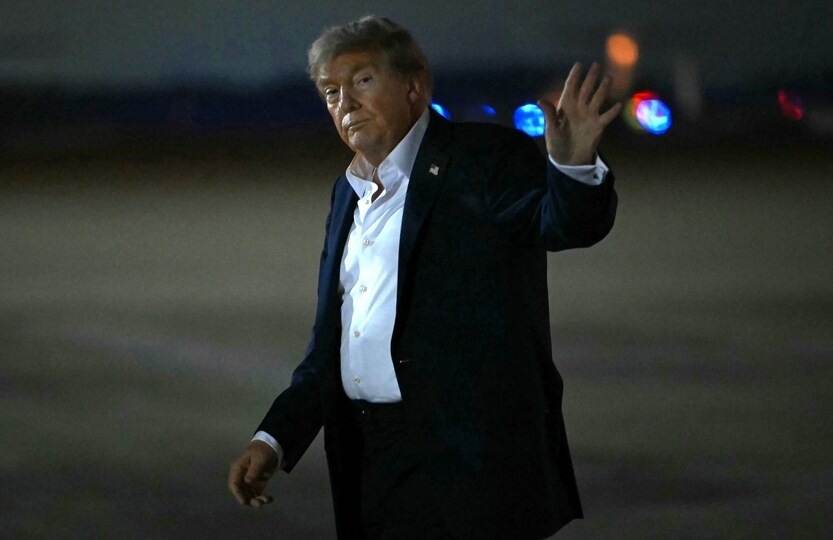
The officials, who spoke with Trump after his meeting with Russian President Vladimir Putin in Alaska, said Trump told them Putin wouldn’t stop fighting during any peace talks and insisted Ukraine cede territory in the country’s east in exchange for a freeze of the front line elsewhere.
Putin accepted, Trump said, that any peace would need to include the presence of Western troops in Ukraine as a way of ensuring its durability, according to four of the officials.
European leaders had been told by the U.S. ahead of the summit in Anchorage that Moscow had indicated to Washington that it was willing to accept a temporary cease-fire and would attend a second round of talks toward a longer-term peace, according to three of the European officials.
But in a call from Air Force One on his way home from the summit, Trump relayed to the Europeans that Putin wanted to keep fighting, the officials said.
Kyiv has long sought U.S. security guarantees as a bulwark against future Russian aggression under any peace deal. But some U.S. officials have insisted that the U.S. wouldn’t act as a guarantor for Kyiv. Zelensky’s determination to win some kind of security guarantee from Washington contributed to the angry confrontation between Trump and the Ukrainian president at the Oval Office in February.
The White House hasn’t spoken publicly about security guarantees for Ukraine since Trump arrived in Alaska for the meeting with Putin.
Trump’s apparent shift on the matter, indicated to the Europeans, is notable because for months he had rejected Zelensky’s request for such a U.S. role, fearing it would mire the U.S. in a foreign war. Trump also hadn’t responded to a European request to provide some form of backstop to any European troops potentially deployed to Ukraine as part of a peace deal.
U.S. security guarantees could potentially enable Zelensky to compromise in talks with Putin, provided Russia is ready to negotiate in good faith, some of the European officials who took part in the call said.
Three people familiar with the call said Trump indicated guarantees could include U.S. military support for a European-led security force in Ukraine but didn’t commit to American forces stationed on the ground.
The security guarantees as described by Trump on the call included bilateral security commitments and financial and military support for Ukraine’s armed forces by a Western coalition of the willing including the U.S., three of the European officials said.
The people on the calls gave different interpretations of Trump’s position on whether there would be a U.S. military component in any security guarantee.
In a joint statement Saturday after calls with Trump and among themselves, European leaders appeared to reference the president’s offer for security guarantees.
“We are clear that Ukraine must have ironclad security guarantees to effectively defend its sovereignty and territorial integrity,” the leaders of Germany, France, Britain, Poland, Italy, Finland and the European Union institutions said in the statement. “We welcome President Trump’s statement that the US is prepared to give security guarantees.”The Kremlin didn’t respond to a request for comment.
Trump also told European leaders he wants a trilateral meeting with Zelensky and Putin by the end of next week to advance the peace process, the European officials said.
Trump and Zelensky are set to meet in the Oval Office on Monday for talks, which will be attended by at least one other European leader. Trump said that if that meeting goes well, he would schedule a meeting with Putin.
The European leaders on Saturday said in their statement they were ready to support Ukraine in a trilateral summit between Russia, Ukraine and the U.S.
Putin’s senior aide Yuri Ushakov, who attended the meeting with Trump in Alaska, told state media that a second summit could be discussed, but that the proposal of holding a trilateral talks between the two presidents and Zelensky has “not been touched upon.”
The highly billed summit in Alaska yielded few concrete steps toward ending the war in Ukraine, which is now well into its fourth year. Trump and Putin signaled that some agreements had been reached but there was no clear breakthrough. The U.S. president left Anchorage without the cease-fire deal he was determined to bring home.
“There will be very severe consequences,” Trump said ahead of the meeting in response to a question about what he would do if Putin failed to offer a cease-fire.
Hours after meeting Putin, however, he dropped his demand in a post on his Truth Social platform, in which he argued in favor of going straight to negotiations for a full peace agreement following his discussions with the leaders of Russia, Ukraine and other European nations.
“It was determined by all that the best way to end the horrific war between Russia and Ukraine is to go directly to a Peace Agreement, which would end the war, and not a mere Ceasefire Agreement, which often times do not hold up,” Trump wrote.
The move echoes Putin’s preferred approach and would allow the fighting to continue until a deal is reached—something Ukraine has argued against.
Putin told legislators Saturday that the meeting with Trump went well and that the conflict in Ukraine could only be pacified by removing what he called “root causes,” which the Kremlin defines as Kyiv’s drift toward the West and its aspirations to join the North Atlantic Treaty Organization.
“We, of course, respect the position of the American administration, which sees the need for a speedy end to military action,” Putin said, according to a Kremlin transcript. “Well, we would also like this and would like to move on to resolving all issues by peaceful means.”
Trump and the European leaders also touched on a proposal by Italian Prime Minister Giorgia Meloni, which would provide Ukraine with a security guarantee modeled on the Article 5 collective-defense clause of the NATO, according to two people briefed on the call.
During the call around 3 a.m. Central European Time on Saturday, Trump told European leaders that he had been working 24 hours straight and appeared tired and irritated with Putin, according to the officials who took part in the call. They said Trump said he would only consider renewing his threat of immediate sanctions against Russia if the trilateral talks failed to deliver progress toward peace.
Write to Bojan Pancevski at bojan.pancevski@wsj.com, Laurence Norman at laurence.norman@wsj.com and Daniel Michaels at Dan.Michaels@wsj.com


