E-Paper


‘I can destroy trade, but can’t charge $1’: Trump scoffs US Supreme Court's tariffs order
Reacting to court setback, Donald Trump said, "I can embargo. I can do anything I want, but I can't charge $1."

 Prefer HTon Google


US President Donald Trump on Friday ripped into the US Supreme Court after it struck down his administration’s reciprocal tariffs, saying the ruling meant he was “not allowed to charge even $1” to other countries. Within hours of the setback, he announced a fresh 10% “global tariff” on all US trading partners.
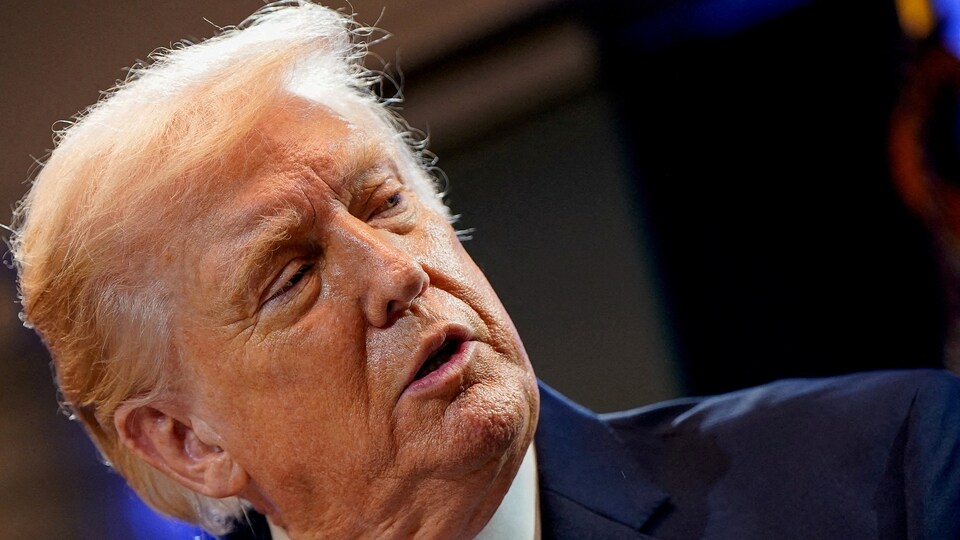
Addressing reporters after the ruling, Trump framed the court’s decision around what he called a basic contradiction.
“To show you how ridiculous the opinion is, however, the court said that I'm not allowed to charge even $1. I can't charge $1… Can't charge $1 to any country under IEEPA. Not $1,” he said.
The Supreme Court had earlier invalidated the reciprocal tariffs imposed in April under the International Emergency Economic Powers Act (IEEPA), dealing a blow to one of Trump’s key trade measures.
‘I can do anything i want, but not charge $1'
Trump argued that the decision limits his ability to levy even minimal tariffs while allowing far harsher actions.
“But I am allowed to cut off any and all trade or business with that same country. In other words, I can destroy the trade. I can destroy the country. I'm even allowed to impose a foreign country destroying embargo. I can embargo. I can do anything I want, but I can't charge $1,” Trump said.
“I assume, [the court’s order is] to protect other countries. This must have been done to protect those other countries. Certainly not the United States of America, which they should be interested in protecting,” he said.
Vows alternatives after court setback
Despite the ruling, Trump made clear that he would pursue other options to keep tariffs in place. He maintained that the earlier tariffs had generated massive revenue. “We were taking in hundreds of billions of dollars. We'll continue to do so,” he added.
“But other alternatives will now be used to replace the ones that the court incorrectly rejected. We have alternatives, great alternatives, could be more money. We'll take in more money and we'll be a lot stronger for it,” he said.
India deal remains unchanged
Earlier in the day, Trump said the Supreme Court ruling would not alter the terms of the US trade deal with India.
“Nothing changes. They will be paying tariffs and we will not be paying tariffs. The deal with India is they pay the tariffs. This is a reversal from what it used to be,” he said.
White House officials clarified that for countries such as India that have signed trade agreements with the US, tariff levels will temporarily fall to 10% before new rates are determined.
Signs 10% global tariff order
Within hours of the court’s order, Trump announced a new trade move.
“It is my Great Honor to have just signed, from the Oval Office, a Global 10% Tariff on all Countries, which will be effective almost immediately. Thank you for your attention to this matter!,” he posted on Truth Social.
The new tariff has been authorised under Section 122 of the Trade Act of 1974, a provision that allows the President to impose duties of up to 15% for a maximum of 150 days to address “large and serious” balance-of-payments problems.
The authority does not require formal investigations. However, any extension beyond 150 days would need approval from Congress. After that period, the tariffs can continue only if lawmakers sign off.
Legal experts, however, say the newly announced tariffs could also face court scrutiny. However, because Section 122 duties are limited to 150 days unless extended by Congress, any legal challenge may outlast the measure itself.