
 E-Paper


Donald Trump seeks Supreme Court ruling on US birthright citizenship
Donald Trump's order was intended to apply starting February 19, but has been blocked nationwide by multiple federal judges.


US President Donald Trump has asked the Supreme Court to allow him to partially enforce his executive action restricting birthright citizenship, reported the Associated Press.
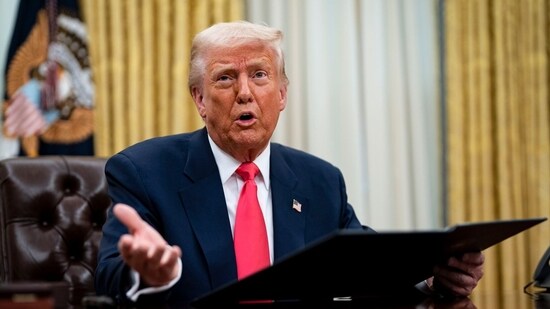
In an emergency application filed on Thursday, the Trump administration urged the justices to narrow court orders entered by district judges in Maryland, Massachusetts, and Washington, which blocked the order President Donald Trump signed shortly after beginning his second term.
The Trump administration argued that the injunctions should be scaled back from being applied universally, Reuters reported.
In the application, the administration said that injunctions should be limited to the plaintiffs who brought the cases and are "actually within the courts' power."
Also Read | ‘Threatens families with lifetime of exclusion’: Why Trump's birthright citizenship order was sued
"Universal injunctions have reached epidemic proportions since the start of the current administration," the Justice Department said in the filing, according to Reuters. "This court should declare that enough is enough before district courts' burgeoning reliance on universal injunctions becomes further entrenched."
Trump's order, signed on his first day back in office on January 20, directed federal agencies to refuse to recognize the citizenship of US-born children who do not have at least one parent who is an American citizen or lawful permanent resident.
The order was intended to apply starting February 19, but has been blocked nationwide by multiple federal judges.
What does Trump say about ending birthright citizenship?
The Donald Trump administration asserts that children of noncitizens are not “subject to the jurisdiction” of the United States and therefore not entitled to citizenship under the 14th amendment.
“The Constitution does not harbor a windfall clause granting American citizenship to, inter alia: the children of those who have circumvented (or outright defied) federal immigration laws,” the government argued in reply to the Maryland plaintiffs' suit.
Even Trump himself has said that the birthright citizenship wasn't for the whole world to "come in and pile" into the US.
The 14th Amendment was added in the aftermath of the Civil War to ensure citizenship for former slaves and free African Americans. It states: “All persons born or naturalized in the United States and subject to the jurisdiction thereof, are citizens of the United States and of the State wherein they reside.”
The amendment has been a part of the US Constitution since 1868 after the Dred Scott Supreme Court decision that determined Scott, a slave, wasn't a citizen.
If implemented, Trump's executive order would upend more than a century of court precedent around the 14th Amendment to the Constitution, which guarantees citizenship for almost anyone born on US soil, regardless of immigration status, according to Bloomberg.


