E-Paper


What is mast bumping and did it cause Hudson River helicopter crash? What we know
A helicopter crashed into Manhattan's Hudson River on Thursday, killing all six people on board

 Prefer HTon Google


A helicopter crashed into Manhattan's Hudson River on Thursday, killing all six people on board. While the cause of the crash is unclear, a former combat helicopter pilot, Jesse Matchey, told News Nation that it looks like a case of mast bumping.
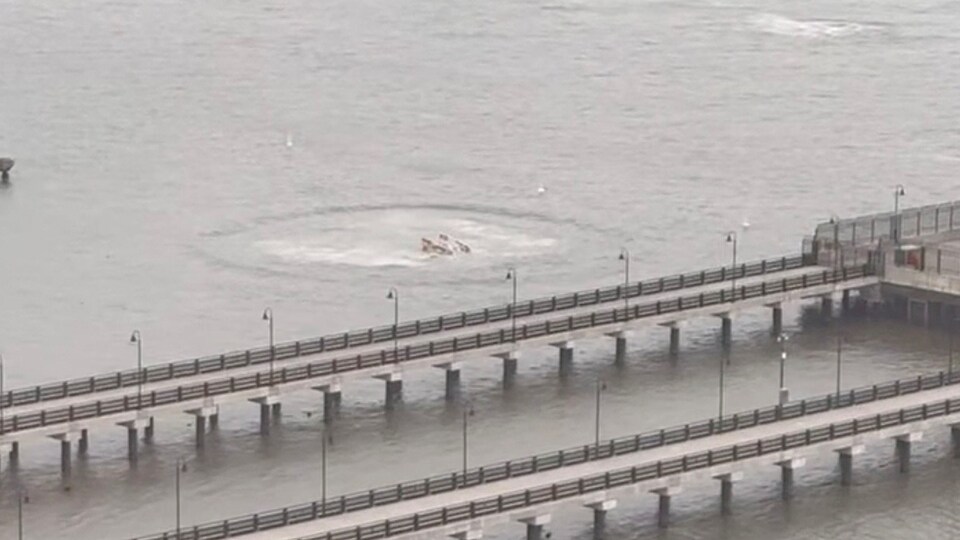
In videos posted on social media, the chopper could be seen breaking midair before crashing upside-down into the river. The New York Fire Department said it received a report of the crash at 3:17 PM All six people aboard were killed, a law enforcement official told The Associated Press.
Read More: Hudson River helicopter crash: First video from scene surfaces, NYC officials on scene | Watch
"Due to a helicopter crash in the Hudson River, in the vicinity of the West Side Highway and Spring Street, expect emergency vehicles and traffic delays in the surrounding areas," the NYPD said in an update on X, platform formerly known as Twitter.
Lesly Camacho, a hostess at a restaurant along the river in Hoboken, told AP: “There was a bunch of smoke coming out. It was spinning pretty fast, and it landed in the water really hard."
While the official cause of the crash is not known, former pilot Jesse Matchey said it could be mast bumping.
Read More: Bell 206L: All about the helicopter that crashed into Hudson River near Pier 40 in NYC
"I have no details, but it appears the main rotor detached and sliced the tail boom off (not sure how)," Matchey posted on X, platform formerly known as Twitter.
"It looks like it was a bell 206 (perhaps a long ranger)…mast bumping seems plausible/likely. In which case, the pilot error could be another potential contributing factor," he further added.
What is mast bumping?
Mast bumping is a helicopter issue where the rotor hub strikes the mast, often in two-bladed, teetering rotor systems like Bell models. It happens during low-G maneuvers or abrupt control inputs, disrupting rotor balance. This can cause the hub to hit the mast, leading to loss of control or rotor separation, risking a crash.