The Federal Emergency Management Agency (FEMA) has moved to dispel growing speculation surrounding a nationwide Emergency Alert System (EAS) test scheduled for Tuesday, 17 November, stressing that the exercise is a routine check of the country's public warning infrastructure and has no connection to an impending blackout or undisclosed emergency.
The agency issued the clarification on Monday after misleading claims began circulating online, suggesting that the planned broadcast interruption could be a warning of a major nationwide crisis. FEMA firmly rejected the allegations, stating that there is “no secret emergency” and no blackout associated with the scheduled test, Newsweek reported.
The nationwide exercise, being conducted in collaboration with the Federal Communications Commission (FCC), is due to take place at approximately 2.20pm Eastern Time. Television and radio audiences across the United States may experience a brief interruption lasting around one minute. Officials have emphasised that the public does not need to do anything in response.
What Americans can expect during the nationwide alert test
Deep Dive
Is a 90-day blackout or global power outage planned for November 17, 2026?
What will happen during the November 17 Emergency Alert System test?
Do Americans need to take action or stockpile supplies for the alert test?
The exercise will involve television and radio broadcasters, cable and satellite television operators, as well as wireline video service providers throughout the country.
{{/usCountry}}The exercise will involve television and radio broadcasters, cable and satellite television operators, as well as wireline video service providers throughout the country.
{{/usCountry}}Depending on the service provider, viewers and listeners may hear an announcement, see a test message displayed on their screens, or encounter both. The broadcast will clearly identify itself as an official test and confirm that no action is necessary.
FEMA expects the interruption to last approximately 60 seconds, after which regular television and radio programming should resume.
An important distinction in this year's exercise is that mobile phones will not receive any alerts. The November test is specifically designed to assess the Emergency Alert System, which distributes national warnings through television and radio networks.
Wireless Emergency Alerts (WEA), the separate system used to deliver emergency notifications directly to mobile phones, are not included in this exercise. They were part of the previous nationwide test conducted in 2023.
Should a significant weather event or another genuine emergency make the scheduled exercise unsuitable, FEMA and the FCC have identified 3 December as an alternative testing date.
Also Read: Trump calls reporter Rachel Scott ‘pathetic’, dismisses White House renovation costs as ‘peanuts’
Why federal authorities are conducting the test
The primary objective is to establish whether the country's broadcast networks and participating service providers can successfully receive and distribute an emergency message issued at the national level.
Under federal law, nationwide public alert and warning capabilities must be tested at least once every three years. Such exercises allow authorities to identify technical failures, communication gaps and operational weaknesses before the system is required during a genuine crisis.
The Emergency Alert System operates within FEMA's broader Integrated Public Alert and Warning System (IPAWS). This framework provides authorised federal, state, local, tribal and territorial authorities with several ways to communicate urgent information to the public.
Its communication channels include the Emergency Alert System, Wireless Emergency Alerts and NOAA Weather Radio.
However, officials have clarified that testing one component does not automatically mean that all the other alert channels are being examined.
According to the FCC's public notice, the test message will be distributed through IPAWS in both English and Spanish. The commission has also encouraged individuals and organisations that identify technical difficulties in their communities to submit reports through its Public Safety Support Center.
FEMA rejects claims of a secret emergency or nationwide blackout
Online speculation surrounding the scheduled exercise has fuelled concerns that Americans could be facing an imminent nationwide power failure.
Among the claims circulating on social media is a purported announcement by President Donald Trump warning of a 90-day blackout. However, the video was misleading and was debunked by PolitiFact, which found that it falsely presented the President as making such an announcement.
FEMA has specifically addressed the growing misinformation, describing the upcoming broadcast as a routine, legally mandated exercise rather than a warning about an impending disaster.
The agency's clarification makes clear that the test should not be interpreted as an instruction to evacuate, stockpile supplies or prepare for an extended loss of electricity.
While emergency alert systems are designed to deliver critical instructions during serious incidents, Tuesday's broadcast is simply an assessment of the country's existing communication infrastructure.
JD Vance dismisses calls for panic buying and bunkers
The rumours surrounding the alert test have also coincided with wider online discussions about emergency preparedness, particularly following recent technology disruptions and service outages.
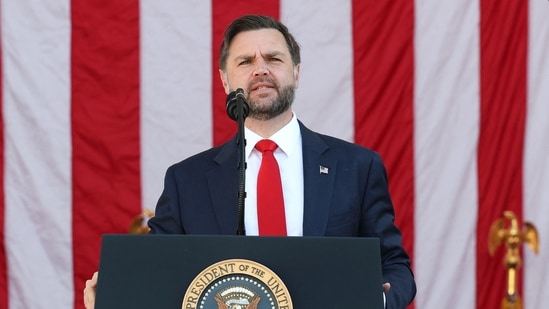
US Vice President JD Vance addressed public concerns during an interview with Fox News presenter Laura Ingraham on Monday, 16 November.
When asked whether Americans should consider preparing for a potential crisis by purchasing large quantities of food and water or building bunkers, Vance said some of his acquaintances had raised similar questions.
“My answer to that is no. We don’t see a crisis coming down,” he said.
He also acknowledged the importance of ensuring that the government remains prepared to respond effectively to unexpected emergencies.
However, Vance's comments concerned broader public anxiety and recent technology outages. He did not associate his remarks with FEMA's planned Emergency Alert System test.
Homeland Security Secretary advises against stockpiling
Homeland Security Secretary Markwayne Mullin has similarly pushed back against suggestions that Americans should begin accumulating large quantities of emergency supplies.
Speaking to Fox News on Sunday, 15 November, Mullin was questioned about concerns arising from a recent Federal Aviation Administration ground stop and online speculation about widespread disruption.
“I’m not stockpiling,” he said, before adding, “Don’t worry unless you see me worry.”
His remarks were intended to discourage unnecessary public alarm amid growing speculation about possible disruptions across the country.
Neither Mullin nor Vance connected their comments about preparedness to the scheduled nationwide alert exercise.
What emergency supplies should households keep?
Although federal officials have rejected the claims of an impending 90-day blackout, that does not mean households should ignore ordinary emergency preparedness.
The US government's Ready.gov preparedness guidance recommends keeping essential supplies available in case of unexpected emergencies. These include at least three days' worth of drinking water and non-perishable food, alongside other basic necessities.
Maintaining a modest emergency supply is a standard precaution intended to help households manage temporary disruptions caused by severe weather, natural disasters or other unexpected events.
This longstanding recommendation should not be confused with viral online claims suggesting that the government has instructed Americans to prepare for three months without electricity.
A routine safety check, not a warning of disaster
FEMA's message is straightforward: the nationwide Emergency Alert System exercise is intended to assess the reliability of television and radio emergency broadcasting networks.
The brief interruption is expected to last about one minute, and the test message will explicitly state that no public action is required. Mobile phones are not included in this year's exercise.
Authorities have also made clear that the scheduled broadcast does not indicate an impending blackout, a hidden national emergency or any requirement for Americans to begin stockpiling supplies.
The exercise is part of the government's legally required effort to ensure that emergency communications remain operational and capable of reaching the public when a real crisis occurs.